By: Zahid Sultan ( Independent Researcher Based in Srinagar, India)
There are anniversaries that invite celebration, and there are anniversaries that demand reflection. The eightieth anniversary of India’s independence ought to be both. On 15 August 1947, India acquired what history had denied it for nearly two centuries: the political authority to determine its own collective destiny. The transfer of power was not merely a change in the personnel of the government. It was the recovery of political agency. A people who had been governed by an external sovereign became, in principle, the authors of their own political future.
Eighty years later, we inherit that freedom as something almost ordinary. The tricolour rises every year, schools organise ceremonies, public institutions mark the occasion, and political leaders speak of the nation’s achievements and aspirations. There is nothing wrong with celebration. Nations need rituals through which they remember themselves. But there is a danger in allowing ritual to replace reflection. Independence cannot become merely an annual performance of patriotism. The deeper question is more demanding: what does independence mean to us now?
The answer cannot simply be that India is sovereign, democratic, economically stronger or geopolitically more consequential. These are important achievements, but they do not exhaust the meaning of freedom. A country may possess sovereignty and yet leave many of its citizens without substantive freedom. A state may be powerful without being just. An economy may grow without eliminating humiliation. A democracy may conduct elections without always cultivating democratic habits of listening, dissent and accommodation. The meaning of independence therefore lies somewhere between the history of 1947 and the unfinished future of the republic.
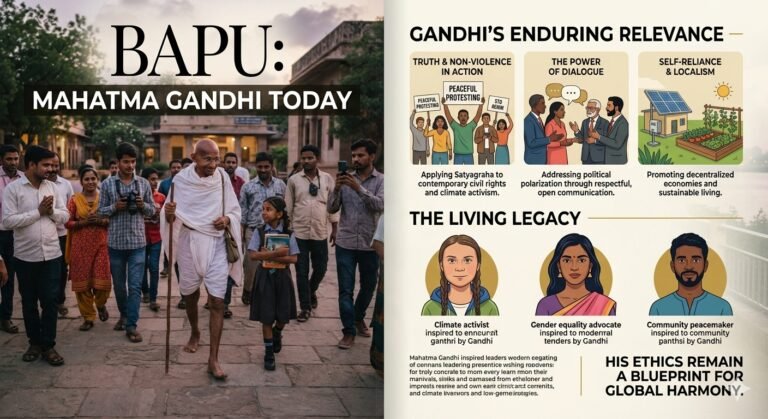
Independence was, first of all, freedom from foreign rule. But the Indian imagination of freedom was never exhausted by the departure of the British. The freedom struggle contained several competing and overlapping visions of what India ought to become. Gandhi associated freedom with swaraj, but swaraj was not simply the replacement of one ruler by another. It involved self-rule in a deeper moral sense, the capacity of individuals and communities to govern themselves. Ambedkar insisted that political democracy could not survive without social democracy. Nehru imagined a modern India capable of combining scientific temper, democratic institutions and economic transformation. Tagore worried about the dangers of reducing the nation to an idol. The Constitution eventually attempted to hold together many of these aspirations within a common political framework.
This is why the significance of 1947 cannot be reduced to the lowering of one flag and the raising of another. It represented the beginning of an experiment. And experiments are never completed merely because they survive. India’s achievement over these eight decades is considerable precisely because the experiment was extraordinarily difficult. The republic inherited poverty, mass illiteracy, enormous social inequalities, Partition’s wounds, linguistic diversity, religious plurality and the challenge of integrating hundreds of millions of people into a common political community. It did not begin as a settled democracy. It had to construct one.
That India did so through a constitutional order, universal adult franchise and regular elections was not inevitable. Democracy is often described today as though it were India’s natural inheritance. It was not. It was a political choice and a remarkably ambitious one. The Indian republic made a wager on the political capacity of ordinary citizens. That wager remains one of the most consequential features of our national story. The most important achievement of independence, therefore, may not be that India became powerful. It may be that millions of people came to see themselves as citizens rather than subjects.
The distinction matters. A subject receives authority. A citizen participates in constituting it. A subject is expected to obey. A citizen possesses rights. A subject stands before power. A citizen, at least in principle, can question it. The transformation from subjecthood to citizenship is perhaps the deepest revolution inaugurated by independence. Yet citizenship is not merely a legal status. It is also a lived experience. The Constitution can proclaim equality, but the meaning of equality becomes real only when a person encounters an institution and is treated with equal dignity. Liberty is not meaningful merely because it appears in a constitutional text; it becomes meaningful when individuals can speak, think, worship, associate and dissent without living permanently in fear. Justice cannot be measured only through courts and statutes; it is also experienced in schools, hospitals, police stations, universities, workplaces and public offices.
This is where the distance between constitutional promise and social reality becomes important. India should neither romanticise this distance nor exaggerate it. The republic has undoubtedly transformed millions of lives. Education has expanded, life expectancy has risen, technological capabilities have multiplied, infrastructure has been transformed, democratic participation has deepened and India has acquired a voice in international affairs that would have been difficult to imagine in 1947. The country has moved from the anxieties of a newly independent state to the confidence of a major global actor.
But development creates its own paradoxes. The more a society advances, the more visible its unfinished inequalities become. A young person may possess unprecedented access to information and yet confront uncertainty about employment. A child may have access to education while still experiencing profound differences in the quality of that education. Cities may become technologically sophisticated while villages struggle with basic institutional capacities. Economic growth may create wealth while also producing new forms of exclusion.
Independence therefore cannot be reduced to the question: How far has India travelled? We must also ask: Who has been able to travel with it? A mature patriotism does not fear questions about the republic. It asks them because it believes the republic is capable of answering them. There is an immature understanding of patriotism that equates love of country with agreement with the government of the day. But a nation is larger than its government. Governments change; institutions evolve; political parties rise and fall. The republic endures.
To love India is therefore not necessarily to approve of every decision made in its name. Indeed, democratic patriotism requires something more difficult: the ability to criticise the state without abandoning the country, and to defend the constitutional order without treating the government as infallible. This distinction is particularly important in an age when political disagreement is easily converted into a question of loyalty. A democracy cannot survive if every disagreement becomes betrayal. Nor can a democracy flourish if criticism becomes an excuse for rejecting every institution.
The challenge is to preserve a political culture in which disagreement remains compatible with belonging. This is where the idea of fraternity in the Constitution acquires unusual significance. Justice and liberty are often discussed as rights that individuals possess. Fraternity points toward a different question: how are citizens expected to live with one another? India is not merely a geographical space containing different communities. It is a political project of coexistence.
Its diversity is not an incidental complication to be overcome before the real nation can emerge. Diversity is constitutive of the Indian experience itself. Languages, religions, regions, castes, tribes, customs and histories have never existed in perfect harmony, but neither have they existed in permanent separation. The genius of the Indian constitutional imagination lies partly in refusing to demand uniformity as the price of belonging. This does not mean that every difference is harmless or that social conflict can simply be celebrated as diversity. A democratic society needs common institutions, common rights and a common constitutional framework. But the common cannot be built by erasing the difference.
The task is harder: to create a political community in which difference does not become an argument for exclusion. That is perhaps one of the great unfinished questions of Indian independence. For the first generation of Indians, freedom meant escaping colonial domination. For our generation, freedom must increasingly mean preventing domination in its many newer forms. Domination can be political, but it can also be social, economic, cultural and institutional.
A person who is formally free but unable to access education may possess liberty in theory but experience constraint in practice. A citizen who has the right to speak but fears social retaliation may possess constitutional freedom while lacking substantive freedom. A young person who is educated but excluded from meaningful opportunities may find that political citizenship does not automatically produce social mobility. Freedom, then, is not simply the
absence of a foreign ruler. It is the presence of conditions under which human beings can develop their capacities.
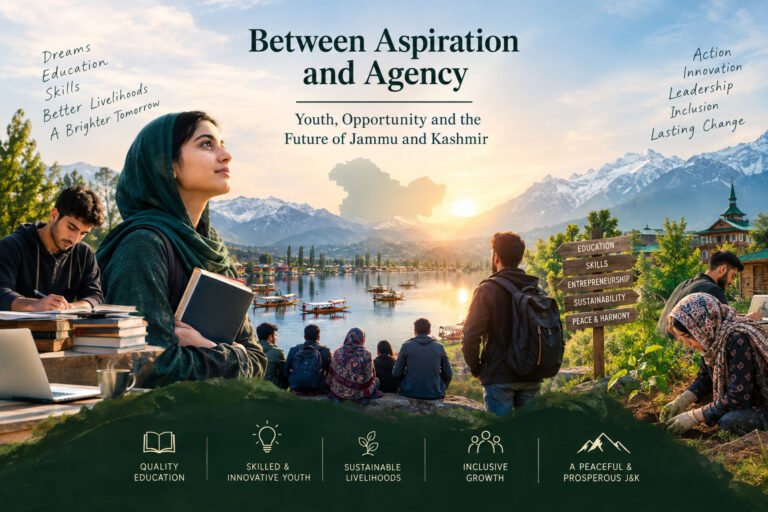
This is why the question of education is central to the meaning of independence. An educated citizen is not merely someone who possesses a degree. Education at its highest level teaches people to question assumptions, encounter disagreement, distinguish evidence from assertion and recognise the dignity of those with whom they disagree. A university, therefore, is not merely a place for producing employable graduates. It is one of the republic’s spaces for reproducing democratic citizenship.
The classroom is political in the best sense of the word, not because it should become partisan, but because it teaches people how to inhabit a world of disagreement. The student who learns to ask difficult questions is not a threat to democracy. The student who learns never to ask them is. Perhaps this is why Independence Day should matter particularly to the young. The freedom inherited by one generation becomes the responsibility of another.
The generation of 1947 fought to obtain political freedom. Subsequent generations were asked to consolidate institutions. The generation now coming of age faces a different challenge: to determine what freedom should mean in a rapidly changing India. Technology has altered the relationship between citizens and state. Social media has transformed political communication. Artificial intelligence is beginning to reshape work and knowledge. Climate change is threatening livelihoods and ecological security. Urbanisation is changing social relations. Globalisation has created opportunities while exposing societies to new vulnerabilities.
The republic therefore cannot simply preserve the meaning of independence as an inheritance. It must reinterpret it. The question is not whether India should remain faithful to the past. The more serious question is what fidelity to the past requires in the present. The freedom struggle did not ask Indians merely to inherit a country. It asked them to build one. That obligation remains. There is also a temptation, after eighty years, to judge independence exclusively through national power. GDP, military capabilities, technological achievements, infrastructure, diplomatic influence and global rankings are important measures of state capacity. They tell us something about how far India has travelled. But they cannot tell us everything about whether the republic is flourishing.
The ultimate measure of a political community is not only how powerful it appears from outside but how dignified life feels from within. Can a citizen approach an institution without humiliation? Can a young person imagine a future without inherited disadvantages determining its boundaries? Can minorities feel that constitutional citizenship belongs to them as fully as it belongs to everyone else?
Can dissent exist without being treated as disloyalty? Can political majorities exercise power without forgetting that minorities remain citizens? Can citizens exercise rights without forgetting that democracy also demands responsibilities? These are not questions that weaken the nation. They are questions through which a nation becomes more serious about itself. The
eightieth Independence Day therefore ought to inspire neither complacency nor despair. Complacency would be intellectually dishonest. India has unfinished work. Despair would be equally mistaken. The country has demonstrated an extraordinary capacity for adaptation, institutional innovation and democratic endurance.
The appropriate response is something more difficult: confidence without complacency. We should be proud of what has been built without pretending that everything that remains to be built is inevitable. We should remember the sacrifices of the freedom movement without turning its memory into a museum piece. We should respect the state without forgetting that the state exists for citizens. We should value national unity without confusing unity with uniformity. We should celebrate economic and technological progress while asking whether progress is expanding human freedom. And above all, we should understand independence not as a finished possession but as a continuing responsibility.
Perhaps the most profound meaning of 15 August is therefore not that India became free eighty years ago. It is that every generation is asked to decide what it will do with that freedom. Freedom can decay through indifference. Institutions can weaken through neglect. Citizenship can become passive. Democracy can become ritualistic. Constitutional values can become words recited on ceremonial occasions rather than principles embodied in everyday conduct. A republic survives not merely because it has a Constitution, elections and institutions. It survives because citizens continue to believe that these institutions are worth defending and improving.
The Indian Constitution gives us a remarkable vocabulary for this task: justice, liberty, equality and fraternity. These are not decorative words. They are standards against which the republic can continually judge itself. Eighty years after independence, perhaps we should therefore move beyond the question of whether India has fulfilled the dreams of 1947. No generation can completely fulfil the dreams of another. The more important question is whether we are worthy of the freedom that generation won.
That worthiness will not be demonstrated merely by the size of our economy, the strength of our military or the height of our buildings. It will be demonstrated in the ordinary spaces of citizenship, in the fairness of an institution, the dignity accorded to a stranger, the willingness to hear an inconvenient argument, the courage to acknowledge injustice, the ability to disagree without hatred, and the determination to ensure that freedom does not become a privilege available only to those already endowed with power.
Independence began as a struggle against foreign domination. The republic’s continuing task is to ensure that freedom is not diminished by domination of any kind. This is why 15 August should remain more than a national festival. It is a moment of political introspection. The flag tells us where we came from. The Constitution tells us what we aspire to become. And citizenship asks what we are prepared to do about it. Eighty years is long enough to celebrate the journey. It is also long enough to recognise that the journey is unfinished. India’s independence is therefore neither simply a memory nor merely an achievement. It is a promise. And like all serious promises, it has to be renewed by every generation.
The larger question before us on the eightieth Independence Day is how freedom can be lived in the fullest sense of the word, by cherishing fundamental rights while equally performing the moral and civic duties envisaged in the Preamble and the Constitution. This responsibility assumes an extraordinary magnitude in a country of nearly 1.4 billion people, a population larger than that of the 54 African countries combined and greater than the combined population of North America, the United States, Mexico and Australia. Added to this unprecedented demographic scale are India’s vast and qualified as well as unqualified diversities, encompassing differences of language, faith, region, culture, community and social experience. These diversities are simultaneously a challenge and a civilisational boon. Alongside them are border issues, geopolitical pressures and what may be described as an organised chaos of competing interests, aspirations and uncertainties. The larger quest, therefore, is to keep pace with a rapidly transforming world while navigating these core concerns, both domestically and abroad, without losing sight of the foundational values that hold the Republic together.
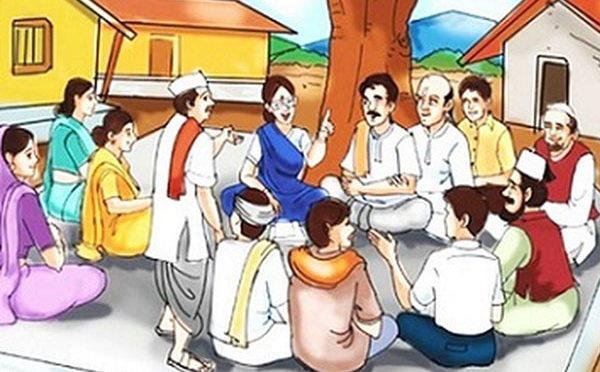
Despite unwanted meddling and the pressures that accompany India’s growing role in a complex global order, the Indian Prime Minister is navigating relations and partnerships with global champions, while seeking to position India as a meaningful force in sustainable efforts across multidimensional programmes of mutual interest. India’s engagement with the wider world must continue to be guided by confidence, responsibility and an understanding that national progress and global cooperation need not be competing objectives. At the same time, the realisation of freedom cannot be left to the state and its institutions alone. Without the participation of the common citizenry, and without citizens feeling themselves to be the principal stakeholders in the realisation of freedom, the promise of independence cannot attain its fullest meaning. Great citizenship requires patriotism, a sense of duty, respect for institutions, regard for the dignity of fellow citizens and, above all, true humanity across the domains of everyday life. The state may provide direction, institutions and platforms, but the enduring strength of the Republic ultimately depends upon how citizens conduct themselves within them.
India’s diversity, despite the challenges it presents, remains one of its greatest strengths. The task is not to erase these differences but to weave them into a larger sense of fraternity and belonging. Across lines of language, religion, region, caste, culture and circumstance, the many fragments of India must continue to be connected by a single verse of commonality. This underlying unity does not demand uniformity; rather, it allows difference to flourish within a shared national and constitutional imagination. The continuing efforts of the Government across domains and platforms, notwithstanding the challenges before the country, must therefore be understood alongside the equally important responsibility of citizens to participate in and strengthen the underlying sense of unity and belonging that is the very plinth of the idea of India.
India must stay democratic, calm, open, self-reliant and hopeful. It must remain sufficiently confident to engage with the world, sufficiently resilient to navigate its challenges, and sufficiently humane to ensure that the meaning of freedom reaches the ordinary citizen. The next eighty years must therefore be a period in which the state and citizenry move together, where rights are cherished and duties are performed, where diversity becomes a source of strength rather than fragmentation, and where patriotism is expressed not merely through celebration but through responsible citizenship. The fullest realisation of freedom will come when every citizen sees himself or herself not merely as a beneficiary of independence, but as a stakeholder and custodian of the Republic. It is through such shared ownership, through the gluing together of our many fragmentations by a common sense of belonging, that the promise of India can continue to unfold as one nation, one constitutional community and one shared human aspiration..
About the Author