Author: Peerzada Muneer
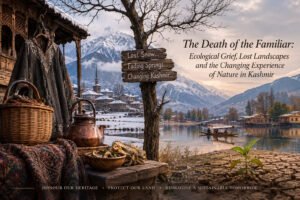
- The Disappearance of the Familiar: Ecological Transformation and the Human Experience of Nature
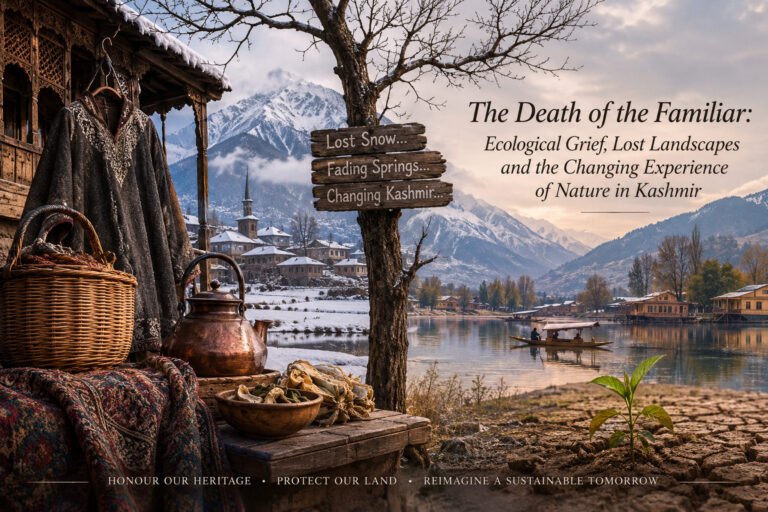
The relationship between human beings and their natural surroundings is considerably more intimate than the conventional understanding of nature as an external environment or a collection of resources. Landscapes are not merely geographical spaces within which human activities take place; they are also repositories of memory, experience, belonging and identity. Rivers, springs, mountains, forests, orchards, meadows and changing seasons become interwoven with the ordinary experiences through which individuals and communities understand their existence. A particular spring may evoke childhood memories, a river may represent the history of a settlement, an orchard may recall generations of family labour, and snowfall may signify not merely a meteorological occurrence but an entire world of seasonal practices, relationships and expectations. Nature, in this sense, is not simply something that surrounds human life; it becomes part of the very texture of human existence. It is against this background that the changing ecological landscape of Jammu and Kashmir deserves to be examined, not exclusively as an environmental crisis but also as a transformation of the familiar world through which people have historically experienced their lives.
The contemporary ecological transformations occurring across Kashmir have increasingly brought this relationship into question. Changing precipitation patterns, declining snowfall, the degradation of springs and water bodies, deforestation, urban expansion, the deterioration of wetlands and the transformation of traditional landscapes have begun to affect both ecological systems and the everyday experiences associated with them. A longitudinal study by Ishfaq Hussain Malik and James D. Ford, examining climate vulnerability in the Kashmir Himalayas between 2017 and 2024, documents changing perceptions of temperature, precipitation, snowfall and water availability, alongside their consequences for livelihoods, health and cultural heritage. The researchers also draw attention to the vulnerability of traditional knowledge systems and the ecological pressures affecting marginalised communities (Malik and Ford, 2025). These transformations indicate that environmental change cannot be understood solely through measurements of temperature, rainfall or biodiversity. It must also be approached through the experiences of people whose lives, memories and cultural practices remain deeply connected with the changing natural world.
The disappearance of a familiar spring, the diminishing flow of a stream, the loss of an orchard or the changing character of a winter landscape represents something more than the alteration of a physical environment. Such transformations may produce what can be described as ecological grief: an experience of sorrow, anxiety or loss arising from the degradation or disappearance of environments to which individuals and communities have developed meaningful attachments. Ecological grief is not necessarily associated with a single catastrophic event. It may emerge gradually, through repeated encounters with an environment that no longer resembles the one remembered. An elderly person who recalls a childhood spent around a flowing village spring may experience its disappearance as the loss of a familiar world. A farmer who notices changes in snowfall and the availability of water may experience uncertainty not only about agricultural production but also about the seasonal rhythms that have historically structured agricultural life. Similarly, younger generations may inherit landscapes that are already substantially different from those described in the memories of their elders.
The concept of ecological estrangement is particularly useful in understanding this experience. Ecological estrangement refers to the gradual process through which people become unfamiliar with the environments they continue to inhabit. It is possible to remain geographically attached to a place while becoming increasingly disconnected from its former ecological character. A landscape may retain its name, geographical location and apparent identity, yet lose the natural features, seasonal patterns and cultural associations through which it was previously experienced. In this sense, environmental degradation may produce a peculiar form of displacement without physical migration. People may continue living in the same villages, neighbourhoods and towns, yet experience the gradual disappearance of the natural world that once made those places familiar. The loss is therefore simultaneously ecological, emotional, cultural and existential.
A phenomenological understanding of this transformation allows us to move beyond the conventional distinction between human beings and nature. Heidegger’s reflections on dwelling are particularly relevant here, as they suggest that human existence involves a meaningful relationship with the world rather than mere physical occupation of geographical space. Similarly, Merleau-Ponty’s understanding of embodied experience reminds us that human beings encounter their surroundings through lived, sensory and practical relationships. The smell of wet earth, the sound of flowing water, the warmth of sunlight in winter, the sight of snow-covered rooftops and the changing colours of autumn are not incidental experiences. They participate in the formation of memory and belonging. When these familiar experiences change or disappear, the transformation is not merely environmental; it also affects the ways in which people inhabit and understand their world. The disappearance of the familiar therefore calls for an ecological philosophy that recognises nature not simply as an object of human management but as an indispensable dimension of human existence.
- The Changing Winter: Ecological Memory, Seasonal Heritage and the Cultural Meaning of Cold
The arrival of winter in Kashmir provides a particularly meaningful context for understanding the relationship between ecological change and cultural memory. As November advances and temperatures begin to decline, the Valley gradually enters a season that has historically shaped its architecture, food habits, clothing, social relationships, occupations and collective imagination. Winter in Kashmir has never been merely a period of low temperatures. It has constituted a distinctive cultural and ecological experience around which generations have organised their everyday lives. Its significance is reflected in the traditional understanding of seasons, the preparation of households, the preservation of food, the use of particular forms of clothing and heating, and the social practices through which communities have negotiated the difficulties and intimacies of the cold. However, changing snowfall patterns and increasingly unpredictable seasonal conditions raise important questions about the continuity of this inherited winter culture.
Traditionally, the Kashmiri winter was organised around a close understanding of the natural environment. The transition from autumn to winter was accompanied by the preparation of households for prolonged cold, the storage of food, the collection of fuel and the maintenance of warm domestic spaces. The preservation of vegetables, commonly known as hokh syun, was an important part of this seasonal knowledge. Vegetables such as bottle gourd, turnip, brinjal and other locally available produce were washed, cut and dried for consumption during the colder months. This practice was not simply a culinary preference. It represented an adaptive relationship with seasonal availability, household resources and the environmental conditions of the Valley. The preparation of dried vegetables also carried a social dimension, involving the participation of family members, the transmission of knowledge between generations and the preservation of culinary traditions. Although improved connectivity, refrigeration and the availability of fresh produce throughout the year have reduced the necessity of such practices in many households, their cultural significance continues to be recognised. Their gradual disappearance would therefore represent not merely a change in dietary preference but also the weakening of a particular form of ecological knowledge.
The kangri occupies an equally important position in Kashmir’s winter heritage. Traditionally carried beneath the pheran, the kangri represents an ingenious adaptation to the climatic conditions of the region. Its earthen firepot, enclosed within a woven wicker framework, provides portable warmth and has historically been associated with domestic life, mobility and everyday social interaction. The craft of making kangris has also sustained specialised artisan communities whose knowledge of wickerwork and earthen pottery forms part of Kashmir’s material heritage. Alongside it, the pheran represents an enduring form of traditional clothing adapted to the region’s cold climate. Together, the kangri and pheran illustrate how communities develop cultural practices through sustained engagement with their natural surroundings. They are not merely objects of tradition but embodiments of practical knowledge, craftsmanship and environmental adaptation.
Another distinctive feature of traditional Kashmiri winter architecture is the hamam, a heated stone-floored space traditionally found in mosques and wealthier households and increasingly incorporated into contemporary residential buildings. Its design provides an example of how architecture historically responded to climatic conditions through locally developed techniques. Traditional houses, often constructed with timber, brick, mud and other locally available materials, incorporated design features that helped retain warmth and accommodate the seasonal requirements of their inhabitants. Research and architectural documentation have drawn attention to the thermal advantages of certain traditional building practices, while also identifying the problems associated with poorly insulated modern construction (Naqash, 2017). The significance of the hamam, therefore, extends beyond its function as a heating arrangement. It represents a social space in which family members, neighbours and members of a congregation could gather during winter. Its warmth was simultaneously physical, architectural and social.
The seasonal experience of winter was also shaped by food, storytelling, handicrafts and forms of domestic togetherness. The preparation of traditional winter dishes, the consumption of dried vegetables, the use of locally available produce and the sharing of meals reflected a close relationship between food practices and seasonal ecology. Winter evenings traditionally provided opportunities for conversation, storytelling, the transmission of folk knowledge and the continuation of craft activities. Such practices were particularly important in societies where seasonal conditions restricted mobility and encouraged people to spend longer periods indoors. The winter landscape itself occupied an important place in poetry, folklore and collective imagination. Snowfall was associated with childhood memories, the transformation of familiar surroundings and the distinctive beauty of the Valley. For older generations, the memory of snow-covered courtyards, frozen water bodies and prolonged winter evenings remains inseparable from their understanding of Kashmiri life.
Yet, the winter landscape that sustained these practices appears to be undergoing significant changes. Research and reporting have increasingly highlighted declining snowfall, altered precipitation patterns and the consequences of warmer winters for agriculture, water resources and traditional livelihoods. A 2026 report in Down To Earth documented a prolonged period of deficient winter precipitation in Jammu and Kashmir, drawing attention to the implications of reduced snow accumulation for rivers, irrigation, orchards and ecological stability. Similarly, Malik and Ford’s longitudinal research indicates that communities have observed significant changes in the timing and intensity of snowfall and rainfall. These developments should not be interpreted as evidence that every winter will necessarily be warmer or snowless; rather, they point towards increasing uncertainty in the seasonal patterns upon which ecological and cultural life has historically depended.
The weakening of winter traditions is also visible in the changing position of the kangri and the livelihoods associated with its production. Contemporary reporting has highlighted declining demand for kangris amid changing winters and the increasing use of electric heaters and other modern heating arrangements (Malik, 2025; Kashmir Despatch, 2026). Such developments should not be interpreted simply as the abandonment of tradition by younger generations. They reflect the interaction of climatic changes, changing domestic architecture, economic considerations and technological alternatives. Nevertheless, the decline of a traditional craft raises questions about the transmission of knowledge and the sustainability of artisan livelihoods. If the kangri becomes merely a decorative object or a souvenir associated with an idealised past, an important dimension of its cultural and practical significance may be lost.
The challenge, therefore, is not to preserve winter culture by attempting to reproduce every aspect of an earlier way of life. Rather, it is to recognise that traditional practices contain accumulated knowledge about living within particular ecological conditions. The kangri, pheran, hamam, hokh syun and traditional architectural arrangements are examples of how human communities have historically negotiated climatic challenges through adaptation, craftsmanship and collective knowledge. Their continued relevance should be explored through contemporary environmental, architectural and social perspectives. Winter heritage must be understood as a living relationship between people and their environment, not as a static collection of cultural objects. The question is not simply whether the old winter will return, but whether the knowledge, values and social relationships developed through generations of living with it can be meaningfully carried into the future.
- Recovering the Familiar: Ecological Responsibility, Constructive Modernity and Cultural Continuity
Recognising ecological grief and the disappearance of familiar landscapes should not lead to an unproductive nostalgia for an imagined past. Kashmir’s environmental and cultural history has always involved adaptation, exchange and transformation. Traditional life was not free from hardship, environmental constraints or social inequalities, and modernity has brought significant improvements in healthcare, transportation, communication, education, housing and access to resources. The objective, therefore, cannot be to reject contemporary development or romanticise earlier arrangements. Rather, it must be to develop a more constructive relationship between inherited ecological knowledge and modern scientific and technological possibilities. The real challenge is to ensure that development does not become synonymous with cultural amnesia or ecological disregard.
This requires recognising the value of traditional knowledge without treating it as infallible or universally applicable. Practices such as water conservation, food preservation, climate-responsive architecture, local craftsmanship and seasonal agricultural adaptation contain valuable insights that can inform contemporary environmental planning. Traditional methods of preserving vegetables, for instance, can be examined alongside modern food science to improve storage, nutrition and sustainability. Similarly, the principles underlying the hamam and traditional building designs can inform contemporary energy-efficient architecture through improved insulation, ventilation and the use of appropriate construction materials. Modern structural engineering, including earthquake-resistant construction, can be combined with locally developed architectural knowledge to produce buildings that are simultaneously safe, thermally efficient and culturally sensitive. The objective should be neither an uncritical return to the past nor an indiscriminate adoption of imported architectural models, but a meaningful synthesis of the strengths of both.
The same approach should guide the preservation of Kashmir’s natural landscapes. Springs, wetlands, forests, rivers and traditional water channels must be recognised as ecological systems that sustain both biodiversity and human communities. Their protection requires scientific monitoring, responsible urban planning, community participation and the restoration of degraded ecosystems. The revival of traditional springs, for example, should involve hydrological assessment, protection of catchment areas, the prevention of pollution and the regulation of construction around natural water sources. Similarly, the preservation of wetlands requires not merely legal protection but an understanding of their ecological functions and their relationship with surrounding communities. Traditional knowledge held by farmers, shepherds, artisans and local residents can complement scientific research in identifying environmental changes and developing appropriate responses.
An important dimension of this process is the involvement of younger generations. Environmental awareness should not remain confined to occasional campaigns or institutional declarations. It must become part of everyday education and cultural participation. Schools and universities can encourage students to document disappearing springs, traditional water systems, local food practices, old architectural arrangements and seasonal knowledge through oral histories, photography, field visits and community-based research. Such initiatives would create opportunities for intergenerational dialogue in which older residents share their experiences while younger people contribute scientific, technological and creative approaches. Digital platforms can be used to preserve local ecological knowledge, document traditional crafts and make environmental information accessible to wider audiences. Technology, in this sense, need not be an instrument of cultural displacement; it can become a means of cultural continuity and ecological responsibility.
The preservation of winter heritage offers a particularly productive opportunity for such collaboration. Kangri-making, wicker craftsmanship, traditional clothing, food preservation and vernacular architecture should be supported not merely as nostalgic cultural practices but as living forms of knowledge and economic activity. Artisans can be connected with contemporary design institutions, architectural researchers and sustainable production initiatives. Traditional heating arrangements can be studied in relation to energy efficiency, indoor air quality and public health, ensuring that cultural preservation does not compromise safety. Likewise, locally adapted building designs can be integrated with modern insulation materials and renewable energy technologies. Traditional foods and preservation techniques can be documented, scientifically assessed and promoted through responsible local enterprises. Such initiatives would allow heritage to remain relevant to contemporary life while providing livelihood opportunities for communities whose knowledge sustains it.
The philosophical foundation of this constructive approach lies in understanding responsibility as something that extends beyond immediate human interests. Hans Jonas’s ethics of responsibility emphasises the obligation of present generations to consider the long-term consequences of their actions for the conditions of future life. Such an understanding is especially relevant to a region whose ecological systems are closely connected with the well-being of future generations. Environmental responsibility must therefore involve a willingness to reconsider patterns of consumption, construction, waste disposal and resource use. It also requires recognising that ecological vulnerability is unevenly distributed. Farmers, pastoral communities, artisans, sanitation workers and households with limited economic resources may experience environmental degradation more severely than those with greater adaptive capacities. A just ecological transition must consequently combine environmental protection with social participation, livelihood security and equitable access to resources.
So, the recovery of the familiar does not mean attempting to restore Kashmir to an earlier historical condition. Nature is dynamic, societies change, and cultural practices must remain capable of responding to new circumstances. What deserves preservation is not every historical arrangement in its original form but the ecological intelligence, craftsmanship, social relationships and sense of responsibility that developed through generations of interaction with the environment. Modernity becomes constructive when it strengthens these capacities rather than displacing them indiscriminately. The task is to build a future in which scientific knowledge collaborates with traditional wisdom, technological advancement complements ecological sensitivity, and economic development remains attentive to cultural and environmental continuity.
Conclusion: Towards a Future That Remains Familiar
The changing ecological landscape of Kashmir invites us to reconsider what it means to belong to a place. The disappearance of springs, the transformation of familiar landscapes, the changing rhythms of snowfall and the gradual weakening of traditional seasonal practices demonstrate that environmental change is also a transformation of human experience. What is at stake is not simply the preservation of natural resources or the conservation of cultural artefacts, but the continuity of relationships through which people recognise their surroundings as familiar, meaningful and worth protecting. Ecological grief, in this context, should not become an expression of helpless nostalgia. It should become an impetus for renewed ecological responsibility and collective action.
The future of Kashmir’s ecological and cultural heritage depends upon our ability to engage constructively with modernity without surrendering the knowledge and sensibilities that have historically sustained life in the region. Traditional practices must be examined, adapted and corroborated through contemporary scientific research, while modern technologies must be evaluated in the light of their ecological and social consequences. The kangri need not compete with modern heating technology; the architectural intelligence of the hamam need not be abandoned in favour of contemporary construction; traditional food preservation need not remain an exercise in nostalgia; and digital innovation need not lead to the disappearance of local knowledge. Each can become part of a renewed relationship between cultural continuity and contemporary development. Such a relationship requires collaboration among communities, educational institutions, scientists, architects, artisans, environmental organisations and public institutions.
Perhaps the most important task is to recover a sense of shared responsibility towards the places we inhabit. Springs must be protected before they become memories, wetlands conserved before their disappearance becomes irreversible, and traditional knowledge documented while its bearers can still transmit it. Children should be encouraged to understand not only the beauty of Kashmir’s mountains and forests but also the ecological processes that sustain them. Older generations should be recognised as holders of valuable experiential knowledge, while younger generations should be empowered to reinterpret that knowledge through contemporary tools and possibilities. The objective must be to create a culture in which environmental protection is not understood as an external obligation but as an extension of belonging itself.
Kashmir does not need to choose between tradition and modernity, nor between cultural preservation and development. It needs a form of modernity that is rooted, reflective and ecologically responsible. A society can embrace scientific progress, technological innovation and changing aspirations while retaining its cultural essence, provided that development remains attentive to the relationships, memories and ecological conditions that give life its meaning. The death of the familiar is not inevitable, but preventing it requires more than remembering what has disappeared. It requires acting upon what remains. Ultimately, the measure of progress should not be how completely we transform our surroundings, but how responsibly we improve them while ensuring that future generations inherit a world in which they can still recognise, inhabit and belong to the places they call home.
Suggested Readings:
- Malik, I. H., and Ford, J. D. (2025). Monitoring climate change vulnerability in the Himalayas. Ambio, 54, 1–19.
- Malik, I. A. (2025). Kashmir’s vanishing winter: How climate change is pushing the kangri tradition to the brink. Mint, 8 February 2025.
- Naqash, R. (2017). Winter in Kashmir: How, as the Valley’s taste in architecture changed, its homes became colder. Scroll.in.
- Death of winter: Kashmir’s shrinking snowfall signals a deeper climate crisis in the Himalayas. Down To Earth, 25 March 2026.
- Pastoral resilience under threat: Impacts of climate change, invasive plant species, and traditional ecological knowledge erosion in the Kashmir Himalayas. Current Opinion in Environmental Sustainability, April 2026.
About the Author