Written by: Sheeraz Zaman
The Goddess, the spring and the Kashmiri Hindu imagination
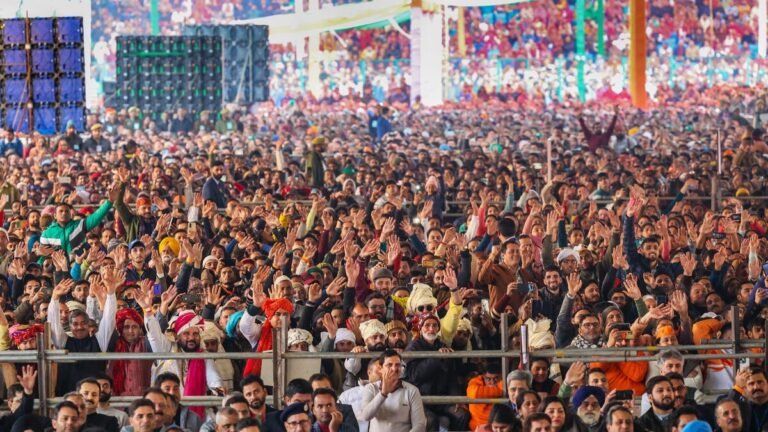
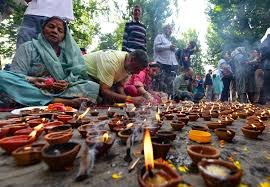
On June 22, 2026, the sacred spring of Mata Kheer Bhawani at Tulmulla in Ganderbal again became more than a shrine; it became a mirror in which Kashmir saw its wound, its memory and its still-living possibility of healing. Thousands of devotees gathered at the Ragnya Devi temple on Jyeshtha Ashtami, with reports noting that the first aarti began around 3 a.m., the shrine was decorated for the occasion, and Kashmiri Pandits arrived from Jammu, Delhi, Mumbai and other parts of India to offer prayers, milk, flowers and kheer at the spring. (Free Press Journal) The 2026 yatra was not confined to Tulmulla alone: organised pilgrim movement was arranged for the traditional Kheer Bhawani observances at Tulmulla in Ganderbal, Manzgam and Devsar in Kulgam, Logripora in Anantnag and Tikker in Kupwara, with reports placing the organised convoy in the range of more than 8,500 to around 9,000 pilgrims travelling in roughly 200-plus buses, while many others came independently. (The Economic Times)
The history of Kheer Bhawani begins in that meeting point between legend, land and inherited devotion which defines Kashmiri Hinduism. The presiding deity is Ragnya Devi, also called Maharagnya Bhagwati or Mata Kheer Bhawani, revered as a manifestation of Durga, and the name “Kheer Bhawani” comes from the ancient practice of offering kheer, the milk-rice pudding of domestic affection and sacred nourishment, into the holy spring. (jktdc.co.in) The official tourism tradition records that the present temple at Tulmulla was built by Maharaja Pratap Singh in 1912 and later restored by Maharaja Hari Singh, but its sanctity is placed much deeper in sacred memory: Lord Rama is said to have worshipped the goddess during exile, and after Ravana’s fall, Lord Hanuman is believed to have shifted her seat from Lanka to Kashmir at her wish. (jktdc.co.in) Another local tradition says that the goddess appeared in the dream of a Kashmiri Pandit, Rugnath Gadroo, and guided him to the spring at Tulmulla, making the site not merely discovered but revealed. (jktdc.co.in)
Religiously, Kheer Bhawani belongs most directly to Shaktism, the Hindu domain in which Shakti, the divine feminine power, is worshipped as supreme reality, mother, protector and liberating force. Britannica describes Shaktism as one of the major forms of modern Hinduism, centred on the worship of the Goddess as Shakti, the cosmic power that may be understood either as the supreme goddess herself or as the active power of Shiva. (Encyclopedia Britannica) In Kashmir, however, the goddess cannot be understood only through a neat sectarian label, because Kashmiri Hindu practice historically grew within a Shaiva-Shakta atmosphere where Shiva and Shakti are metaphysically inseparable. The Internet Encyclopedia of Philosophy notes that medieval Kashmir’s Shaiva and Shakta lineages were deeply intertwined and that in Kashmiri Shaiva thought Shakti is the power through which Shiva manifests, reveals and is recognised; one cited formulation is that “Shakti is the door.” (iep.utm.edu) This is why the spring at Tulmulla is not just water, and the goddess is not just an icon. The spring becomes the visible tremor of the invisible; it is matter as message, nature as scripture, and water as a ritual language through which a community reads its own destiny.
The belief that the colour of the spring changes and may indicate the condition of Kashmir has given the shrine an almost civilisational psychology. Official and tourism accounts record the belief that the spring’s colours change and that dark or black water is regarded by devotees as an omen of calamity. (jktdc.co.in) Whether one reads this literally, symbolically or psychologically, its meaning is profound: Kashmiri Hindus have long seen the goddess not as a remote divinity but as a mother whose environment responds to the moral weather of the land. The offering of kheer is therefore tender but not trivial. It is the act of feeding the Mother; it is also the act of admitting that a civilisation survives not by power alone but by nourishment, memory, service and return.
Five shrines, one pilgrimage: Tulmulla, Manzgam, Devsar, Logripora and Tikker
The geography of Kheer Bhawani in Kashmir is a sacred map of springs, goddesses, memory and old settlement patterns. Tulmulla remains the principal and most famous seat, but the 2026 observance again affirmed that the tradition is spread across several sites: Tulmulla in Ganderbal, Tikker in Kupwara, Manzgam and Devsar in Kulgam, and Logripora in Anantnag. (The Economic Times) These are not merely administrative locations; they are nodes in a religious landscape where the feminine divine is encountered through water, earth, village memory and community gathering.
Tulmulla is the great centre because it combines mythology, temple history, the sacred spring and the large annual congregation. On June 22, 2026, pilgrims there described the day not as a visit but as a homecoming. Avtar Kishan, who had come from Delhi, told Kashmir Reader that returning to the shrine felt like “a homecoming,” while Renu Devi said the pilgrimage was not only prayer but “a reunion with our roots.” (Kashmir Reader) Shobha Kaul described tears rolling down as she touched the soil, and Sanjay Razdan said he had brought his children so they could see the land of their ancestors and understand that the temple is “a symbol of identity, resilience and belonging.” (Kashmir Reader) In those sentences lies the emotional grammar of the mela: the deity is worshipped, but the lost homeland is also addressed; the spring receives offerings, but it also receives grief.
At Manzgam in Kulgam, the tone was more intimate, closer to the village memory of Kashmir. Video coverage from June 22 showed devotees offering prayers at the Manzgam Kulgam temple for peace, prosperity, harmony and well-being. (YouTube) Accounts from pilgrims at Manzgam described a mood of aching nostalgia: many remembered native homes and ancestral lanes, spoke of wanting to return, and watched with visible hope as local Muslims participated, helped, greeted and stood alongside them. These accounts also described langars becoming so crowded that food briefly ran scarce, after which individuals, organisations and uniformed personnel, including Army-linked support in the broader pilgrimage environment, stepped in to serve and organise additional food. The significance of such a scene is not logistical; it is moral. In a valley where the grammar of separation has often been louder than the grammar of belonging, the full langar becomes a small republic of shared hunger and shared service.
Devsar, especially the Khanbarni or Khanabarani sacred complex associated with Mata Tripur Sundari, represents another stream of the same goddess tradition in south Kashmir. A local religious account of the shrine describes the annual function there on Zesht Shukla Paksha Ashtami, notes participation across communities, and records that the Army has helped pilgrims with material assistance such as blankets, fruits and drinking water, while bhandara is served to all. (Panoramic Spots) This matters because the goddess at Devsar appears not merely as an object of private devotion but as a force that gathers strangers into the discipline of hospitality. A bhandara is not only food distribution; it is the theology of equality enacted through utensils, rice, vegetables, hands and time.
Logripora near Aishmuqam in Anantnag carries an explicitly philosophical resonance. A local account describes the ancient shrine of Mata Ragnya at Logripora as connected to the era of Satisar and marked by five springs, interpreted as a symbol of the five elements or panchtatva. (Kashmir Temple) If Tulmulla is the grand spring of collective return, Logripora is the contemplative spring of elemental memory. In Hindu philosophy, the five elements are not only physical substances; they are the layered constitution of embodied existence. A pilgrimage to such a site asks the devotee to remember that the body is earth and water, heat and air, space and consciousness; to pollute the land or the neighbour is therefore to pollute oneself.
Tikker in Kupwara, the northern node in the 2026 Kheer Bhawani circuit, completes the valley-wide spread of the observance. Government and media reports repeatedly listed Tikker with Tulmulla, Manzgam, Devsar and Logripora as one of the recognised sites for this year’s pilgrimage arrangements. (The Economic Times) Its inclusion is important because it prevents Kheer Bhawani from being reduced to a single temple story. The goddess, in the Kashmiri imagination, is distributed across the valley like a hidden nervous system: north, south and centre all have to be remembered if Kashmir is to be spiritually whole.
The 2026 mela also revived the old social image of local Muslims participating in the festival, selling flowers, milk and ritual items, helping pilgrims and welcoming old neighbours. Rising Kashmir reported that local Muslims at Tulmulla welcomed devotees and helped them with flowers, milk and ritual material, while emotional reunions with former Muslim neighbours were witnessed around the shrine. (Rising Kashmir) Kashmir Reader described the atmosphere at Tulmulla as one of devotion, spirituality and communal harmony, and noted the attendance of leaders including Lieutenant Governor Manoj Sinha, Chief Minister Omar Abdullah and Mehbooba Mufti, with the Chief Minister expressing hope that the festival would strengthen harmony. (Kashmir Reader) This year, therefore, the mela did not merely bypass fear through security; it bypassed fear through participation.
Exile, interruption and return: the message of the 2026 mela
To understand the force of this year’s gathering, one must remember the rupture. Before the militancy and terrorism of the late twentieth century tore apart Kashmir’s social fabric, the Kheer Bhawani Mela was widely remembered as a shared cultural occasion in which local Muslims participated with Kashmiri Hindus. Indian Express has noted that hundreds of local Muslims traditionally joined the mela, while Hindustan Times reported in 2024 that local Muslims participated in large numbers outside the shrine by setting up stalls and selling flowers, milk and puja items. (The Indian Express) Older and recent reports repeatedly preserve this memory of mutual presence: a local Muslim shopkeeper, Abdul Rahim, was quoted in 2025 saying that the festival had always been a symbol of Kashmiri brotherhood, while a pilgrim, Sunita Bhat, said that seeing Muslim neighbours welcome them brought tears to her eyes. (Northlines)
Then came the years of silence. In the 1990s, after the mass displacement of Kashmiri Pandits, the mela nearly disappeared from its natural home. Indian Express recorded that only a handful of devotees visited the shrine during the 1990s, while Kashmir Rechords described June 1, 1990, as a day when the Tulmulla shrine was almost empty after thousands had fled, with no usual flood of pilgrims, bhajans or children. (The Indian Express) The same historical account records that from 1991 to 1997 attendance remained sparse, mostly limited to small groups and government employees, before pilgrims gradually began returning under security and transport arrangements. (Kashmir Rechords) Another account of the post-exodus period notes that from 1990 to 1996 return was almost unthinkable, though local Muslims quietly protected the temple and small groups later began to return under heavy security before a slow resurgence emerged in the 2004–2010 period. (Kashmir Rechords)
That interruption did not erase the festival; it changed its meaning. Before exile, Kheer Bhawani was a seasonal pilgrimage. After exile, it became an annual referendum on memory. Each return to Tulmulla, Manzgam, Devsar, Logripora or Tikker says: we are still here, even if scattered; the goddess still calls, even if the village is lost; the spring still receives, even if the home remains locked. This is why the mela is central to Kashmiri Hindus in a way that outsiders often fail to understand. It is not only the second major Hindu gathering in Kashmir after the Amarnath Yatra, as Indian Express and Hindustan Times have described; it is the ritual form of Kashmiri Hindu continuity itself. (The Indian Express)
The records of recent years show a gradual return of scale. Hindustan Times reported around 33,000 devotees in 2023 and about 30,000 in 2024 at Tulmulla, while noting that local Muslim participation and commerce around the shrine remained visible. (Hindustan Times) In 2025, amid anxiety after the Pahalgam terror attack, footfall was reported as lower, yet the festival still continued and local Muslims again helped sustain the atmosphere of welcome. (Hindustan Times) In 2026, despite the burden of history and the continuing need for multi-layered security, the pilgrimage again drew large numbers, with the administration arranging transport, accommodation, sanitation, medical services, ration, LPG, langar facilities, parking and help desks across sites. (Free Press Journal)
The larger message of Kheer Bhawani in 2026 is not that conflict has ended; it has not. Nor is it that pilgrimage alone can solve political wounds; it cannot. Its message is more demanding: no society can heal if it loses the ability to gather in reverence. The modern world suffers not only from violence but from irreligiosity in the deeper sense: the loss of sacred attention, the inability to see another human being as a bearer of memory, grief and divine possibility. Kheer Bhawani answers that loss through bhakti. It says that religion, at its deepest, is not a slogan shouted against someone but a lamp lit before the Mother; not identity as aggression, but identity as offering; not memory as revenge, but memory as return with dignity.
Pilgrimage is central to the human being because we are not only thinkers and workers; we are returners. We return to rivers, graves, temples, childhood lanes, lost houses, mother tongues and old songs because the soul does not live by information alone. At Kheer Bhawani, the Kashmiri Hindu returns to the goddess, but he also returns to the possibility that Kashmir may yet become a place where memory is not punished. The local Muslim who sells flowers, serves water, guides a pilgrim or recognises an old neighbour is also returning, returning to an older ethic and ethos of Kashmir in which sacred difference did not require social distance. Reports from Tulmulla this year described precisely such scenes of welcome, help and reunion. (Rising Kashmir)
Kashmir can evolve from these examples only if they are treated not as public-relations spectacles but as moral seeds, fragile yet capable of renewing an entire civilisation if allowed to take root in public life and private conscience. Security is necessary, but security alone cannot create belonging; development is necessary, but development alone cannot restore trust, for a society is not healed merely by roads, barricades, buildings or announcements, but by the slow resurrection of reverence between people, places and memories. The lesson of Kheer Bhawani is that a civilisation is repaired by repeated acts of sacred tenderness: a pilgrim touching the soil of an ancestral land, a Muslim neighbour offering flowers, an Army jawan helping organise a crowd, a langar feeding whoever arrives, a displaced family teaching its children the name of a spring they may never have grown up beside but still carry within their inherited soul. For the exiled Kashmiri Hindu community, revisiting such metaphysical sites is not only a physical return to temples, springs and villages; it is an inward rediscovery that divine consciousness is never truly absent from the individual, even when the individual is torn away from homeland, history and house. The sacred site becomes a mirror in which the exile realises that God was not lost with the loss of place; rather, the place remained alive within God-consciousness, waiting to be recognised again through pilgrimage, prayer and tears. On June 22, 2026, the mela showed that the goddess still gathers what history scattered. The spring at Tulmulla, and the sister shrines across Manzgam, Devsar, Logripora and Tikker, did not ask Kashmir to forget its pain. They asked it to consecrate that pain into return, service and devotion. In a time of conflict, non-spirituality and noisy certainties, that may be the most radical message of all: feed the Mother, serve the pilgrim, remember the neighbour, return to the sacred, and let the valley learn again how to become not only peaceful, but spiritually whole.
About the Author