Dr Tawseef Ahmad, Research scholar, History
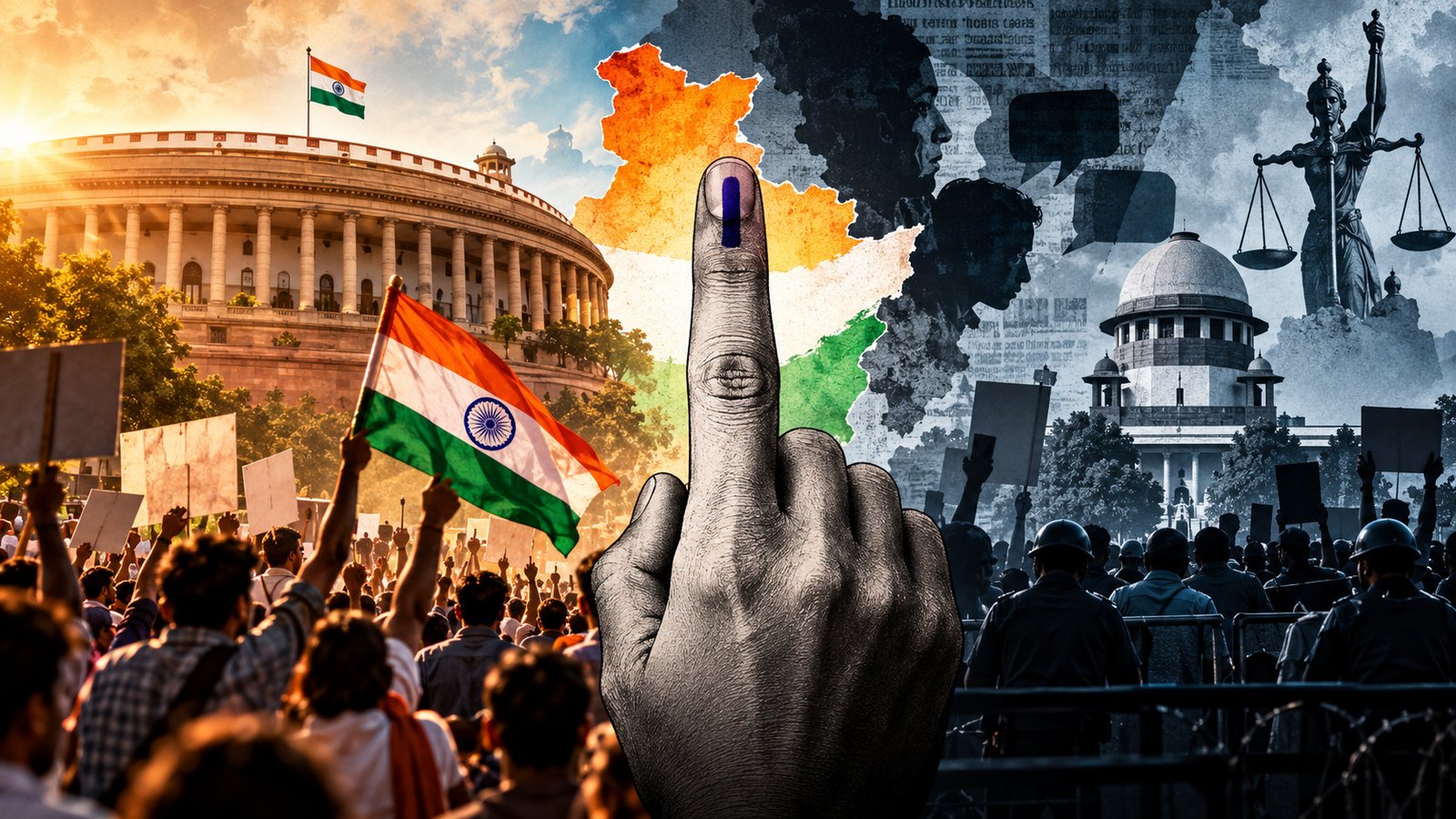
Elections turn disagreement into power. The task for a plural republic is not to hush the disappointed but to build institutions that make losing bearable and dissent safe.
Democracy is rarely a quiet conversation. It is a standing contest of interests, identities and visions of the future, and elections sharpen that contest by converting opinion into power. Adam Przeworski (1991) distilled the logic into a deceptively simple proposition: democracy is a system in which parties lose elections. The real test, then, is not whether disappointment exists but whether the disappointed can live with it. Anderson et al. (2005) show that this “losers’ consent” rests less on temperament than on institutions: on whether the defeated believe the process was fair and that another chance will come.
In India, where a single election absorbs an extraordinary plurality of languages, faiths, castes and regions, the stakes of that consent are unusually high. A dispute over a ballot can quickly become a dispute over belonging. The task is to lower the temperature without lowering the ceiling on expression. Peace cannot mean silence, and public order cannot be reduced to the absence of visible dissent.
Disagreement is not the enemy of order
The Constitution anticipates this. Article 19(1) protects speech and expression, peaceful assembly without arms, and the formation of associations, while clauses (2) to (4) permit only reasonable restrictions. The Supreme Court has read that qualifier strictly. In Anuradha Bhasin v. Union of India (2020), it held that restrictions affecting expression, including indefinite internet suspensions, must be proportionate, published and open to judicial review. Liberty is the rule; restriction must justify itself. Such freedoms are foundations of stability, not obstacles to it.
Political theory explains why this matters. Chantal Mouffe (2000) argues that a pluralist democracy does not abolish conflict but converts antagonism, a struggle between enemies, into agonism, a contest between adversaries who accept one another’s legitimacy. Levitsky and Ziblatt (2018) identify kindred conditions in mutual toleration and institutional forbearance: rivals who treat each other as legitimate and decline to use every power available to them. Suppressing a legitimate question may thin the crowd on the street, but it leaves the grievance intact and teaches citizens that institutions are deaf.
Equally, freedom is not licence. Peaceful criticism must be distinguished from threats, intimidation and incitement. Democratic argument targets decisions and ideas, never the dignity or safety of opponents.
“Political disagreement should be intense enough to expose failures, yet restrained enough to preserve the possibility of coexistence.”
How a grievance becomes a confrontation
Tension rarely has a single cause. An electoral announcement or disputed decision prompts concern; a clipped video or anonymous forward circulates before anyone has verified it; influential voices read the episode in its most provocative light. People then respond not to facts but to rival narratives. Vosoughi, Roy and Aral (2018) found that false stories on Twitter travelled farther and faster than true ones, and that humans, not bots, were chiefly responsible. Once a controversy acquires an emotional charge, correction is heard as an attack on identity rather than an invitation to reconsider; Sunstein (2017) describes how like-minded networks harden precisely this reflex.
Escalation is also political. Wilkinson (2004) shows that ethnic violence in India is shaped less by ancient hatreds than by electoral incentives and by whether state governments choose to restrain it. Rhetoric that casts opponents as enemies of the nation or threats to a community converts a contest over policy into a conflict over belonging. De-escalation must therefore begin before the confrontation, with officials who explain procedures promptly, acknowledge errors and answer unfounded allegations with evidence rather than dismissal.
Verify before you forward
Responsible citizenship now requires a simple discipline: verify before sharing, distinguish allegation from evidence, and correct misinformation when it is found. Citizens can trace a claim to its source, check whether reputable outlets corroborate it and, on electoral matters, consult the Election Commission of India, the Chief Electoral Officer or the District Election Officer. Information literacy is thus a civic virtue: it tethers disagreement to verifiable facts rather than imagined threats.
Yet verification must never become deference. Official statements remain open to scrutiny, and independent journalism, documentary evidence and lawful complaint are the instruments of accountability. There is a difference between asking for evidence and silencing criticism; a democracy should insist on both. Those who make serious allegations should be ready to substantiate them, and those who hold power should be ready to be questioned. The objective is not unquestioning trust but informed judgement.
Protest is not a failure of democracy
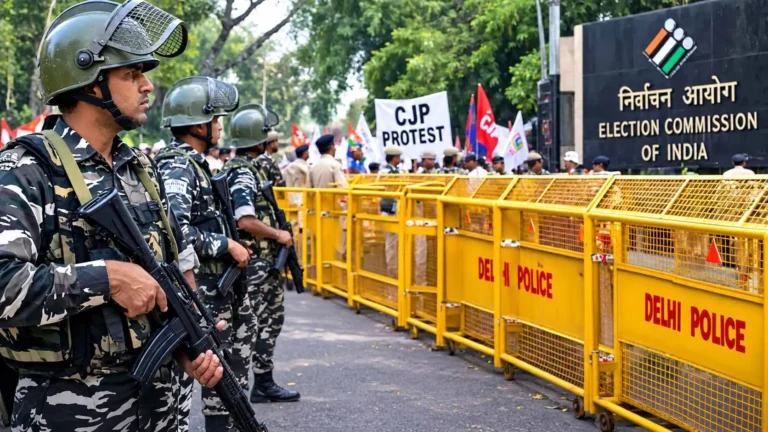
A common error in tense moments is to read protest itself as evidence of instability. Charles Tilly (2004) treated demonstrations as part of the repertoire through which ordinary people make claims on power when other channels fail. Peaceful assemblies surface administrative failures, demands for fair representation and local grievances that electoral competition alone does not resolve. In In re Ramlila Maidan Incident (2012), the Supreme Court recognised peaceful assembly and protest as protected rights, subject to reasonable restriction. Limits must be grounded in law and applied proportionately, never merely because a gathering is inconvenient to those in office.
Organisers carry duties of their own: clear communication, a commitment to non-violence, and the discipline to defuse provocation, discourage property damage and refuse communal hostility. Principle and strategy point the same way. Chenoweth and Stephan (2011), studying campaigns between 1900 and 2006, found that nonviolent movements were more likely to achieve their aims than violent ones. The right to protest and the responsibility to protect others are complementary, not contradictory.
Institutions that answer back
Appeals for calm ring hollow when institutions do not respond. De-escalation cannot rest on asking citizens to be patient; it requires credible routes for grievance. Electoral authorities should publish how complaints are lodged and decisions challenged, acknowledge them promptly and give reasoned replies. Election disputes have a statutory home in election petitions under the Representation of the People Act, 1951, and parties should use such mechanisms rather than rely solely on inflammatory statements, without implying that every adverse result is illegitimate or every official decision beyond challenge.
District administrations and police are equally central. Impartiality, professionalism and restraint, together with early dialogue with organisers and residents, can address concerns before they harden; any intervention must be lawful, proportionate and accountable. Transparency matters most when allegations concern public authorities themselves. Institutional credibility is not secured by demanding trust. It is earned through consistent conduct, fairness and a willingness to answer difficult questions.
Local leaders and the Kashmir test
In plural societies, local leaders are often the first point of contact between public anxiety and institutional response. Varshney (2002) demonstrated that cross-community civic associations, from business bodies to trade unions, helped Indian towns resist communal violence by checking rumours and sustaining communication in moments of stress. Teachers, civil-society groups, religious figures and youth organisations can play comparable roles. Their purpose is not to instruct citizens to abandon grievances but to facilitate dialogue, encourage verification and point towards lawful redress.
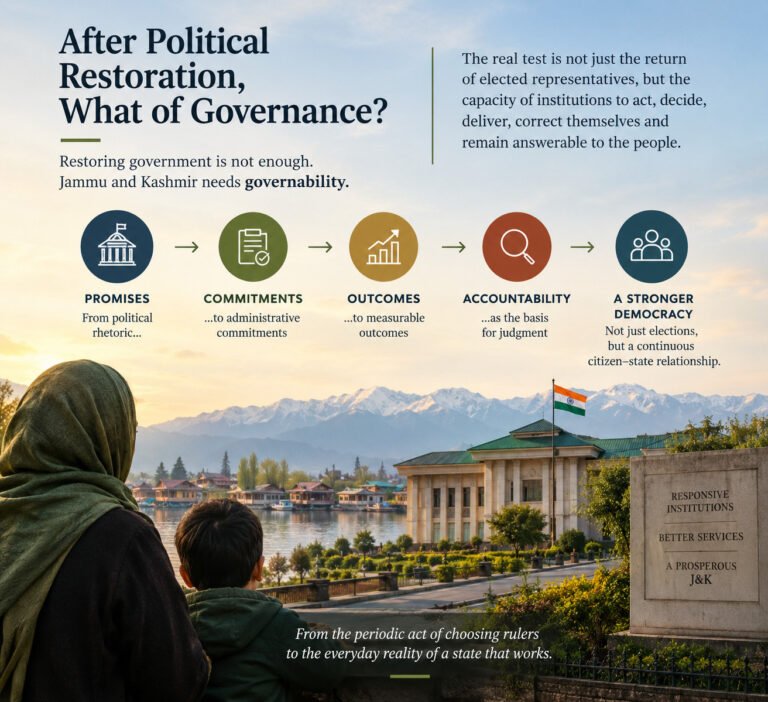
In Jammu and Kashmir, this requires particular attentiveness. Electoral developments are read through lived experiences of representation, security and historical mistrust, and communication that ignores them appears distant or dismissive. The answer is neither to presume every grievance justified nor to treat every expression of dissatisfaction as a threat, but to listen, separate evidence from speculation and respond to specific concerns fairly. Young people, at once the most active digital participants and the most promising advocates of peaceful engagement, deserve sustained investment in media literacy and constitutional education. Stepan, Linz and Yadav (2011) argue that India’s distinctive strength as a “state-nation” lies in accommodating multiple identities without demanding uniformity; that insight applies with special force here.
Restraint must be reciprocal
De-escalation is sometimes misread as a demand that the aggrieved make the first concession. That is neither fair nor sustainable. Where a legitimate grievance exists, responsibility for addressing it lies with those in authority; where misinformation circulates, its sources should correct it; where violence or intimidation occurs, accountability must follow by lawful process. Citizens should avoid violence and unverified accusations, leaders inflammatory rhetoric, authorities partiality, and journalists the temptation to prefer sensation to verification, without false equivalence between supported and unsupported claims.
Accepting an outcome, finally, does not surrender the right to question its administration. The vote confers a mandate, not unlimited authority, and it does not relieve the winner of the duty to listen. Electoral legitimacy and public accountability must operate together.
Peace through participation
India’s democratic strength lies in its capacity to accommodate differences that cannot always be reconciled. Elections will keep producing winners and losers, enthusiasm and anger. What matters is the framework within which those emotions are expressed. The health of a democracy is not measured by empty streets or muted criticism, but by whether citizens can express dissatisfaction without fear, whether allegations are examined fairly and whether authorities communicate openly.
The goal is not peace through silence but peace through participation: a democratic order in which disagreement is met with evidence, grievances with credible remedies and protest with principled restraint. A mature democracy is not one in which citizens stop arguing. It is one in which they argue without abandoning truth, dignity, constitutional values or one another. Calm, in this sense, is the product of fairness rather than a substitute for it.
About the Author