Written by: Anusreeta Dutta
In Jammu and Kashmir, eating is more than just that. It’s a language that shows who you are, what you remember, and how you subtly rebel. The smells of boiling meat, the deep reds of heated gravies, and the light scent of saffron-laced tea all show a culture and the things that are used to cook. Kashmiri food is a reflection of the people’s past, their strength, and their strong sense of who they are. This area is often defined by conflict and geopolitics.
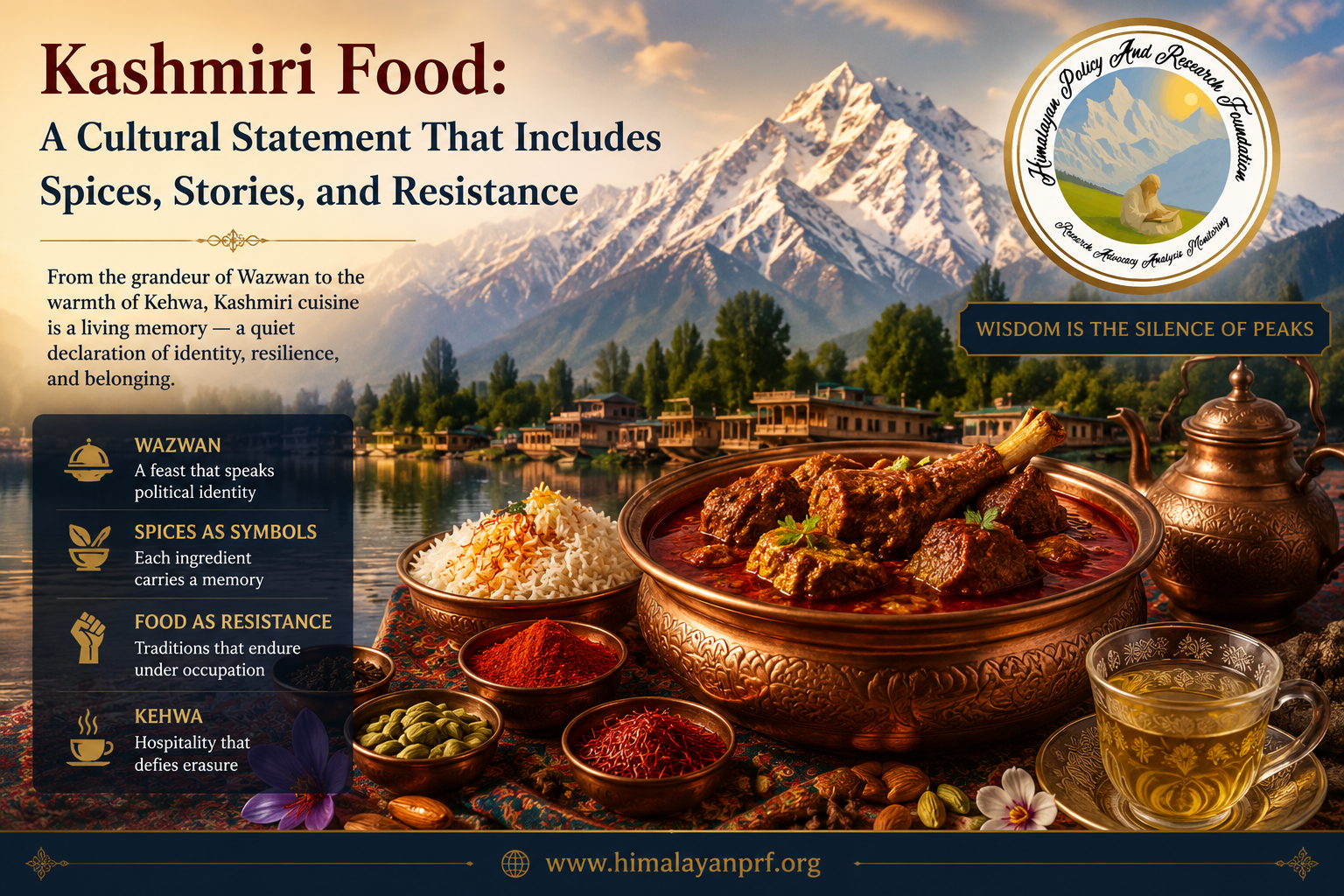
A Feast That Speaks: Wazwan’s Political Identity
The history of Kashmiri cuisine is strongly linked to the tradition of Wazwan, a large multi-course banquet that is an important aspect of Kashmiri culture. Wazwan offers more than just wedding and festival meals. Wazas, or master chefs, have been producing it for decades. It is a ceremonial gesture that indicates that things will continue to progress even when circumstances are awful.
The foods, which include saffron, cardamom, fennel, cloves, and the famous red chili powder called deg, show how cultures have mixed over the years. Persian, Central Asian, and Mughal flavors have come together perfectly with local Himalayan ingredients to make a cuisine that is both beautiful and deeply rooted. Rogan Josh, Yakhni, Gushtaba, and Rista are some of the most famous dishes that bring back memories of royal courts, Sufi traditions, and trade routes that used to go through the Valley. But the way they are made and performed now tells a different story: one of keeping cultural identity alive in an uncertain present. Everyone follows the rules when making wazwan. These rules include washing their hands in copper containers (tasht-e-naer) and sharing a big plate (trami). Every gesture is a sign of a cultural norm or a sense of belonging to a group. Being a part of a wazwan makes you feel like you belong to a group. Food brings people together in a gentle way in a place where political stories are often broken.
Spices as Symbols: Each Ingredient Has a Memory
You need to know the spices in Kashmiri food to understand it. The saffron, red chile, and cardamom that give the Valley’s food its flavor are more than just spices; they also represent the Valley’s people, place, and climate. People call Pampore the “Saffron Town of Kashmir” because it grows the best saffron in the world. People have been farming here for more than 2,000 years. This golden spice is a symbol of Kashmiri culture that is deeply connected to both farming and religious traditions. In the same way, the strong red chile that grows in the area gives Kashmiri gravies their unique red color. It isn’t too hot, but it smells great and adds color and warmth to the dish.
Every spice in a Kashmiri kitchen has a story: farmers working in fragile Himalayan ecosystems, trade caravans crossing mountains, and grandparents passing down secret mixes. When the outside world tries to change the stories about Kashmir, keeping these food traditions alive is a quiet way of saying, “We are still here.”
Food Under Occupation: Quietness and Assertion
Culture often becomes a battleground in places where there is war. For decades, the Valley has been marked by political conflict, militarization, and competing nationalist stories. In this kind of situation, Kashmiri food has often been a small but powerful way to fight back.
People don’t make their case with loud slogans; instead, they do things like making wazwan at weddings with traditional copper pots, insisting on local saffron instead of cheaper substitutes, and making kehwa as part of winter hospitality rites. These customs say that we should keep our traditions.
In Srinagar’s markets, people often talk about both food and politics at the same time. When saffron prices go up and down or the weather affects crops, these are more than just economic changes; they also affect cultural continuity. Families that store dried vegetables (hokh syun) for the long winters are not only saving food, but they are also practicing self-sufficiency that has been around for hundreds of years. This is work on identity. It means that culture stays strong even when things are unclear.
Kehwa: Hospitality as Defiance.
If wazwan is a great celebration of assertion, Kehwa is a daily ritual of silent opposition. Kehwa is green tea infused with saffron strands, cardamom, cinnamon, and, on occasion, almonds. It is served in small, delicate cups with etched golden rims. It is the first thing provided to guests, the last thing served after a meal, and the defining feature of Kashmiri hospitality.
Serving kehwa in Kashmir is more than just a habit; it is a symbol of respect. Even during curfews, disturbances, and hardships, kehwa makes its way to the table. The ritual of heating water with spices, allowing the perfume to fill the room, then serving it with grace expresses the idea that “our culture endures.” You can’t take away what dwells in our kitchens.
The perfume of kehwa is frequently associated with weddings, community meetings, and even quiet evenings in winter when snow falls outdoors. In some ways, it is the Valley’s way of communicating to the rest of the world that we exist on our terms.
Women and the Kitchen: Sites of Power
Much of Kashmiri cuisine exists in the home, where women are the primary keepers of recipes and traditions. For millennia, Kashmiri women have passed down oral culinary traditions that have never been written down, including spice mixes, seasonal preservation methods, fermentation procedures, and festival feasts.
This household archive becomes a cultural bulwark. In many households, the grandmother’s spice box establishes the family’s culinary identity. In the face of political upheaval, these women maintain their memory and identity through regular acts of cooking.
They’re also quietly adapting. When access to ingredients is disturbed, whether by climatic change or governmental restrictions, substitutes and inventions occur, but always in ways that preserve cultural grammar. This flexibility within tradition is also a kind of resistance: adjusting without erasing.
Culinary Heritage and Diaspora
Kashmiri food is not limited to the valley. Forced and voluntary migration has spread its smells all over India and the world. Kashmiri immigrants in cities like Delhi, Pune, and London recreate wazwan in their homes and restaurants, keeping a part of their culture alive through food.
Food brought back memories for Kashmiri Pandits who left the Valley in the early 1990s. Some of the foods that were kept in exile were Dum Aloo, Modur Pulav, and Nadur Yakhni. They were often more accurate than other cultural activities. When landscapes were lost, food helped people feel better and passed on their culture to future generations.
For younger generations who were born outside of Kashmir, learning these recipes is often a way to remember their roots. Second-generation migrants frequently comment, “I learned to cook wazwan to feel closer to home.” The kitchen becomes a site for cultural recovery.
Globalization, commercialization, and the quest for authenticity
Like many native foods, Kashmiri food is being hurt by globalization in two ways. More and more restaurants in India and other countries are serving “Kashmiri dishes,” but the recipes are often changed or made easier. Rogan Josh may be served without its trademark Kashmiri chili, and kehwa without saffron. These versions may be popular, but they lack cultural substance.
Local chefs and culinary activists in Kashmir have begun to claim authenticity as a method of resistance. Food festivals, culinary classes, and documentation projects seek to recover the narrative from commercial dilution. By insisting on traditional procedures and ingredients, they defend not only recipes but also cultural ownership.
This battle for authenticity is about more than just taste; it is also about controlling cultural representation. In a place where external narratives frequently take precedence, safeguarding the integrity of food is another way to reclaim the tale.
Cuisine as a Political Text.
In Kashmir, food is an unspoken but powerful political text. When families gather for wazwan and kehwa is served in beautiful cups, or when farmers grow saffron despite changes in the weather, these are all ways of affirming their culture. They are statements of continuity, identity, and belonging.
Kashmiri food shows the world that there is a living, breathing culture that fights to stay alive through everyday activities in a place that is often only known for conflict. Food is like a map and a memory at the same time; it helps us remember things we can’t lose.
The story of Kashmiri food is not one of passive tradition,but of active, everyday resistance. Spices have stories, foods have identities, and kitchens become places of power. The scent of saffron and the red of Kashmiri chile send a message: our culture is strong, not weak.
Kashmiri food keeps expressing itself, whether it’s in the Valley, in migrant kitchens, or on tables around the world. That might be its best feature. Food lasts when words don’t.
————————————————————————————————————
About the author:
Anusreeta Dutta is a columnist and climate researcher with prior experience in political research and ESG analysis.
About the Author