www.himalayanprf.org
By: Zubair Ahmad Bhat (Senior Research Fellow)
Afghanistan has once again returned to the centre of South Asia’s geopolitical imagination, not as a theatre of grand ideological projects, but as a space where the anxieties of neighbouring states are quietly projected and contested. The recent intensification of Pakistan-Afghanistan tensions does not merely mark another episode in their historically fraught border politics; it reveals a deeper structural condition of the region: the persistent instability of Pakistan’s west, and the gradual reconfiguration of Afghanistan from a Pakistani “strategic asset” into a contested and fragmented geopolitical arena. For India, this shift is neither straightforwardly beneficial nor unambiguously destabilising. It is, rather, a condition that reshapes strategic possibilities in ways that are indirect, uneven, and often counterintuitive.
To understand India’s stake in this evolving configuration, one must begin by dispelling a common misreading: that India seeks either influence over Afghanistan or the weakening of Pakistan through Afghan instability per se. This is too mechanical a view of strategic thinking. India’s interest lies not in the production of instability, but in the prevention of monopolised stability- that is, a regional order in which Afghanistan becomes structurally dependent on a single external power, especially Pakistan. The distinction is crucial. India’s geopolitical anxiety has historically been less about Afghanistan as an independent actor and more about Afghanistan as an extension of Pakistani strategic imagination.
Pakistan’s doctrine of “strategic depth” has long been interpreted as an attempt to secure Afghanistan as a rear space in the event of conflict with India, or at the very least, as a politically friendly buffer that neutralises India’s presence in the western arc of South Asia. While this doctrine has evolved and become more contested within Pakistan’s own strategic community, its legacy persists in the form of enduring attempts to maintain influence over
Afghan political and security structures. From India’s perspective, therefore, Afghanistan is not a distant periphery but an integral component of the regional balance of power. The durability of Pakistani influence in Kabul has always implied a structural constraint on India’s continental and Central Asian connectivity.
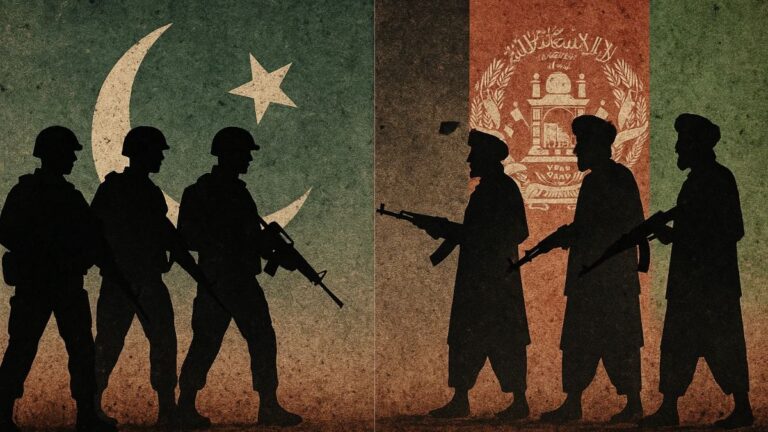
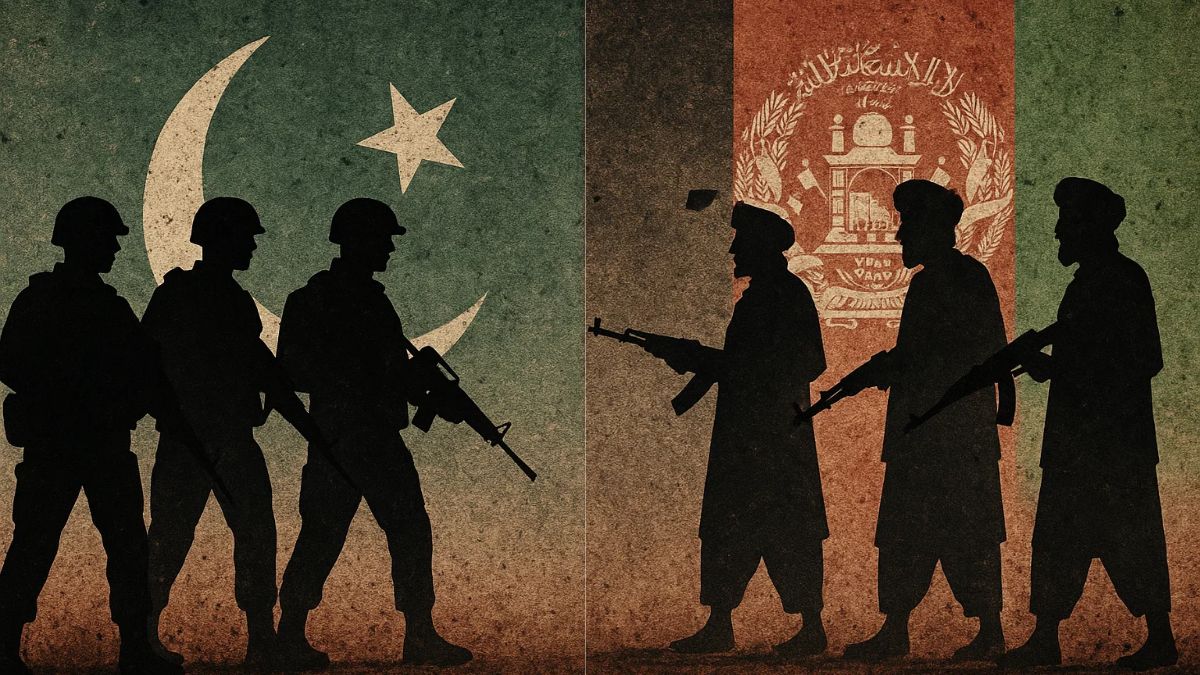
It is within this framework that the current Pakistan-Afghanistan tensions acquire significance. The escalation of cross-border strikes, retaliatory rhetoric, and mutual accusations over militant sanctuaries signals not merely a breakdown in bilateral relations, but a deeper erosion of Pakistan’s assumed leverage over Afghan territory. The Taliban’s return to power in 2021 was initially interpreted in some Pakistani strategic circles as a moment of advantage- a political configuration that might finally yield a compliant Kabul. That expectation has proven increasingly fragile. Instead of producing alignment, the new Afghan dispensation has generated friction, particularly around the presence and operations of anti-Pakistan militant groups such as the Tehrik-i-Taliban Pakistan (TTP).
The consequence is a paradoxical inversion: Pakistan, once the principal external influencer of Afghan political outcomes, now finds itself militarily engaged in coercive actions against the very territory it had historically sought to dominate through non-conventional means. Afghanistan, in turn, while lacking international recognition and facing severe economic constraints, has begun to assert a form of sovereignty rooted not in institutional strength but in refusal- refusal to fully internalise Pakistan’s security demands. This mutual antagonism has created a volatile equilibrium along the Durand Line, one that is characterised less by decisive war or peace than by periodic escalation and managed retaliation.
It is precisely in this unstable equilibrium that India’s strategic interest must be located. Contrary to a simplistic zero-sum interpretation, India does not derive advantage from Afghan instability or humanitarian deterioration. Rather, its interest lies in the deconcentration of Pakistani influence in Afghanistan. When Pakistan is compelled to divert military attention to its western frontier, its strategic bandwidth vis-à-vis India is inevitably constrained. This is not a matter of opportunistic advantage in a narrow sense, but of structural redistribution of attention and resources within Pakistan’s security establishment.
The logic here is subtle but significant. Pakistan’s military doctrine has historically been India-centric, with Afghanistan functioning as a strategic extension of that orientation. However, sustained conflict along the western border introduces a condition of strategic
overstretch. Resources that might otherwise be directed eastward are reallocated to counterinsurgency operations, border management, and internal security crises. The result is not Pakistan’s collapse, but its multi-directional preoccupation, which weakens the coherence of its external strategic posture.
From India’s perspective, this development has two implications. First, it dilutes the possibility of a consolidated Pakistan-Afghanistan axis that could potentially marginalise Indian presence in the region. Second, it opens limited but meaningful diplomatic space for India to re-engage Afghanistan through non-military instruments- humanitarian aid, infrastructure projects, and selective diplomatic communication channels. These forms of engagement are not designed to produce alignment, but to ensure that Afghanistan does not become an exclusively Pakistan-dependent geopolitical space.
However, this argument must be handled with care, for it risks slipping into a romanticisation of instability. A fragmented or conflict-prone Afghanistan does not automatically translate into strategic advantage for India. On the contrary, excessive instability generates its own set of risks: the proliferation of non-state armed actors, increased radicalisation pressures across the region, humanitarian crises that spill across borders, and the possibility of greater external penetration by other powers seeking opportunistic influence. China, for instance, has already demonstrated a willingness to engage pragmatically with the Taliban regime, particularly in relation to mineral extraction and connectivity projects. Iran, too, maintains its own layered engagement with western Afghanistan. In such a context, instability does not produce a vacuum; it produces competitive pluralisation of external influence, which is not necessarily aligned with Indian interests.
This brings us to a more refined formulation of India’s strategic preference. India does not seek a weak Afghanistan, nor a strong Pakistan-aligned Afghanistan. It seeks, instead, a condition that might be described as asymmetric pluralisation: an Afghanistan that is sufficiently autonomous to resist domination by any single regional power, yet sufficiently stable to prevent its territory from becoming a persistent security threat. This is a delicate equilibrium, and perhaps an inherently unstable one. But it captures the essence of India’s geopolitical imagination in the region.
Within this framework, the Pakistan-Afghanistan conflict plays a specific structural role. It disrupts the possibility of bilateral consolidation between Kabul and Islamabad. It forces
Afghanistan to look outward for alternative partnerships, however limited. And it compels Pakistan to recognise the limits of coercive leverage in shaping Afghan political outcomes. In doing so, it redistributes regional influence in ways that indirectly benefit India’s strategic flexibility.
Yet one must also recognise the deeper irony embedded in this configuration. India’s historical absence from Afghanistan’s immediate security architecture means that it is often a reactive beneficiary of developments it does not directly shape. Unlike Pakistan, which has maintained dense operational linkages within Afghanistan for decades, India’s engagement has been largely developmental and symbolic in military terms. This asymmetry imposes constraints on India’s ability to translate geopolitical openings into sustained influence. In other words, India’s gains are often structural rather than operational, positional rather than directive.
This raises a further analytical question: can such a strategy be sustained in the long term? Can a regional power rely on the weakening of rival influence without simultaneously investing in robust alternative architectures of engagement? The answer is uncertain. What is clear, however, is that India’s Afghan strategy has increasingly shifted from ambition to calibration- from attempts at shaping outcomes to efforts at preserving optionality.
At a broader level, the Pakistan-Afghanistan dynamic also reflects the exhaustion of older geopolitical imaginaries in South Asia. The idea of fixed spheres of influence, clearly demarcated buffer states, and stable proxy relationships has eroded under the pressure of fragmented sovereignty, non-state militancy, and transnational insurgent networks. Afghanistan is no longer a buffer in the classical sense; it is a contested interface. Pakistan is no longer able to unilaterally structure outcomes there. And India is no longer an external observer but an indirect stakeholder in a system it does not fully enter.
In such a context, strategic thinking must move beyond binary categories of gain and loss. The more appropriate lens is one of relational instability, where the value of any development lies in how it reshapes the configuration of constraints and possibilities for multiple actors simultaneously. The Pakistan-Afghanistan conflict, viewed through this lens, is not an event to be judged in isolation, but a process that continuously reorders regional equations.
Ultimately, India’s interest in Afghanistan cannot be reduced to the simplistic logic of advantage-seeking. It is better understood as a concern with preventing the monopolisation of
a critical geopolitical space by a rival power, while simultaneously avoiding the collapse of that space into ungovernable disorder. This is a narrow corridor of strategic possibility, defined as much by limits as by ambitions.
Afghanistan today is not a prize to be won, nor a vacuum to be filled. It is a site where the contradictions of regional power are continuously negotiated without resolution. The Pakistan-Afghanistan conflict merely makes these contradictions more visible. For India, the task is not to resolve them, but to navigate them with a degree of analytical restraint that recognises both the opportunities and the profound limits of influence in a region where certainty has long ceased to exist.
About the Author