The War in Iran and the Shadow of a Global Energy Crisis
By Arshia Malik
Any attempt to understand a large-scale military confrontation involving the United States, Israel, and Iran in 2026 must move beyond the immediacy of battlefield developments and instead situate the conflict within the deeper structures of global political economy, energy dependence, and strategic geography. Wars in the Persian Gulf region have never been merely regional affairs; rather, they are systemic that reverberate across continents because they intersect with one of the most critical arteries of modern capitalism-the Strait of Hormuz. This narrow maritime corridor, through which a significant proportion of the world’s seaborne oil and liquefied natural gas passes, transforms any localized disruption into a global crisis. In this sense, the 2026 war- whether interpreted as an actual unfolding conflict or as a rigorous analytical scenario- must be read as an illustration of how contemporary warfare is inseparable from the infrastructures that sustain global economic life.
The historical genealogy of such a conflict is neither sudden nor accidental. It is rooted in the long arc of antagonism that followed the 1979 Iranian Revolution, which fundamentally altered the geopolitical orientation of Iran and recast it as a state in ideological opposition to both the United States and Israel. The revolution did not simply replace one regime with another; it transformed Iran’s identity within the international system, embedding a narrative of resistance against Western hegemony and Zionism. Over subsequent decades, this antagonism manifested through a combination of direct confrontation, covert operations, and, most significantly, the cultivation of asymmetric capabilities. Iran’s reliance on proxy networks, including groups such as Hezbollah and Hamas, allowed it to project influence without engaging in conventional interstate war. This strategy reflects what scholars of international relations describe as “hybrid warfare,” where state and non-state actors operate in tandem to complicate the strategic calculations of adversaries.
At the same time, Israel’s security doctrine- shaped by its perception of existential threat has consistently emphasized pre-emption and deterrence. This doctrine has been evident in earlier operations targeting nuclear facilities in the region, and it remains central to Israeli strategic thinking. The United States, for its part, has oscillated between containment and confrontation in its approach to Iran, influenced by broader considerations of regional stability, energy security, and alliance commitments. The convergence of these three actors within a single conflict scenario thus reflects not a breakdown of order, but rather the culmination of long-standing tensions embedded within the regional security architecture.
What distinguishes the 2026 conflict from earlier episodes, however, is the scale at which military operations intersect with economic infrastructures. Modern warfare, often characterized by precision strikes and advanced technologies, is frequently perceived as
limited or contained. Yet this perception obscures a crucial reality: when such warfare targets critical nodes- energy facilities, shipping lanes, or industrial complexes- the consequences extend far beyond the immediate theatre of conflict. The targeting or disruption of the Strait of Hormuz exemplifies this dynamic. Unlike territorial conquests, which may have localized impacts, disruptions to maritime chokepoints generate cascading effects across global supply chains.
The concept of the chokepoint is central to understanding this phenomenon. In geopolitical theory, chokepoints are narrow passages whose control or disruption can influence the flow of essential goods. The Strait of Hormuz is perhaps the most significant of these in the contemporary world economy. It is not merely a geographical feature; it is an infrastructural linchpin that sustains the energy needs of industrial economies. The concentration of oil exports from Gulf producers through this corridor creates a structural vulnerability. As a result, even a partial disruption whether through military action, blockade, or insurance withdrawal can trigger disproportionate economic consequences.
Historical precedents underscore this vulnerability. The 1973 Oil Crisis demonstrated how political decisions affecting oil supply could induce inflation, recession, and geopolitical realignment across the globe. More recently, the Russia-Ukraine War revealed the fragility of energy interdependence in a globalized economy. In both cases, disruptions to energy supply chains produced effects that extended far beyond the immediate conflict zones, reshaping economic policies and strategic priorities in distant regions. The 2026 conflict must therefore be understood not as an anomaly, but as part of a broader pattern in which energy and geopolitics are deeply intertwined.
From the perspective of international political economy, the war illustrates the dynamics of what can be termed “weaponized interdependence.” In an interconnected world, states are linked through networks of trade, finance, and infrastructure. These linkages, while facilitating economic growth, also create opportunities for coercion. Control over key nodes, whether financial systems, supply chains, or maritime routes enables actors to exert influence beyond their immediate capabilities. In the case of Iran, the ability to threaten or disrupt traffic through the Strait of Hormuz provides a form of strategic leverage that compensates for asymmetries in conventional military power. For the United States and its allies, the challenge lies in securing these networks while avoiding escalation that could further destabilize them.
The economic consequences of such a disruption are both immediate and long-term. In the short term, reductions in supply lead to price spikes in global oil markets. These price increases, in turn, feed into inflationary pressures across economies, raising the cost of transportation, manufacturing, and agriculture. The ripple effects are particularly severe in import-dependent regions, where energy costs constitute a significant portion of economic expenditure. In the longer term, sustained disruptions can alter investment patterns, accelerate diversification efforts, and reshape the global energy landscape. However, such transitions are neither rapid nor frictionless. While renewable energy sources offer alternatives, their scalability and integration into existing systems remain constrained in the short run.
The differential impact of the crisis across regions further complicates the picture. Advanced economies, while affected by rising energy costs, often possess strategic reserves and institutional mechanisms to mitigate short-term shocks. Developing economies, by contrast, face more acute vulnerabilities. Balance-of-payments pressures, currency depreciation, and fiscal constraints limit their ability to absorb price increases. The result is a widening of global inequalities, as the burdens of the crisis are distributed unevenly across the international system.
At the same time, the conflict reshapes geopolitical alignments. Major powers respond not only to the immediate security implications, but also to the economic opportunities and risks created by the crisis. Energy exporters may benefit from higher prices, while importers seek alternative sources and routes. Diplomatic initiatives emerge as states attempt to de-escalate tensions and restore stability. Yet such efforts are often constrained by competing interests and mistrust among the parties involved.
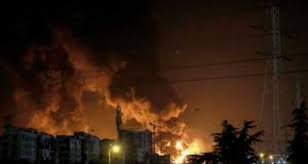
The humanitarian dimension of the conflict must not be overlooked. While discussions of energy markets and geopolitical strategy dominate policy discourse, the human costs of war remain profound. Civilian casualties, displacement, and the destruction of infrastructure create long-term social and economic challenges. The targeting of industrial facilities, for instance, can result in environmental damage with lasting consequences for public health and livelihoods. These impacts, while less visible in global analyses, are central to understanding the full scope of the conflict.
Moreover, the war raises normative questions about the conduct of international relations. The use of pre-emptive force, the targeting of critical infrastructure, and the broader implications for international law are subjects of ongoing debate. The legitimacy of such actions, and the responses they provoke, shape the evolution of norms governing the use of force. In this sense, the conflict is not only a material thing, but also a site of contestation over the principles that underpin the international order.
From a theoretical standpoint, the 2026 conflict can be interpreted through multiple lenses. Realist perspectives emphasize the role of power and security competition, highlighting how states act to preserve their interests in an anarchic system. Liberal approaches focus on the breakdown of cooperation and the failure of institutions to manage conflict. Critical theories, meanwhile, draw attention to the underlying structures of capitalism and imperialism that shape the distribution of resources and power. Each of these perspectives offers valuable insights, yet none alone is sufficient to capture the complexity of the conflict . An integrated approach, combining elements of these frameworks, is necessary to fully understand the dynamics at play.
The interplay between military strategy and economic consequences also underscores the limitations of contemporary warfare. Precision strikes and advanced technologies may reduce certain forms of collateral damage, but they cannot eliminate the systemic effects of targeting interconnected infrastructures. In a globalized economy, the boundaries between military and civilian domains are increasingly blurred. Energy facilities, shipping routes, and
communication networks serve both civilian and military functions, making them attractive targets while also amplifying the risks of escalation.
Looking ahead, the long-term implications of the conflict depend on its duration and outcome. A swift resolution could allow markets to stabilize and supply chains to recover, albeit with lingering uncertainties. Prolonged conflict, by contrast, risks entrenching disruptions and accelerating structural changes in the global economy. The diversification of energy sources, the development of alternative routes, and the reconfiguration of geopolitical alliances may all be catalyzed by the crisis. Yet such transformations require time and investment, and their outcomes remain uncertain.
Finally, the 2026 war involving the United States, Israel, and Iran whether analyzed as an actual or a rigorous hypothetical illustrates the enduring centrality of energy in global politics. It reveals how modern conflicts, despite their technological sophistication, remain deeply rooted in material infrastructures and geographic realities. The Strait of Hormuz emerges not merely as a strategic location, but as a symbol of the interconnectedness that defines the contemporary world. Disruptions to this narrow passage reverberate across economies and societies, reminding us that the consequences of war extend far beyond the battlefield. As policymakers and scholars grapple with the issue, the challenge lies in reconciling the imperatives of security with the demands of economic stability and human well-being. The stakes are not confined to the region; they are global, shaping the trajectory of the international system in the years to come.
Arshia Malik is an influential writer, blogger, and social commentator. Her areas of expertise and focus include Muslim women’s issues and conflict zones , with a particular emphasis on the complex dynamics in Kashmir. She has earned recognition for her insightful commentary on a range of subjects related to South Asian .
About the Author