Iqra Bhat (B.Sc. (Hons.) Zoology, Cluster University of Srinagar)
“From the consciousness of woman emerge new ideas that enrich civilisation;
Without woman, no enterprise, no domain of life can truly function.”
~ Allama Iqbal
 Women in Jammu and Kashmir are gradually altering their social and economic status. Historically, they were mostly engaged in unpaid household labour, subsistence farming, and unpaid family chores; nevertheless, they are now increasingly accepted as active participants in the economy, civic groups and public affairs. This transition is being pushed not simply by changes in social and economic institutions, but also by women actively questioning cultural conventions and seeking greater autonomy. By expanding economic participation, promoting community involvement and raising their public profile, women in the area are changing prevailing entrenched cultural myths. When taken as a whole, these modifications point to the creation of more equitable paths for social mobility and improved chances for community empowerment. This progress transpires with ongoing systemic and gender-based violence, which continues to erode women’s autonomy, safety, and dignity, rendering the pursuit of substantial change both intricate and imperative.
Empirical evidence indicates that women’s labor participation in Jammu and Kashmir is nontrivial and, in some dimensions, exceeds the national average. According to a 2025 analysis, the female labour-force participation rate (LFPR) in J&K was 32.8 percent, compared with India’s national female LFPR of 25.1 percent . In rural areas of J&K, female LFPR reached 35.3 percent, while urban female LFPR was 22.3 percent, reversing typical rural–urban work participation trends. Such statistics reflect a notable engagement of women in rural livelihoods, agriculture, allied activities, and possibly informal work- indicating economic interdependence beyond the domestic sphere. Additional evidence of structural inclusiveness can be found in government entrepreneurship and employment programs.
Under the rural employment scheme in recent years, over half a million women were granted wages – a shift from traditional unpaid family labor toward recognized work. Moreover, thousands of female-owned businesses have been officially registered under national employment-generation programs in J&K, indicating the rise of entrepreneurial agency instead of just wage labour or subsistence work. Participation in self-help groups and grassroots-level cooperatives also reflects increasing collective organization and economic collaboration among women, serving as nodes of social capital and community resilience .Through these developments, women are not just individual beneficiaries of empowerment; they are actively reshaping economic structures, contributing to household incomes, and creating networks of mutual support that challenge older patriarchal norms.
Beyond economics, women in Kashmir are increasingly occupying roles in education, public service, governance structures, social activism, health awareness, cultural preservation, and local governance.
Anecdotal evidence of women from remote regions entering administrative services, education, entrepreneurship, environmental activism and civil society suggest a qualitative transformation in both ambition and opportunity, notwithstanding the limited number of studies done across the region.
By doing this, these women are questioning the traditional gender norms that restricted them to the home and private realm and gradually normalise women’s participation in public life. In this structural shift, women are no longer merely dependents but rather prominent changemakers, innovators and leaders, signifying a reconfiguration of gender identity and social mobility. This developing agency might also be analysed using feminist theoretical frameworks. Virginia Woolf, a noted feminist thinker of the early 20th century argued in her influential text A Room of One’s Own that genuine autonomy for women necessitates both financial independence (money, property) and intellectual freedom (education, creative liberty). Woolf’s academic theoretical framework aligns with the women in our context and as women attain access to livelihood options, entrepreneurial assistance and collective organisation, they establish not just economic autonomy but also social visibility and agency. Their increasing participation in public spheres, entrepreneurship, community initiatives and education exemplifies Woolf’s claim of “a room of one’s own,” representing the fundamental prerequisites for women’s creative, social and intellectual advancement beyond traditional constraints.
Simultaneously, Indian feminist critiques publicise the entrenchment of patriarchy inside social, cultural, and family structures, which influences gender dynamics, restricts women’s autonomy, and limits access to resources. Kashmiri women, while participating in paid employment, entrepreneurship, or public positions, are simultaneously negotiating economic frameworks and cultural as well as social norms. Their capacity to navigate conventional norms and embrace culturally attuned methods of interaction such as operating inside socially acceptable frameworks, home-based businesses, community-focused initiatives, or cooperative organizations exemplifies strategic agency. They convert structural disadvantages into avenues for empowerment while maintaining cultural identity, promoting wider acceptance of evolving women’s roles and progressively altering community perspectives on gender equality. This hopeful trajectory is overshadowed by the ongoing prevalence of gender-based and systemic violence, a crisis both global and local. The most recent global report by the World Health Organisation (WHO) and UN partners indicates that over 840 million women globally nearly one in three, encountered intimate-partner or sexual assault at some point in their lives (WHO, 2025). In the most recent year 2024–2025 alone, 316 million women aged 15 or older reportedly faced physical or sexual violence by an intimate partner as per WHO, 2025 report. These alarming statistics illustrate the magnitude and persistence of violence against women globally. They demonstrate that systemic transformation is required rather than mere temporary solutions. More recent data show that crimes against women are still a big problem in Jammu and Kashmir, but they have gone down a little bit. According to data released in late 2025, registered crimes against women in the Union Territory declined by 7.21 percent over two years, from 3,937 cases in 2021 to 3,653 in 2023.Still, the breakdown is worrying: in 2023, there were 895 cases of kidnapping, 524 cases of domestic violence or cruelty by a husband, and 231 cases of rape. This trend reflects that 427 women were reported to have been kidnapped for forced marriage in just one year. This vindicate that structural inequality, coercive social control, and gender-based oppression are still common. Analysts also say that official data probably doesn’t show the whole picture of violence because people are afraid, don’t want to talk about it, or can’t get to the right places.
So, even though women in Kashmir are becoming more visible as agents of social mobility and economic interdependence, structural and gender-based violence is still a major irritant that limits their freedom, dignified space and keeps inequality going. Violence in its many forms — intimate-partner violence, forced marriage, harassment, social coercion, and discrimination — continues to deprive women of safety, autonomy, and opportunity. It also functions as a structural mechanism that preserves patriarchal gender orders and limits the realization of women’s potential, not only individually but socially and institutionally.
WHO’S 2025 report reveals that progress in reducing violence against women by intimate partners has been very slow, with only a 0.2 percent annual decline over the past 20 years . This inertia demonstrates that despite increased awareness, advocacy, and policy frameworks, deeply entrenched gender inequalities and systemic resistance persist indefinitely.
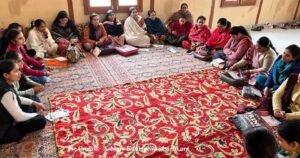 In this case scenario where the public agency is expanding and violence still persists, the stakes extend beyond women’s individual freedom and economic advancement; they encompass broader social transformation in Jammu and Kashmir. When women become economically independent accept public roles, work together, and become active agents of social change, they challenge the basic ideas behind patriarchal social structures. Their increasing public visibility reframes women not as dependents but as contributors to family welfare, economy, culture, and community. This redefinition has long-term effects- kids (both boys and girls) may have new role models; communities may start to value women’s education, work and opinions; and established social norms may slowly change to be more equal between men and women. Over time, ideas about gender that only value women for being homemakers, having children, or being submissive may fade away. This will make way for more fair and varied ideas about gender, work, respect, and citizenship. Nevertheless, such transformation depends fundamentally on addressing violence – structural, domestic, and social with renewed seriousness. Empowerment without protection is fragile; economic participation without security is vulnerable; social mobility without dignity is incomplete. Legal frameworks must be strengthened and sensitively implemented; support systems — shelters, counselling, legal aid, women-friendly institutions — must be enlarged; education must include awareness of gender equality, women’s rights, and gender-based violence; community dialogues must challenge stigma, harmful traditions, and silence; and economic policies must ensure equitable access, fair wages, and rightful recognition of women’s work — whether formal or informal, paid or unpaid.
In addition, the path toward empowerment requires enabling women’s “room,” in the sense Woolf advocated, meaning not only physical or economic space, but psychological, social, and intellectual space. Women deserve and require opportunities for education, expression, leadership, creativity, and decision-making. They need their contributions recognized and valued. They are in need of safe, supportive social structures where their choices, voices, and dignity are respected. Only then can we imagine their growing labor force participation, entrepreneurship, community engagement and public roles translate into enduring social mobility, structural equality, and genuine empowerment.
This evolving trajectories of women in Jammu and Kashmir – from subsistence laborers and invisible domestic agents to entrepreneurs, labour-force participants, public actors, and community-organizers represent a subtle revolution. Their economic interdependence, social visibility, and collective agency challenge older gender constructions and open possibilities for social mobility, dignity, and equality. Yet this revolution remains fragile and divided ; structural and gender-based violence continues to suppress potential, limit choices, and undermine dignity. Global and local statistics make clear that without sustained, systemic action legally, socially, and institutionally empowerment will remain partial and precarious. A just future for women in Kashmir depends not just on opportunity, but on safety, respect, recognition, and equal dignity. Ending violence against women – structural, domestic, social – must therefore be central to any effort aiming at genuine gender equality, social transformation, and inclusive development in Jammu and Kashmir.
References:
Butalia, U. (2017). Gender and Nation: Feminist Perspectives in South Asia. Zubaan Books.
Government of Jammu & Kashmir. (2025). Statistical Handbook of Jammu and Kashmir. Department of Economics & Statistics.
Iqbal, M. (1930). The Reconstruction of Religious Thought in Islam. Lahore: Sheikh Muhammad Ashraf.
Kandiyoti, D. (1988). “Bargaining with Patriarchy.” Gender & Society, 2(3), 274–290.
Ministry of Micro, Small & Medium Enterprises (MSME). (2024–2025). Udyam Registration Database – J&K Women Entrepreneurs.
National Crime Records Bureau (NCRB). (2024, 2025). Crime in India: Annual Reports. Ministry of Home Affairs, Government of India.
Period Labour Force Survey (PLFS). (2025). Annual Report 2024–2025. Government of India, Ministry of Statistics and Programme Implementation.
Rural Development Department, J&K. (2024–2025). MGNREGA Annual Report and Gender Participation Analysis.
UN Women. (2025). Progress on the Sustainable Development Goals: Gender Snapshot 2025. New York: United Nations.
Woolf, V. (1929). A Room of One’s Own. London: Hogarth Press.
About the Author