Written By: Irshad Ahmad Bhat (Research Scholar)
The first anniversary of the Pahalgam terror attack illuminates something rarely acknowledged in conventional analyses of Jammu and Kashmir: that the most consequential battle being fought in the Valley today is not military but moral — and that it is society, sustained and enabled by a multi-front policy architecture of exceptional depth, that is winning it.
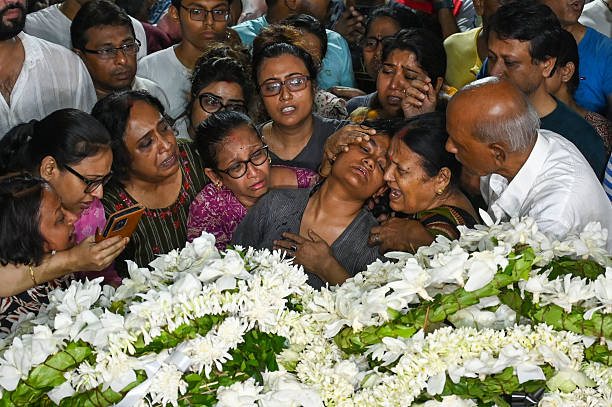
When terrorists struck the Baisaran meadow in Pahalgam on 22 April 2025, claiming twenty-six lives in an act of deliberate religious sectarian savagery, they were operating from a playbook whose logic had, for decades, demonstrated a grim coherence. Violence in Jammu and Kashmir had historically served multiple strategic functions simultaneously: destabilising governance, deterring investment, deepening communal fault lines, and perhaps most critically, sustaining a climate of normative ambiguity in which condemnation was always partial, always qualified, always shadowed by the implicit suggestion that the perpetrators were, at some level, responding to legitimate grievance. That ambiguity was itself a form of power. It insulated violent actors from the full weight of societal rejection, providing them a degree of moral cover that security operations alone repeatedly struggled to strip away. The Pahalgam attack was designed, in this tradition, to communicate that the project of normalcy in the Valley was a governmental fiction — that beneath the surface of recovered tourism statistics and infrastructure announcements, the instruments of terror retained their power to demoralise, to disrupt, and to divide.
The response that followed demolished that ambiguity with a swiftness and completeness that had no precedent in three decades of conflict. And in doing so, it revealed the extent to which the social, political, and institutional foundations upon which terror violence once rested have been fundamentally and structurally eroded. But to understand the response, one must first understand what produced the conditions for it. The societal verdict delivered after Pahalgam did not emerge in a vacuum. It was the cumulative output of a policy architecture that the Indian state has been constructing, with increasing coherence and ambition, since the constitutional reorganisation of 2019 — one that has operated simultaneously across the domains of security, governance, economic aspiration, youth engagement, and social recovery, each reinforcing the others in ways that no single intervention could have achieved in isolation.
The most visible dimension of this architecture has been the security doctrine itself: a posture of zero tolerance not merely for acts of violence but for the entire ecosystem that sustains militancy — its financing networks, its overground facilitators, its institutional sympathisers, and the cross-border infrastructure that had, for more than three decades, replenished both arms and recruits with a consistency that kinetic operations alone could never permanently interrupt. The National Investigation Agency and the Enforcement Directorate, operating with mandates that extended well beyond conventional counter-terrorism into terror financing and asset seizure, dismantled the economic arteries through which militant organisations had sustained themselves. Hawala networks were disrupted, properties attached, bank accounts frozen, and the financial architecture of terrorism systematically disaggregated. The state communicated, with unusual clarity and consistency, that the constitutional reorganisation of 2019 was irreversible — that violence would not produce political concessions, and that the operating environment for militant organisations had changed in ways that were permanent rather than cyclical. It is this consistency of posture, sustained across successive security and administrative establishments, that transforms rhetoric into doctrine. The quantitative consequences are measurable: militant incidents have declined sharply from their historical peaks, active cadre strength within the Valley has contracted to levels not seen in a generation, and voluntary local recruitment — the most reliable leading indicator of a conflict’s social depth, because it reflects what populations believe to be worth fighting for — has fallen in ways that are structurally significant.
Yet the security doctrine alone could not have produced what Pahalgam revealed. What gave it traction, what converted a change in the security environment into a change in the normative environment, was the simultaneous prosecution of a developmental offensive pursued with equal seriousness and considerably greater ambition than anything the region had seen in previous decades. The extension of the full architecture of central welfare delivery to Jammu and Kashmir following the 2019 reorganisation — PM Awaas Yojana, Jal Jeevan Mission, Ayushman Bharat, PM-KISAN, Jan Aushadhi stores, MGNREGS — was not a humanitarian addendum to the security strategy. It was the strategy’s indispensable complement, its logic being that a population with a material stake in the continuation of normalcy is structurally less available for the politics of disruption. Over 40,000 kilometres of roads upgraded or constructed, electricity connections extended to previously unelectrified hamlets in Kupwara and Karnah, piped water reaching villages that had never had it, health and wellness centres functional in districts where the nearest hospital had previously required a day’s journey: these interventions materially altered the lived relationship between citizen and state across large sections of the population. When citizens experience the state primarily as a provider of welfare rather than an apparatus of control, their relationship to violence conducted in ostensible opposition to that state changes correspondingly. The normalisation of governance has, in this sense, been among the most effective instruments deployed in the region — not because it purchased loyalty, but because it gave people a reason to defend the present rather than gamble on an alternative that three decades of conflict had shown to be ruinous.
This material transformation was given global and symbolic ratification when Srinagar hosted a G20 Tourism Working Group meeting in May 2023. To bring the delegations of the world’s largest economies into a city that had, in international imagination, been synonymous with conflict and political uncertainty was to make an argument that no diplomatic communiqué could make as effectively: that Jammu and Kashmir was not merely stable but open — open to commerce, to international engagement, to the ordinary transactions of an integrated economy. The event was watched by potential investors, potential tourists, and, perhaps most importantly, by Kashmiris themselves, for whom it served as visible confirmation that their region’s place in the national and global economy was no longer in suspension. Tourist arrivals, already recovering sharply, crossed record levels in 2023 and 2024, doubling pre-2019 baselines in several months. The G20 meeting did not cause this recovery; it ratified a trajectory that governance had already set in motion, and in doing so it sent a message about the irreversibility of the Valley’s reintegration that resonated well beyond the conference rooms on the Dal Lake.
Alongside the welfare architecture and the signal sent by the G20 moment, the UT administration invested in constructing an entrepreneurship ecosystem targeted at precisely the demographic most historically vulnerable to radicalisation: educated young men with foreclosed economic aspirations. Registered start-ups in the Union Territory have grown from fewer than 50 in 2019 to over 3,500 by the end of 2025, a transformation enabled not merely by regulatory ease but by the construction of institutional scaffolding that previously did not exist — the J&K Entrepreneurship Development Institute, Business Incubation Centres at the University of Kashmir and NIT Srinagar, the Tejaswini scheme for women-led enterprises, the YUVA programme, and the integration of J&K into the national Start-up India framework. The Startup Kashmir conclave, now in its fourth edition, has drawn entrepreneurs from every remote areas, including Gurez, Machil, and Kishtwar, areas that would not have been associated with commercial aspiration in any prior decade. Young Kashmiris are building agri-tech firms working on saffron traceability, digitising the reach of Kashmiri artisans to global markets, founding tourism enterprises and IT-enabled services companies. Behind each of these ventures is a young Kashmiri who has made an irreversible personal investment in the present order. The connection between this transformation and the decline of militancy is structural and not merely correlational.
The state has also addressed, with growing seriousness, a precondition of radicalisation that analyses rarely name: the intersection of youth idleness, social dislocation, and substance dependence that the years of conflict had produced, concentrated most acutely in districts like Kupwara, Baramulla, and Budgam where cross-border narcotics trafficking had compounded an already demographically vulnerable situation. The Nasha Mukt Bharat Abhiyan — the national drug-free India campaign — has acquired particular salience in J&K, where school-level awareness drives, community rehabilitation centres, de-addiction facilities in district hospitals, and the active involvement of panchayati raj institutions have worked simultaneously as public health intervention and, in effect, as a counter-radicalisation programme operating under a different name. The expansion of District Youth Festivals, the Back to Village programme, and the systematic scaling of sports and cultural infrastructure have created institutional channels through which young Kashmiris participate in the legitimate economy of recognition and achievement rather than inhabiting the vacuum that three decades of conflict had produced. Generational disengagement from the politics of violence is not, in this reading, a spontaneous or ideological shift. It is the product of a state that has invested, across multiple programmatic channels, in giving young Kashmiris something else to be.
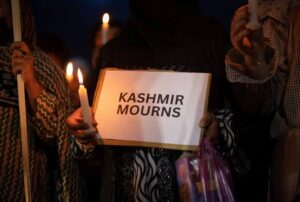
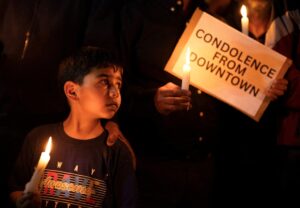
Against this cumulative backdrop, the transformation of mainstream Kashmiri political culture after Pahalgam becomes analytically legible rather than merely emotionally striking. For three decades, the grammar of mainstream politics in the Valley had required a particular and carefully maintained syntax: condemnation of violence embedded within contextualisation of grievance, solidarity with victims at a careful institutional distance from the state’s security narrative, participation in governance without full endorsement of its counter-insurgency posture. This was not cynicism. It was a rational response to a structural constraint — the constituency that elected these leaders contained multitudes, and unqualified proximity to the state’s anti-terror position carried costs that were electoral, reputational, and in certain periods physical. That calculus has now inverted, and it has inverted because the constituency itself has changed. Leaders’ and public representatives’ decision to lead street protests against the Pahalgam attack was, in the context of J&K’s political history, an act of a kind rarely witnessed: senior Kashmiri leaders with deep roots in the Valley’s most complex political terrain choosing visible, embodied solidarity with the victims over the customary distance of institutional condemnation. Across the political spectrum condemnation was swift, unhedged, and stripped of the subordinate clauses that had once been the mandatory syntax of Kashmiri political speech on violence. This convergence was not coordinated. It was a simultaneous recognition, by leaders of different formations and different histories, that the voters they answer to have been transformed by the very policy framework described above — more aspirational, more economically invested, more impatient with any formation that offers conflict where they want opportunity. Critically, however, it was society that moved first. Condemnations spread on social media sites before they appeared in press releases. Vigils were self-organised before any party issued a mobilisation call. Political leaders read the room because the room had already delivered its verdict.
Political condemnation, however unequivocal, operates at the surface of normative life. The more structurally consequential dimensions of the post-Pahalgam response were delivered through the parallel and deeper institutions of everyday Kashmiri society. The Valley’s ulema used the Friday khutba — the most penetrating normative instrument available in Kashmir, reaching populations that no newspaper or television broadcast consistently touches — to deliver a theological judgment of exceptional clarity: that violence against unarmed civilians is not a matter on which Islamic jurisprudence permits ambiguity; it is categorically impermissible, sinful, and devoid of any doctrinal defence regardless of political context. Islamic religious authority in Kashmir had, at various historical junctures, been instrumentalised or misinterpreted by militant networks seeking theological cover for their activities. That cover has been comprehensively and publicly withdrawn. This theological foreclosure severs the spiritual rationalisation pathway through which militant organisations have historically converted grievance into recruits — a pathway that no security operation, however effective, can permanently close without the active participation of religious authority itself.
The trading community, the students, and the NGO sector completed what the ulema began. The Chamber of Commerce bodies framed its condemnation as an explicit statement of economic interest: the Valley’s recovery — record tourist arrivals, thousands of new enterprises, a generation of entrepreneurs with concrete stakes in normalcy — depends on the continuation of the present order, and that order has enemies. Markets in Lal Chowk and across Kashmir stayed open. Student vigils at the Universities of Kashmir were assembled without party instruction. Civil society organisations working in conflict rehabilitation and youth mental health have reported, across the past three years, a declining willingness among young Kashmiris to reproduce the victimhood narratives that once served as the emotional substrate of radicalisation. The social licence for political violence, never formally granted by Kashmiri society, has now been formally and publicly revoked. Yet, one cannot deny the negative comments across social media, the rhetoric of accusing the Indian state itself of such an attack as has been observed at many instances, the implication of some condemning the act as it would affect their livelihoods rather than condemning the terrorism in it, and the wide psychology of us and them, the ingroup mindset, and the ensuing othering and violence, both structural and otherwise, as something we as a society has to reflect upon. Also, to be checked is how such elements can be dealt with and such a narrative countered across all domains and aspects.
The theoretical literature on norm change in conflict-affected societies argues, with considerable consistency, that the delegitimization of violence is not produced by state coercion but by the gradual construction of new normative consensus within society itself. What makes the Pahalgam moment analytically significant is precisely that its normative weight derives from below. The state has provided the structural conditions — credible security, welfare delivery, an entrepreneurship ecosystem, a youth engagement infrastructure, a public health campaign that doubles as counter-radicalisation, the global signal of the G20 — within which this consensus has been able to form. But the consensus itself is societal, owned and articulated by the people of Jammu and Kashmir, and its durability is consequently far greater than any apparatus could guarantee unilaterally. This distinction matters analytically and politically: a normative transformation that is experienced as externally imposed carries the seeds of its own reversal; one that is owned by the population that has enacted it is of a fundamentally different and more durable character.
None of this is occasion for complacency. The transformation underway is the product of sustained, deliberate policy choices, and it requires equally deliberate choices to consolidate. The security doctrine must be maintained without dilution. The developmental investments that have given Kashmiri society a material stake in normalcy must deepen rather than plateau. The entrepreneurship ecosystem and the youth engagement infrastructure must be adequately and continuously resourced. The Nasha Mukt Abhiyan must be treated not as a campaign but as a long-term institutional commitment. And the democratic and electoral frameworks must progressively normalise — because a society that has chosen governance over grievance must be able to see governance respond to its democratic expression with credibility, inclusion, and fidelity. What the anniversary of Pahalgam ultimately commemorates is not only a tragedy but a turning point. The attack was intended to demonstrate that the instruments of terror retained their power to destabilise and demoralise, that the project of normalcy was a fiction that violence could expose. What the response demonstrated was the opposite: a society that has been given, through years of sustained and multi-dimensional state commitment, enough of a stake in its own future to defend it — in the streets, in the pulpits, in the markets, and in the quiet, irreversible investments of a generation that has chosen to build. The state did not manufacture this transformation. It created the conditions within which it became possible. The citizens of Jammu and Kashmir made it real. What is being built in the Valley today is not merely a security achievement. It is a social compact — one founded on the shared conviction that the future must be negotiated, not detonated.
About the Author