Peerzada Muneer
In living memory, the weather of Jammu and Kashmir has never felt as unsettled, as uncertain, and as emotionally heavy as it does today. Winter, which once arrived with a quiet assurance that snow would blanket the Valley and the mountains would refill their reservoirs of ice and water, is now faltering. Year after year, the season that defined the rhythm of life here is slipping out of its old shape.
What has changed is not just a few days of sunshine in January or a light snowfall in February, but the very character of winter itself. Between December 2025 and February 2026, Jammu and Kashmir received only about 100.6 millimetres of precipitation against a normal 284.9 millimetres, a 65 per cent deficit that marks one of the driest core winters in recent record. February 2026 alone recorded just about 14.2 millimetres of rain against a normal of 130.4 millimetres, an almost 90 per cent shortfall that turned what should have been a snow bearing month into something closer to a prolonged autumn. This was not a one-off anomaly: it was the seventh straight winter since 2019–20 to end with below normal precipitation, with deficits deepening over time from about 20 per cent in 2019–20 to 65 per cent in 2025–26.
The statistics tell one part of the story; the lived experience tells the rest. In many neighbourhoods in Srinagar, elders now recall with a hint of disbelief how Dal Lake would once partially freeze, how snow would stay in courtyards for weeks and how schoolchildren learned to walk on slippery lanes as a seasonal skill. This year, Srinagar saw roughly 84.2 millimetres of winter precipitation against a normal 236.5 millimetres, translating into a 64 per cent deficit that many residents could feel in the dustier air, the bare hillsides, and the absence of deep snow in the higher reaches that are usually visible from the city. The pattern repeats across districts: Kishtwar recorded a 90 per cent deficit, Shopian around 82 per cent, and several others including Kulgam, Kupwara, and Budgam remained more than 60 per cent below normal. The geography of scarcity is now spread from the Pir Panjal to the Chenab valley, touching both Jammu plains and Kashmir Valley in different ways.
To understand the depth of this change, it helps to remember what winter once meant here. For generations, people in Jammu and Kashmir have read the year through its seasons like a familiar book. Chilai Kalan, the harshest forty days of winter, was traditionally expected to bring sustained snowfall, fill the glaciers and nourish the springs that would later feed rice fields, orchards, and household taps. Snow on the mountains acted as a quiet, patient reservoir, melting through spring and summer to keep rivers alive, aquifers replenished and temperatures moderated. Farmers, orchardists, herders, and even urban residents built their expectations around this dependable sequence of snow, melt and flow.
That sequence is now being interrupted. Data from recent winters shows not only weaker snowfall, but also more erratic western disturbances, longer dry spells, and a greater concentration of precipitation in a few intense events. December 2025 was almost dry, with around 13 millimetres of rainfall against a normal 59.4, a deficit of 78 per cent. January brought some relief, but still stayed below normal, and February collapsed almost entirely. The critical window in which snowpack is normally built is shrinking, and with each passing year, the mountains enter spring with less stored water in the form of snow and ice.
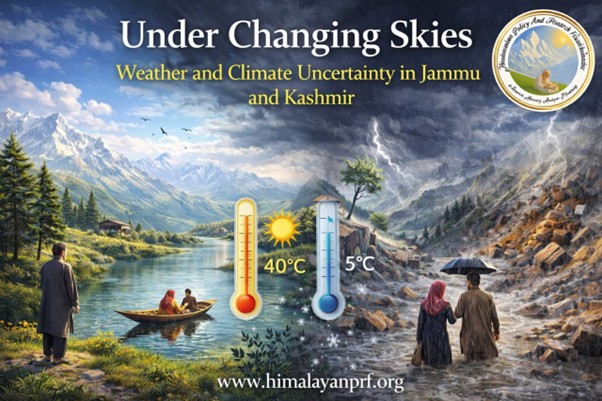
At the same time, the region is facing episodes of unusual warmth, sometimes in the very heart of winter. February 2026 has already been described as unusually warm, with temperatures that felt unseasonal to residents and worrying to experts. Independent meteorologists and institutional forecasters have noted repeated spells where temperatures rise sharply over a few days, turning what should be crisp winter afternoons into something closer to early spring. Forecasts in early March 2026 again spoke of an “unseasonal heat spell” and a sharp rise in temperature over the next couple of days, with a continuing dry spell expected until at least mid-March. When warmth arrives without the foundation of snow, the landscape responds differently: soil dries faster, evapotranspiration increases, and whatever moisture remains in fields and orchards dissipates more quickly.
The emotional weight of this change is particularly heavy because of what Kashmir’s weather means to its people. The Valley’s mild summers, crisp autumns, snow filled winters, and fragrant springs have long been woven into its sense of self. Poets have written about the first snowfall in Gulmarg, about the soft rain that falls over almond blossoms in Badamwari, about the way the Jhelum swells after the melt. Tourists come seeking that famed climate, the snow under walnut trees, the cool air of Pahalgam in June, the relief from scorching plains. When winter arrives late, when snow is patchy and rain fails to fall, it is not only crops and rivers that feel the loss, but also a cultural imagination shaped by these seasons.
The most immediate effect of these wavered weather conditions is visible in agriculture and horticulture, which remain the backbone of rural livelihoods. With a persistent dry spell across the Valley, experts at Sher e Kashmir University of Agricultural Sciences and Technology of Kashmir have issued urgent advisories to farmers. They have asked fruit growers to prioritise soil moisture conservation by applying four to six inches of organic mulch, such as paddy straw or grass clippings, around tree basins to retain what little moisture the soil still holds. They caution against using polythene or other inorganic mulches that can trap heat and raise soil temperatures to levels that damage root systems already under stress from lack of water. Farmers without irrigation have been advised to delay fertiliser applications until moisture improves, and to avoid heavy tillage or tractor movement that can break soil structure and accelerate desiccation.
For field crops such as wheat, mustard and peas, the advice is focused on survival rather than productivity. Growers are being told to monitor fields closely, remove weeds that compete for scarce water, and restrict urea application to about 2.5 kilograms per kanal, and that too only when adequate moisture is present. In vegetables and floriculture, including the iconic tulip fields near Srinagar, experts recommend light and frequent irrigation in early morning or late evening to reduce evaporation losses. They urge the use of shade nets and straw coverings for nurseries of tomato, chilli, capsicum, and cabbage to buffer seedlings from heat and moisture stress. These are not routine seasonal advisories; they are crisis responses to conditions that are becoming more frequent and more severe.
Behind these immediate instructions lies a deeper worry: what happens to the region’s water security when winter after winter passes without adequate snow and rain. Winter precipitation is critical here because the snow that settles in higher reaches is the primary source for rivers, streams, and springs during the rest of the year. When snowpack is thin and fragmented, the meltwater pulse that usually sustains flows through late spring and summer is weaker, shorter, and less predictable. Experts have warned that these repeated winter shortfalls are eroding the “meltwater buffer” that Jammu and Kashmir relies on. Instead of a slow, sustained release of water from snow and glaciers, the region faces the risk of sharper contrasts: very low flows during dry periods and sudden surges when rain arrives in intense bursts over already stressed catchments.
Groundwater too is quietly affected. Many rural households depend on springs that emerge from the foothills, while urban residents rely increasingly on borewells and municipal water sourced from rivers fed by snow and glacier melt. When winter precipitation falls consistently below normal, the recharge of aquifers is compromised. Springs that once flowed perennially may start to weaken, shift to seasonal patterns, or dry up altogether in late summer. For households that have never known water scarcity in the cold months, the idea of rationed supply or dry taps in February and March feels unsettling and new. Over time, these hydrological changes can push communities to dig deeper wells, invest in storage tanks, or even migrate seasonally in search of more reliable water sources.
On the high ridges and glaciers of the Himalayas, the consequences are slower but no less significant. Glaciers in the wider Himalayan region are already known to be retreating under the influence of global warming. In Jammu and Kashmir, reduced winter snowfall combined with higher temperatures increases the likelihood that glaciers lose more mass each year than they gain. Initially, glacial melt can maintain or even slightly increase river flows in some catchments, masking the underlying loss. But once a glacier passes a certain threshold of shrinkage, the long-term trend is toward declining dry season flows and more erratic water availability. The people who depend on these rivers for irrigation, hydropower and drinking water will feel the consequences long before the last ice disappears.
The rise in temperature is not just a matter of comfort or discomfort; it reshapes ecosystems and economies. Warmer winters disrupt the chill hours required by many temperate fruit trees such as apples, cherries, and walnuts, which dominate horticulture across much of Kashmir. These trees need a certain duration of cold conditions to break dormancy properly and to flower and fruit in a healthy way. When winters are warmer and shorter, flowering can become erratic, fruit set may decline and pest pressures can rise. Already, farmers and agricultural scientists are concerned that changing chill patterns may shift suitable zones for some varieties upward in elevation, squeezing cultivation into narrower belts, and leaving lower orchards less productive.
Unseasonal heat spells in late winter or early spring can be particularly damaging. If temperatures climb sharply for several days, trees may break dormancy early, only to be hit later by a cold wave or a rare late snowfall, damaging blossoms, and young fruit. Vegetables and early sown crops can also suffer, either from direct heat stress or from moisture loss in already dry soils. SKUAST K’s advisory reflects this concern when it emphasises protecting nursery beds with shade nets and straw to reduce heat load on young plants. At the same time, new pest and disease patterns can emerge as warmer conditions allow insects to complete more life cycles or expand into zones that were previously too cold.
Agriculture in the plains of Jammu faces different but related challenges. Rainfed wheat, mustard, and other rabi crops depend on timely winter rain to establish and grow properly. With rainfall deficits as high as 90 per cent in districts like Kishtwar and around 64 per cent in Jammu district during the 2025–26 winter, many fields are left at the mercy of residual soil moisture and whatever irrigation farmers can manage from canals or tube wells. This increases costs, reduces yields, and adds another layer of uncertainty to livelihoods already exposed to market volatility and policy change. Over time, persistent stress can push some farmers to abandon water intensive crops, alter sowing dates, or even leave agriculture altogether.
Tourism, another mainstay of the region’s economy and identity, is equally sensitive to these wavered weather conditions. The image of Kashmir that circulates in travel brochures and memories of visiting families is closely tied to its climate: snow covered slopes in Gulmarg, frozen streams in Pahalgam, white roofs in Sonamarg, and the crisp air on the Boulevard in January. When snow arrives late, falls in smaller quantities, or melts quickly due to warm spells, winter tourism suffers. Ski slopes may open for shorter seasons; ice skating and snow related activities become sporadic; and hotels that prepare for peak winter occupancy find themselves facing cancellations or reduced bookings.
At the same time, extreme weather events can disrupt tourism when they finally arrive. After prolonged dry spells, heavy rain or sudden snow can trigger landslides, close mountain passes, and block key arteries such as the Jammu Srinagar national highway and the Mughal Road. Reports in early March 2026 highlight how heavy rain that finally broke a dry phase also led to the closure of these routes due to fresh snowfall and associated hazards. For tourists caught in transit and for local businesses that depend on reliable connectivity, the pattern of “too little for too long, then too much at once” is deeply unsettling. It introduces an element of risk that can discourage repeat visits and complicate planning for tour operators and transporters.
The overall demography of the region is not static in the face of these changes. While it would be simplistic to say that climate alone determines migration, there is growing concern that water stress, agricultural losses and livelihood uncertainty may encourage more people, especially youth, to move toward urban centres or outside the region. Rural families who traditionally depended on a combination of farming, horticulture, and seasonal labour now find that one of their pillars, agriculture, is increasingly insecure. In some villages, young people may see little future in orchards that fail repeatedly or in fields that demand more investment for lower returns. Over years and decades, such slow shifts can alter the social fabric, weakening the intergenerational transmission of traditional land-based knowledge, and placing more pressure on cities struggling with their own water and infrastructure challenges.
The psychological dimension of these wavered weather conditions is often overlooked but deeply felt. When seasons fail to behave as expected, people experience a kind of temporal disorientation: the calendar says one thing, the sky and the air say another. Farmers look toward the mountains searching for snow lines that should have dropped by now; children ask why there is no snow day off from school; older residents speak of missing the hush that falls after a heavy snowfall. Each dry winter compounds a sense of unease, a feeling that something fundamental is shifting beyond one’s control. This emotional burden intersects with economic and physical vulnerabilities, shaping how communities perceive risk and how they respond to calls for adaptation.
From a scientific perspective, the emerging picture is that Jammu and Kashmir is heading toward a serious climate crisis driven by changing patterns of western disturbances, rising temperatures, and increasing variability in rainfall. Analysts have noted that since 2019, the region’s winter precipitation has moved from a mix of surplus and deficit years toward a persistent and deepening deficit pattern. Earlier winters in 2012–13, 2016–17 and 2018–19 recorded surplus precipitation of 14, 29, and 36 per cent respectively, which now stand in sharp contrast to the string of deficient years that followed. This is not random fluctuation around a stable average; it suggests a structural shift in the climate system affecting the western Himalayas. Factors such as warming of the Indian Ocean, changes in mid latitude circulation, and regional land use patterns are all part of a complex web of drivers that researchers are still working to untangle.
Policy makers, scientists, and communities are beginning to respond, though the scale of the challenge remains daunting. Agricultural universities like SKUAST K are issuing more frequent and more detailed advisories, not only for farmers but also for allied sectors such as fisheries, where pond depth, feeding rates, and water quality now need careful management during hot, low oxygen spells. There is growing interest in water harvesting structures, micro irrigation, drought tolerant crop varieties, and better soil management to enhance moisture retention. Some orchardists are experimenting with varieties that need fewer chill hours or that can tolerate more heat, while others are altering pruning and fertilisation schedules to match new climatic realities.
Yet, adaptation has its limits if the underlying trend of warming and drying continues unchecked. Long term resilience will depend not only on local measures but also on broader efforts to reduce greenhouse gas emissions, both within India and globally. For Jammu and Kashmir, this could involve rethinking energy choices, protecting and restoring forests that regulate microclimates and water flows, and integrating climate risk into development planning at every level. Hydropower projects, road construction, and urban expansion will all need to be assessed not just for immediate benefits but also for their impact on already stressed mountain ecosystems and water systems. The cost of ignoring climate signals will not be paid in abstract numbers alone; it will show up in lost harvests, disrupted school years, altered festivals, and deepening inequalities.
At a more intimate scale, there is also the question of how to preserve the cultural memory of Kashmir’s seasons even as they change. Parents may find themselves telling stories of winters their children may never fully experience: frozen ponds, thick snow carpets, the way smoke from hearths curled into icy air. Artists and writers may increasingly document these shifts, turning climate data into narratives that carry both grief and urgency. Religious calendars, local sayings about weather, and even traditional architecture may gradually adapt, as people adjust their expectations of when to sow, when to store, when to travel, and when to celebrate. In doing so, they will be negotiating not only with the sky above them, but also with their own sense of what it means to live in this place.
The weather that the Valley of Kashmir is known for is indeed being disturbed, not in a passing or superficial way, but in a manner that touches the deepest layers of ecology, economy, and identity. The seventh consecutive dry winter, the sharp deficits in rainfall, the unusually warm February days, and the repeated advisories issued in anxious tones are all signals of a climate in flux. The challenge now is to read these signals with honesty, to listen to both data and lived experience, and to act with a sense of responsibility that extends across generations. Whether the people of Jammu and Kashmir can steer through this change with dignity and resilience will depend on how seriously we take this moment and how quickly we can move from awareness to collective action.
About the Author