Dr Usheen , Research scholar, Poblic policy and Governance.
As demonstrations unfold across India, the real test is whether public anger can become informed participation, institutional answerability and genuine reform
Democracy is usually celebrated as the power to choose a government, and India exercises that power on a scale few countries can match. But the deeper test begins once the votes are counted. It lies in whether citizens can question decisions, challenge official explanations, demand correction and insist that public institutions answer to the people they serve.
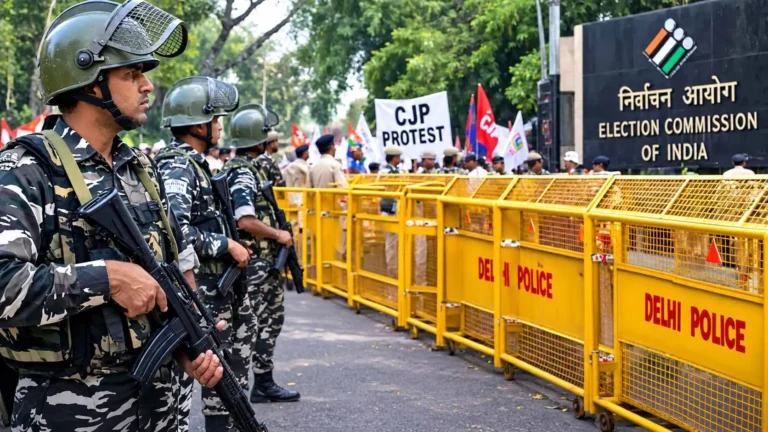
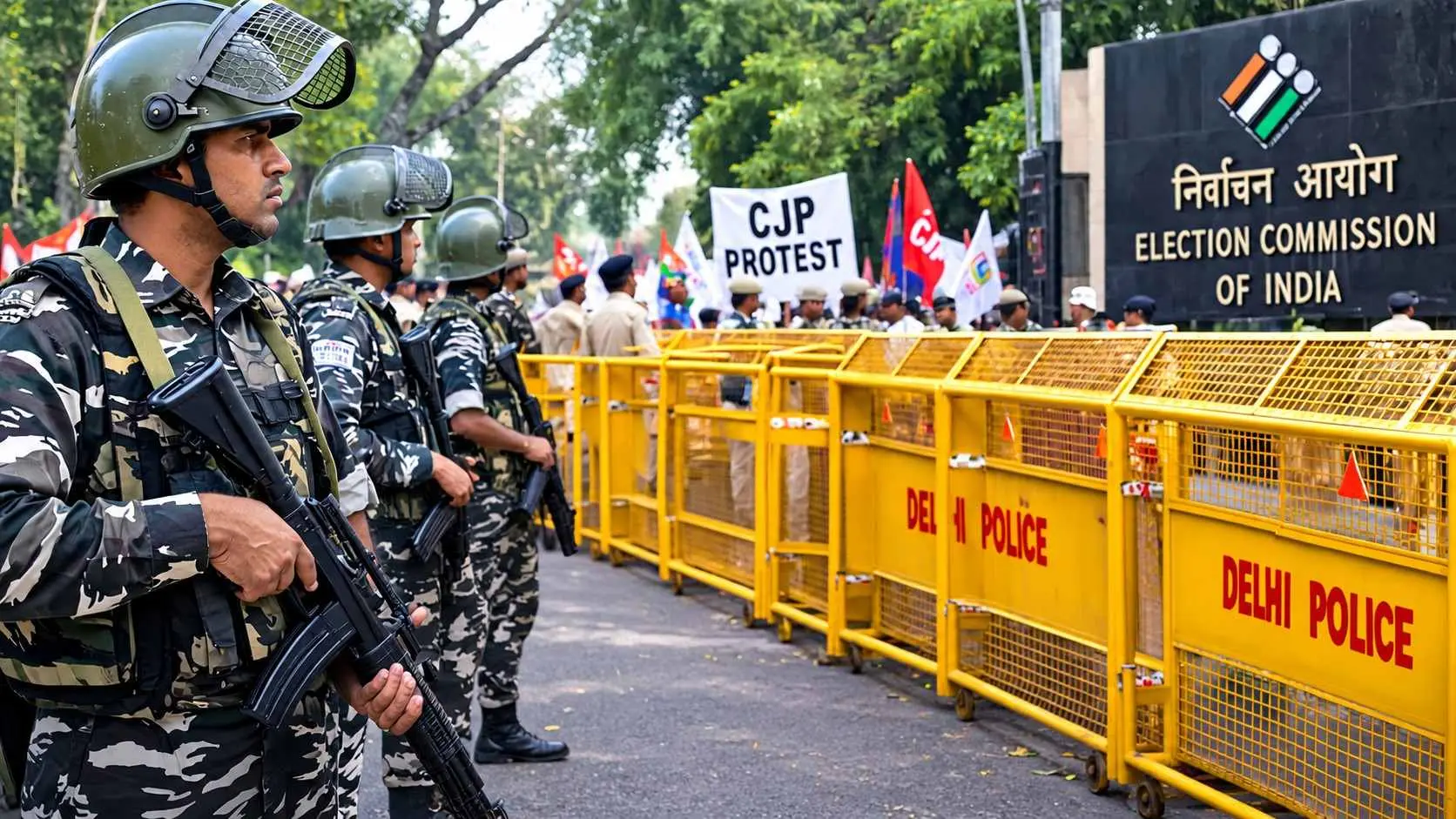
The protests unfolding across the country bring that test into sharp focus. Whether they concern jobs, education, governance or rights, they reveal something basic about the relationship between citizen and state. People do not see themselves as passive recipients of decisions taken elsewhere. They want a say in how those decisions are made, explained and carried out.
That demand is not a threat to stability. Peaceful dissent is one of the ways a democracy discovers where its institutions have failed and where trust has worn thin. The harder question is what follows once the slogans fade, the crowds disperse and the television cameras move on. A protest can force a government to respond. A response is not a resolution.
The strength of a democracy lies not in the absence of dissent, but in its capacity to turn dissent into accountability.
What the Constitution promises
The foundations are already in place. Article 19 guarantees every citizen the freedom of speech and expression and the right to assemble peacefully and without arms, subject to the restrictions the Constitution permits.
Yet constitutional democracy also rests on the idea that rights and responsibilities travel together. The right to protest cannot be reduced to a favour dispensed at the pleasure of those in office. Equally, the justice of a cause does not excuse violence, intimidation or the violation of other people’s rights. The task of governing is to protect peaceful dissent while responding proportionately to genuine threats to public safety.
Proportionality is not an abstract ideal. In Anuradha Bhasin v Union of India in 2020, the Supreme Court held that restrictions on fundamental freedoms must be necessary, proportionate and open to review. That applies to prohibitory orders, once issued under Section 144 of the old Criminal Procedure Code, as much as to internet shutdowns. Criticism, opposition and mobilisation should never, by themselves, be treated as evidence of wrongdoing, and accountability must not depend on whether a person backs or opposes the government of the day.
The age of the unverified clip
This balance is harder to strike in an information environment where controversies escalate before facts are established. A short video, an unverified allegation or a statistic stripped of context can cross WhatsApp groups and social media feeds within minutes. By the time a correction appears, the claim may already have inflamed anger or ruined a reputation.
Misinformation is not merely a communications problem. It distorts the process by which citizens decide what deserves their attention and how to respond. But there is an equal danger in letting the word “misinformation” become a convenient way to dismiss uncomfortable questions. Official statements are not true simply because they come from the state, just as allegations are not established simply because a crowd repeats them.
The democratic answer is independent verification. Who made the claim? Is the original document available? Can the video be authenticated? Do credible, independent sources corroborate it? Journalists, officials, protest organisers and political leaders should all be held to the same expectation: claims that move people to action must withstand scrutiny.
From the street to the file
The same principle must extend beyond the screen. India has many institutional channels for grievances, yet they are often underused, poorly understood or discredited by a feeling that complaints achieve little. A farmer denied a benefit or a village waiting on a stalled road may know how to express anger, but not how to obtain the records, identify the responsible officer or seek a formal review.
The Right to Information Act of 2005 remains the most powerful tool available. It grew out of a grassroots campaign, led by the Mazdoor Kisan Shakti Sangathan in Rajasthan, that demanded public access to the records of local spending. The idea was simple and radical: a citizen who can see the paperwork can challenge it. Departmental grievance cells, the government’s online CPGRAMS portal, public hearings, statutory commissions and the courts offer further avenues, depending on the dispute.
None of this replaces peaceful protest, and citizens should not be expected to chase endless paperwork while officials stay silent. A protest brings a neglected issue into public view; institutional action turns that visibility into a specific demand for correction. A documented objection, naming the decision, the evidence, the authority responsible and the remedy sought, is harder to wave away than a general call for accountability, and lets everyone judge afterwards whether a promise was kept.
A general demand for accountability may capture attention. A documented objection gives that attention a direction.
What the state owes its citizens
Here the obligations of government become inseparable from those of citizens. Authorities cannot ask people to trust institutions while offering thin explanations for their decisions. Nor can they expect grievance mechanisms to command confidence if complaints vanish into administrative silence, or if replies merely acknowledge receipt without addressing the substance of the objection.
A government that takes participation seriously must do more than allow people to speak. It must show that speaking can make a difference. That means clear procedures for lodging grievances, decisions explained in language people can follow, realistic response deadlines and public reporting on what was done. Where a demand cannot be met, officials should say why, citing the legal, financial or administrative constraints involved.
Beyond the capital: where citizens meet the state
A more constructive model begins locally. A village without a dependable road, a school without basic facilities or a health centre short of staff may never reach national headlines, yet these are where citizens meet the state most directly. Gram Sabhas, ward meetings and district grievance forums can make such concerns visible, provided participation is genuine and objections are taken seriously. The social audits required under the Mahatma Gandhi National Rural Employment Guarantee Act show what is possible when villagers can check public records for themselves.
Civil society groups, student bodies and community leaders can help bridge the gap between dissatisfaction and institutional action, by helping citizens verify information, draft representations and track official replies. Their credibility, however, depends on applying to their own claims the standard of evidence they demand of those in power.
Young people, in particular, should see citizenship as something more durable than voting on election day or joining an occasional online campaign. It means reading public budgets, attending consultations, questioning representatives and engaging respectfully with those who disagree. Civic education should produce not citizens who agree with authority, but citizens who know how to question it effectively.
The media, too, must look beyond the spectacle of confrontation. Dramatic images and angry studio debates make compelling headlines, but they rarely explain why a protest began, what evidence supports its demands or whether the problem was ever solved. Responsible journalism separates allegation from fact and returns to the story once the excitement has passed. The measure of coverage should be public understanding, not merely public attention.
A change in expectations
Constructive participation ultimately requires a shift in expectations on every side. Citizens must verify claims, document objections and use lawful institutional channels without surrendering their right to protest. Governments must accept that listening is not a concession to opponents but a basic duty of accountable administration. Political parties must resist turning every grievance into electoral advantage, and institutions must show that evidence and constitutional principle matter more than partisan convenience.
None of this guarantees that every demand will be accepted. Democracy does not promise every citizen the outcome they prefer. It promises something more fundamental: that public power can be questioned, decisions can be scrutinised, rights can be defended and grievances can be pursued without making unquestioning obedience the price of citizenship.
India does not need a quieter democracy bought by silencing legitimate discontent. It needs a more responsive one, in which dissent is protected, facts are valued and public institutions are able to learn from criticism. The aim is not to march citizens off the streets and into bureaucratic corridors, as though one form of participation must cancel the other. It is to ensure that public mobilisation opens the door to real engagement, and that institutional processes never become places where legitimate demands go to disappear.
Protest gives democracy its voice. Verification gives that voice credibility, institutional engagement gives it direction, and accountability gives it consequences. The democratic task is to bring these together, so that public anger becomes informed action and disagreement produces reform rather than lasting distrust. A democracy is not strengthened when citizens stop asking questions. It is strengthened when asking becomes productive, and when the power to correct public decisions belongs, in practice as well as in principle, to the people those decisions affect.
Dr Usheen , Research scholar, Poblic policy and Governance.
About the Author