Sahil Shabir Bhat (B.Sc. Honors in Anthropology)
Climate change is no longer an abstract, distant concern for Kashmir; it is a lived reality shaping its seasons, water, landscapes, and the fragile alpine ecosystems that surround the valley. The same forces that are warming the planet, greenhouse gas emissions from burning fossil fuels, deforestation, and unsustainable development, are disrupting glaciers, snowpack, forests, lakes, and biodiversity in the Kashmir Himalayas, with direct consequences for human health, agriculture, and culture. These changes are particularly profound in the high‑altitude zones, where even subtle shifts in temperature and precipitation can overturn ecosystems that evolved in delicate balance over centuries.
From Global Warming to a Fragile Himalayan Valley
The story of climate change in Kashmir begins with the broader global crisis. Since the pre‑industrial era, human activities such as burning coal, oil, and gas, clearing forests, and adopting intensive agricultural practices have dramatically increased greenhouse gas concentrations in the atmosphere. Carbon dioxide levels are now roughly 50% higher than they were before industrialization, trapping more of the heat radiated by the Earth’s surface and driving a steady rise in global temperatures. This “greenhouse effect”, first described scientifically in the 19th century, explains why the planet is warming faster than can be accounted for by natural variability alone.
These global changes manifest locally in Kashmir in multiple, interconnected ways. Long‑term climate analyses show a clear warming trend across parts of the western Himalayas, with the Kashmir region experiencing a significant rise in maximum temperatures in recent decades. According to one study, maximum temperatures in the valley increased by about 2 °C between 1980 and 2020, equivalent to an average warming of 0.5 °C per decade. This warming is not simply a statistical curiosity; it is visible in the form of earlier springs, more intense and frequent heatwaves, and winters that bring less snow and shorter periods of sustained cold.
These changes are already reshaping daily life. Residents who once associated Kashmir with cool summers and thick winter snow now experience scorching days, parched fields, and mountains that remain brown and barren well into winter due to delayed snowfall. Farmers who converted paddy fields into apple orchards, believing fruit would be more resilient to changing rainfall, have begun to see those orchards wither under extended dry spells and rising temperatures, as irrigation canals run dry and the timing of rain becomes unreliable. Heat has also emerged as a new health threat, particularly for older residents who are not physiologically or infrastructurally prepared for such extremes; episodes of breathlessness, exhaustion, and heat stress are increasingly reported in communities accustomed to mild summers.
Yet the most far‑reaching effects often begin far above the valley floor, in the glaciers, snowfields, and alpine meadows that capture moisture from western disturbances and the Indian monsoon. The Himalayan ranges around Kashmir, including the Pir Panjal and the Greater Himalaya, are among the youngest and most tectonically active mountains on Earth, with fragile, unstable terrain and loose soils. They are also key to the region’s water security: winter snow and glaciers act as reservoirs, gradually releasing meltwater into rivers like the Jhelum and Chenab through spring and summer. Climate change is disrupting this natural storage and release system on three fronts, reduced snowfall, accelerated glacier retreat, and altered timing of snowmelt, which together destabilize river flows and groundwater recharge.
The consequences are visible in both hydrological extremes. On one side, prolonged dry winters and weak western disturbances reduce snow accumulation, leading to diminished spring flows and water scarcity for irrigation, drinking, and ecosystems. On the other, when intense rainfall events or sudden warm spells follow, rapid snowmelt and heavy runoff contribute to flash floods and river surges, as seen in past inundations of Srinagar and surrounding districts when the Jhelum and its tributaries swelled beyond capacity. Such floods have washed away paddy fields, orchards, and homes, starkly illustrating how climate‑altered hydrology threatens both livelihoods and infrastructure.
Compounding these changes is an increase in extreme weather events, such as cloudbursts. Experts point out that Kashmir lies at the confluence of two weather systems, the western disturbances from the Mediterranean region and the southwest monsoon from the Bay of Bengal and Arabian Sea, and that moist air masses can rapidly rise over the mountains, forming dense clouds that collapse as intense localized downpours. In a landscape with denuded forests, loosened soils, and unplanned concrete growth, even a “small” cloudburst can mobilize huge volumes of debris and water, leading to destructive flash floods that sweep away roads, bridges, homes, and lives.
These physical processes set the stage for deeper ecological transformations. Deserts expand elsewhere on the planet, and in Kashmir wildfires and heatwaves become more common while glaciers, snowfields, and perennial streams retreat. Species that once found stable habitats in forests, wetlands, and alpine zones are forced to relocate or adapt; those that cannot track suitable climates quickly enough risk local extinction. Even if global mitigation efforts succeed in limiting future warming, some changes, such as expanded ocean heating, acidification, and sea‑level rise, will continue for centuries, reminding humanity that climate systems respond slowly but persistently to past emissions.
In India more broadly, climate change amplifies pre‑existing vulnerabilities. The country’s large population, with a significant share dependent on climate‑sensitive sectors such as agriculture and forestry, faces frequent heatwaves, erratic rainfall, and floods that push millions toward uncertainty. Megacities like Delhi, lying in a basin and prone to air stagnation, have seen their air quality worsen as climate‑related changes in temperature inversions, humidity, and wind interact with pollution from vehicles, industry, and crop burning; episodes of hazardous Air Quality Index values reveal how environmental degradation and climate change reinforce each other. These conditions often hit the poorest communities hardest, those who have contributed least to emissions but live in the most exposed neighborhoods and rely on the most fragile resources.
Critiques of development choices in India and Kashmir highlight the role of “capitalist hegemony” in driving projects that disregard ecological limits and local livelihoods. Examples include leasing vast forested lands or orchards for thermal power plants, expansion of infrastructure deep into forest belts, and large‑scale projects like highways, ring roads, and tourism facilities that cut across sensitive mountain meadows and river valleys. While such projects are often justified in the name of growth and connectivity, they frequently impose heavy environmental costs: deforestation, altered hydrology, pollution, habitat loss, and increased disaster risk. This wider political economy forms the backdrop against which Kashmir’s fragile alpine ecosystems now struggle.
Kashmir’s Alpine Ecosystems under Pressure
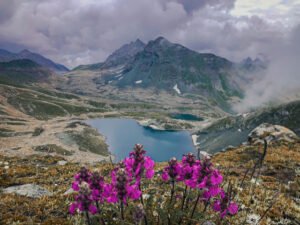
Kashmir’s identity is inseparable from its mountains: the snow‑clad peaks, alpine meadows, glacial lakes, and forests that ring the valley have shaped its ecology, spirituality, and economy for centuries. Today, this high‑altitude world is one of the most sensitive frontlines of climate change. The impacts unfold across four main components of the alpine system, glaciers and snow, lakes and rivers, forests and biodiversity, and pastures and tourism, and each in turn feeds back into the valley’s fate.
Glaciers in the Kashmir Himalayas are shrinking as temperatures rise, and snowlines are shifting to higher elevations. In the short run, accelerated melt may temporarily increase flows in some rivers, but over time, as ice volume diminishes, the system moves toward water stress, especially during the summer months when demand peaks. The altered timing and rate of melting also disrupts downstream ecosystems that evolved with a gradual, predictable release of cold meltwater into streams, wetlands, and lakes.
One of the most visible manifestations of glacier retreat is the growth of glacial lakes. Across Jammu & Kashmir, experts estimate that there are more than a hundred such lakes scattered across mountain ranges, with many in Ladakh and the Chenab valley. Their number and size have increased over time as glacier tongues recede and leave behind basins that fill with meltwater. A subset of these lakes is considered highly vulnerable to Glacial Lake Outburst Floods (GLOFs), where the natural dam, often a moraine made of loose rock and ice, fails suddenly, sending torrents of water and debris downstream. Such events can devastate villages, roads, hydropower facilities, and agricultural land, making it imperative to map these lakes, monitor them regularly, and restrict risky development in potential flood paths.
At the altitudes above the treeline, plant species are adapted to cold temperatures, intense solar radiation, thin soils, and short growing seasons. Even slight warming can rearrange this delicate balance. Studies from the Kashmir Himalayas and comparable alpine zones show “thermophilization”: a shift in plant communities toward species that prefer warmer conditions, as temperatures rise. Warm‑adapted species climb upslope and colonize new ground, sometimes increasing local species richness in the short term, while cold‑adapted specialists lose space and may be driven toward extinction if no higher or cooler habitat remains.
Research on alpine ecosystem dynamics over the Great Himalayan Range suggests that alpine pastures and shrublands have expanded at the expense of nival and bare‑rock zones, reflecting a warming environment in which vegetation can grow in areas previously too cold or snow‑covered. At the same time, the alpine treeline is shifting as climate change alters soil moisture, temperature, and disturbance regimes, allowing trees and shrubs to establish at higher elevations than before. These changes can substantially affect habitat structure and food availability for alpine fauna such as birds, small mammals, and insects, and can alter ecosystem functions like carbon storage and slope stabilization.
Kashmir’s forests, which intersect with alpine zones, also face pressures from both climate change and human activity. Repeated forest fires, sometimes sparked by negligence, such as unattended campfires or charcoal preparation in remote villages, burn large tracts of conifer and mixed forest, destroying habitat and releasing carbon dioxide, carbon monoxide, methane, and soot into the atmosphere. These emissions contribute to local warming and air quality deterioration, while the loss of tree cover makes slopes more vulnerable to landslides and flash floods when heavy rains or cloudbursts occur. Changes in fire regimes also threaten plant and animal species that evolved under different disturbance patterns and may not recover quickly from frequent or intense burns.
In recent years, trekking to high‑altitude lakes and meadows has become a popular activity among locals and visitors from other Indian states. On one hand, this reflects a positive desire to reconnect with nature; on the other, when tourism is unregulated, it can inflict serious damage on fragile alpine ecosystems. Organised trekking groups and informal visitors bring tents, plastic packaging, fuel, and vehicles into areas that evolved with minimal human disturbance. Reports of garbage heaps, discarded bottles, diapers, and other waste at camping sites, once pristine pastures where saints and sages prayed, illustrate how quickly these landscapes can be degraded.
In some alpine valleys, such as Margan Top and other lake‑rich areas, locals have collected hundreds of liquor bottles and other trash left behind by visitors, while observations of people bathing with soaps and shampoos in high‑altitude lakes raise serious concerns for aquatic biodiversity. These lakes often have low nutrient levels and limited capacity to dilute pollutants; the introduction of phosphates, surfactants, and other chemicals can disrupt water chemistry, harm invertebrates and fish, and alter algal growth. The repeated trampling of meadows by large groups, the driving of vehicles across soft ground, and the cutting of bushes and trees for fuel all further undermine the resilience of alpine soils and vegetation, which may take decades to recover under harsh climatic conditions.
Tourism infrastructure in classic destinations like Gulmarg, Pahalgam, and Sonamarg adds another layer of pressure. Construction of hotels, resorts, and roads in seismic zones IV and V, on slopes and near rivers, not only fragments habitat but also raises the risk of human casualties when climate‑intensified disasters strike. Over‑tourism, combined with deforestation and land‑use change, leaves “not a single acre of land” untouched in some corridors, according to local observers, diminishing the valley’s capacity to absorb climate shocks and eroding the very natural beauty that attracts visitors.
Kashmir’s alpine hydrology is intimately connected to its lakes and wetlands, which act as ecological and hydrological buffers. Wular Lake, once one of Asia’s largest freshwater bodies, historically supplied fish, plants, and transport routes, and helped moderate floods and droughts. Today, it has shrunk dramatically, its open water area reduced by encroachment, siltation, and changing inflows, and faces acute pollution pressure from solid waste, sewage, and agricultural runoff.
Reports from environmental agencies indicate that biochemical oxygen demand (BOD) in parts of Wular now exceeds safe thresholds several fold, and fecal contamination from human and animal waste poses health risks to communities that rely on the lake for drinking, washing, and fishing. Similar issues are seen in Dal and Manasbal lakes, where high organic carbon and nitrogen levels, along with rising sedimentation rates, reveal how climate change interacts with human activities to accelerate degradation. As climate‑driven changes in rainfall and meltwater make river flows more variable and extreme, the loss of healthy wetlands and lakes reduces the system’s capacity to buffer floods and store water, exposing downstream communities to greater risk.
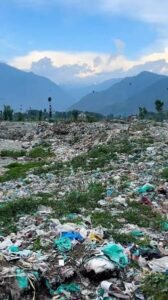 Zalwaan, on the banks of Wular Lake in Bandipora, has effectively turned into the district’s dumping ground for solid and liquid waste, transforming a fragile aquatic ecosystem into an informal landfill. Untreated garbage from surrounding towns and villages, including plastics, chemicals and other hazardous materials, now flows into the lake through small channels and direct runoff, severely degrading water quality and threatening fisheries and the communities whose livelihoods and daily needs depend on Wular. The deterioration of Zalwaan thus accelerates Wular’s pollution, sedimentation, and ecological decline, and stands as a stark symbol of governance failure, where short‑term waste disposal convenience is prioritised over the long‑term survival of one of Asia’s significant freshwater lakes.
At the same time, new “development” proposals are deepening ecological risks. A proposed ring road linking the Valley to Ladakh via Shilwath and the Gulmarg side would cut through forested meadows in Pulwama and Budgam, especially the Tosamaidan belt, fragmenting intact forests and pastures in one of the most climate‑sensitive mountain systems in the Himalaya. Promoted as a modern, hassle‑free corridor for tourism and trade, the road would traverse young, tectonically active, and already stressed terrain in high seismic zones, where unregulated construction, militarisation and over‑tourism have weakened slopes. Experience from similar high‑altitude projects shows that blasting, tunnelling, and large‑scale slope cutting destabilise mountains, raise landslide and flash‑flood risks, and intensify the impacts of cloudbursts, pushing a valley already at environmental breaking point into deeper climate and disaster vulnerability, especially for communities that have contributed least to the crisis.
Recent forest fires in Gurez and Buthoo further illustrate how localised human actions can trigger long‑term ecological damage in this fragile region. In Gurez’s Bagtore area, fires reportedly sparked by charcoal preparation have turned stretches of “green gold” into charred slopes, disrupting microclimates, accelerating erosion on steep terrain, and destroying habitat for high‑altitude flora and fauna, all in a valley simultaneously being promoted through the “Go Gurez” tourism campaign, which brings more camps, off‑road driving and waste into sensitive meadows and riverbanks. In December 2025, a major fire in Buthoo, on the lower slopes of Harmukh, not only stripped visible forest cover but also released large amounts of greenhouse gases and soot, pushed local air quality from “good” to “moderate”, altered snowfall and rainfall patterns, and damaged habitats for species like nettles, violets and the chukar. With many nearby glacial lakes already identified as vulnerable to outburst, such fires heighten the risk that destabilised upper slopes and weakened natural buffers could one day translate into devastating floods for the settlements below.
Beyond physical and ecological impacts, climate change in Kashmir raises profound cultural and ethical questions. The valley’s spiritual and literary traditions, embodied in figures like Nund Resh and Lal Ded, long emphasized harmony with nature and the importance of forests, rivers, and fields as sacred trusts. Nund Resh’s famous line “Ana posh telli yelli wann posh” (“Food will last as long as forests last”) captures a deep understanding that human survival is inseparable from ecological integrity. When forests burn, lakes shrink, mountains are blasted, and meadows are littered, it is not only environmental damage but also a betrayal of these ethical teachings.
Climate change and ecological degradation thus emerge not just as scientific or policy problems, but as moral and social responsibilities. Kashmir contributes very little to global carbon emissions, its economy is largely based on agriculture and tourism, and it lacks heavy industry, but the region is among the hardest hit by warming‑induced disruptions. This asymmetry underscores issues of climate justice: a community that played a minor role in causing the crisis suffers major impacts on its health, water, and livelihoods.
At the same time, local choices matter greatly. Forest fires caused by negligence, uncontrolled garbage dumping into lakes, unplanned construction, and reckless tourism are within the power of local institutions and individuals to change. Measures such as enforcing waste management regulations, protecting forest and alpine zones from encroachment, revising tourism models to prioritize low‑impact practices, and integrating environmental education into schools and religious spaces can significantly reduce harm. Scientific efforts to monitor glaciers, glacial lakes, rainfall trends, and lake chemistry must be paired with community‑based stewardship rooted in local culture and values.
Ultimately, the survival of Kashmir’s alpine ecosystems and the valley they sustain depends on a collective choice: to continue on a path of reckless exploitation, or to embrace preservation, responsibility, and wisdom. Protecting fragile mountain environments, restoring degraded wetlands and forests, and respecting the limits of rivers and lakes is not only about conserving scenic beauty, it is about safeguarding water, food, safety, and dignity for present and future generations. If those choices are made with urgency and care, there is still hope that the snow‑capped peaks, glacial lakes, meadows, and forests that define Kashmir can remain resilient in a warming world.
References (Web Sources)
- Rising Kashmir – “Climate Change in Kashmir: A Threat to Biodiversity, Ecosystem Stability, and Measures for Control” https://risingkashmir.com/climate-change-in-kashmir-a-threat-to-biodiversity-ecosystem-stability-and-measures-for-control/
- Frontiers in Plant Science – “Early Evidence of Shifts in Alpine Summit Vegetation: A Case Study from Kashmir Himalaya” https://www.frontiersin.org/articles/10.3389/fpls.2020.00421/full
- Nature India – “Shifting alpine vegetation in Kashmir Himalayas” https://www.nature.com/articles/nindia.2020.106
- Dialogue Earth – “Sweeping vegetation changes projected in Kashmir Himalayas due to climate change” https://dialogue.earth/en/climate/vegetation-himalayas/
- BBC News – “Kashmir’s growing heat crisis hits health and harvests”
https://www.bbc.com/news/articles/ckgdpnlg34ro - ScienceDirect – “Time series analysis of climate variability and trends in Kashmir Valley”
https://www.sciencedirect.com/article/pii/S1470160X21003551 - ScienceDirect – “Impact of climate change on the Himalayan alpine treeline vegetation”
https://www.sciencedirect.com/article/pii/S2405844024168284 - PMC – “Early Evidence of Shifts in Alpine Summit Vegetation” (open‑access)
https://pmc.ncbi.nlm.nih.gov/articles/PMC7194130/ - NEPT / Jhelum Basin study – “Assessing the Climate Change Impacts in the Jhelum Basin of North West Himalaya” https://neptjournal.com/upload-images/(12)B-4251.pdf
- GeoscienceWorld – “Assessing Alpine Ecosystem Dynamics over the Great Himalayan Range, Kashmir” https://pubs.geoscienceworld.org/jour-geosocindia/article/97/2/158/632274/Assessing-Alpine-Ecosystem-Dynamics-over-the-Great
- PreventionWeb – “Once‑cool Kashmir valley offers little respite from heatwaves”
https://www.preventionweb.net/news/once-cool-kashmir-valley-offers-little-respite-south-asias-heatwaves
About the Author