www.himalayanprf.org
Written by: Zahid Sultan ( Research Scholar )
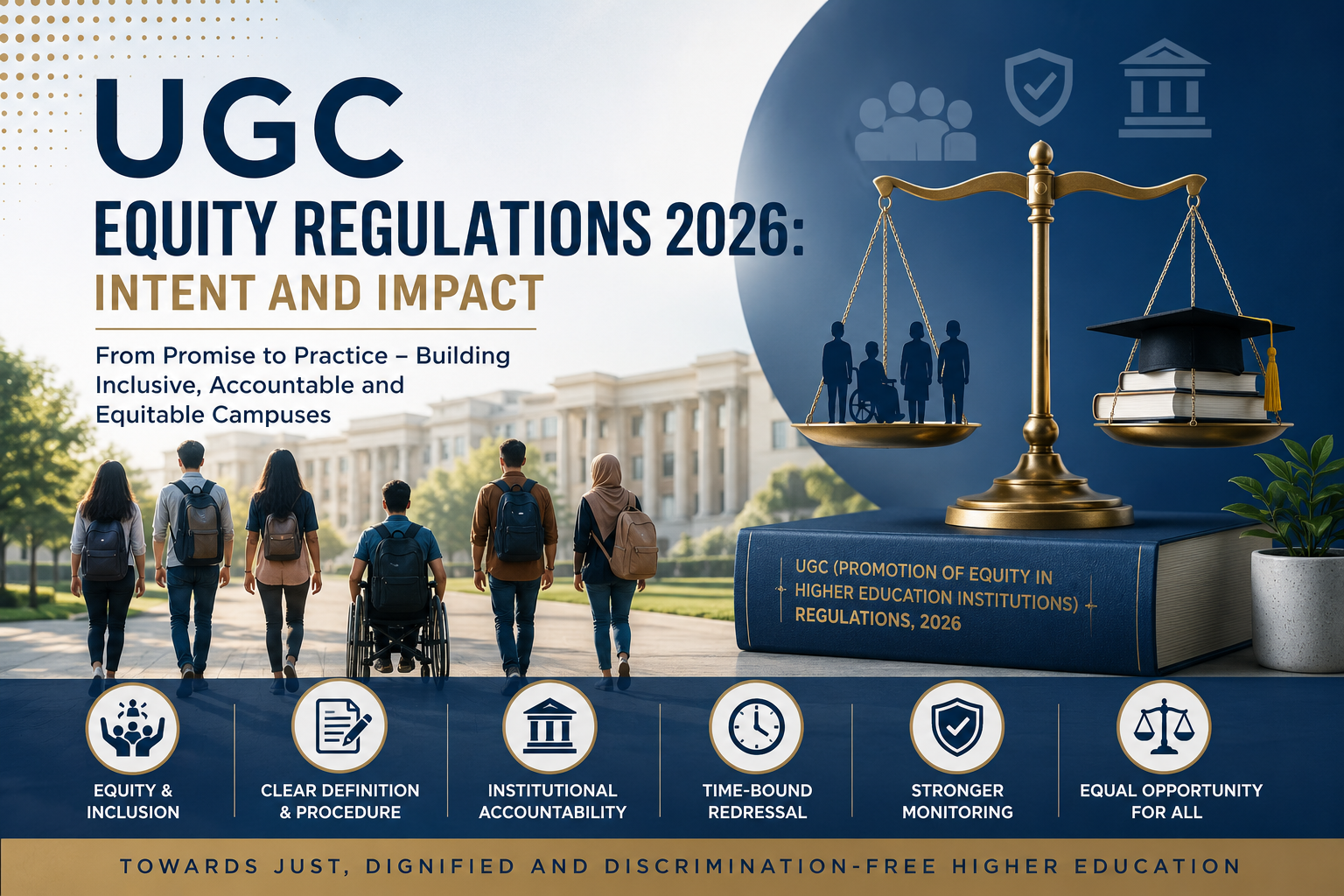
The University Grants Commission (Promotion of Equity in Higher Education Institutions) Regulations, 2026 – popularly labelled in media and exam discourse as the “UGC new Act 2026”, “UGC Bill 2026” or “UGC Equity Regulations 2026” – are not a new parent statute but a set of binding subordinate regulations issued by the UGC under the UGC Act, 1956. Notified on 13 January 2026, they are supposedly designed to replace and strengthen the earlier 2012 UGC (Promotion of Equity in Higher Educational Institutions) Regulations, with the stated aim of ensuring equity, inclusion, and non‑discrimination across Indian campuses through clear definitions, time‑bound complaint procedures, institutional accountability, and national‑level monitoring. These regulations apply to all UGC‑recognised institutions – central, state, deemed and private universities, as well as affiliated colleges – and explicitly prohibit discrimination on the grounds of caste (SC, ST, OBC), religion, race, gender, place of birth, disability and also extend protection to Economically Weaker Sections (EWS), thereby enlarging the list of protected categories compared to the 2012 regime. Substantively, they require every institution to set up Equal Opportunity Centres (EOCs), Equity Committees, and related bodies, maintain accessible complaint mechanisms (including helplines and online portals), follow strict timelines in acknowledging and deciding complaints, submit periodic reports, and face sanctions such as withdrawal of grants or recognition in cases of persistent non‑compliance.
Historically, the 2026 regulations sit on top of a decade‑long experience with the 2012 equity regulations and related UGC guidelines on anti‑ragging and grievance redressal that were largely advisory in nature. The earlier framework urged institutions to prevent caste‑based harassment and set up internal committees but provided no strict timelines, did not clearly fix liability on vice‑chancellors or principals, and lacked a robust system for national‑level oversight; consequently, implementation was uneven and many cases were either delayed or handled informally without meaningful remedy. High‑profile tragedies such as the suicides of Rohith Vemula at the University of Hyderabad and Payal Tadvi in Mumbai exposed deep institutional apathy and failures in addressing caste‑based discrimination, prompting protests, parliamentary discussions and litigation questioning whether existing safeguards were adequate. In particular, proceedings often grouped under the Abeda Salim Tadvi v. Union of India matter in the Supreme Court pushed UGC to revisit its regulatory framework and draft more effective, enforceable measures to tackle discrimination in higher education, which ultimately culminated in the 2026 regulations. In that sense, the new rules are framed as a regulatory overhaul driven by judicial scrutiny, social movements against caste atrocities, and a policy shift signalled by the National Education Policy 2020 towards stronger accountability and inclusion in higher education governance.
On paper, the 2026 regulations reform the old regime along several dimensions: definitions, structures, procedure, accountability, monitoring, and sanctions. First, they expand and sharpen definitions of “discrimination” by listing a wide range of protected groups and spelling out that discriminatory conduct can include denial of facilities, hostile academic environments, derogatory remarks, exclusion from hostels or research opportunities, and biased evaluation, thus giving committees a more concrete yardstick than in 2012. Secondly, they mandate institutional structures: EOCs as nodal units to coordinate equity work and assist affected students; Equity Committees with representation from SC, ST, OBC, women, religious minorities, and persons with disabilities, usually chaired by the institutional head or a senior nominee; and in some explanatory material, “Equity Squads” or “Equity Ambassadors” to observe campus spaces like hostels and laboratories. Thirdly, they impose strict timelines: complaints are to be acknowledged promptly (often described as within 24 hours), inquiries initiated quickly, reasoned reports completed within around 15 working days, and institutional action – including disciplinary measures where warranted – taken within a short, specified follow‑up period, with an appeal mechanism to an Ombudsperson or similar external authority. Fourthly, they tighten accountability by making vice‑chancellors and principals directly responsible for ensuring compliance, creating safe environments, and filing periodic compliance reports with UGC, so that failure can attract consequences for the institution itself rather than remaining at the level of individual errant staff. Fifthly, they envisage national‑level monitoring through a central committee including statutory commissions (NCSC, NCST etc.) and civil‑society representatives, annual institutional reporting, bi‑annual public reports from EOCs and a central UGC portal tracking complaints and compliance status, thereby moving from internal, opaque handling of cases to a more transparent, data‑driven approach. Finally, they back these mechanisms with stronger sanctions: non‑compliance can trigger financial penalties, denial of new courses, exclusion from schemes, suspension of degree‑granting powers or, in extreme cases, withdrawal of UGC recognition, which marks a shift from soft guidelines to hard regulation with “teeth”.
Proponents justify this overhaul on several grounds, emphasising the persistent reality of discrimination and the inadequacy of prior arrangements. They point to evidence that caste‑based and other forms of discrimination remain entrenched in Indian campuses, contributing to alienation, dropouts, and severe mental‑health consequences for students from marginalised communities, and argue that without clear, enforceable rules institutions have repeatedly failed to act even in egregious cases. The 2012 regulations are widely criticised as vague, weak on enforcement and lacking both institutional and national‑level accountability, which allowed universities to delay or bury complaints and made data on discrimination fragmentary and unreliable. From this vantage point, the 2026 regulations are presented as a response to Supreme Court directions in cases like those concerning Rohith Vemula and Payal Tadvi, as well as the broader Abeda Salim Tadvi proceedings, thereby carrying a degree of judicial endorsement as a necessary corrective to institutional apathy. They also align with NEP 2020’s emphasis on inclusion and India’s international commitments on equality and non‑discrimination, and their supporters argue that codified definitions, time‑bound procedures, and centralised data will make complaint‑handling less arbitrary and more evidence‑based. In practical terms, advocates contend that time‑bound, accessible grievance redressal could help prevent extreme outcomes like suicides, reassure vulnerable students that their experiences are recognised, and push even reluctant institutions to take structural steps such as revising hostel allocation or disciplining discriminatory faculty.
At the same time, the regulatory architecture is complex and has drawn serious questions from institutions and critics. Universities and colleges are expected to create EOCs staffed with trained personnel to manage complaints, outreach, sensitisation, and coordination with external authorities like police or district administrations, tasks that require both resources and capacity that many smaller institutions may not possess. Equity Committees and any associated “squads” must meet regularly, maintain round‑the‑clock helplines or online channels, and process complaints in compressed timeframes, which could strain administrative bandwidth and risk turning sensitive inquiries into hurried, bureaucratised exercises. Regular orientation and training for faculty, non‑teaching staff and students, integration of equity themes into curricula, and detailed record‑keeping for annual reporting are all potentially valuable but increase compliance burdens and paperwork, especially if not matched with funding and capacity‑building. There is also concern that heavy UGC oversight and the threat of funding cuts may encourage “check‑box” compliance – elaborate rules on paper but minimal substantive change – or risk‑averse behaviour where institutions shy away from robust academic and political debate for fear that complaints may attract regulatory consequences. Critics further point out that the regulations primarily strengthen procedural response to discrimination but do not directly repair deeper structural issues such as severe under‑representation of marginalised groups in faculty positions, curriculum reform, or socio‑economic barriers in admissions and funding, raising doubts about how far procedure alone can transform entrenched caste hierarchies.
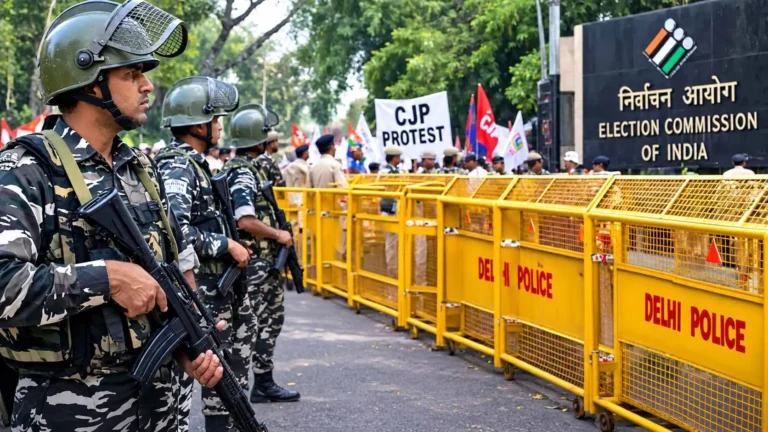
These tensions have produced a sharply polarised response. On one side, some student organisations representing SC, ST, OBC and minority communities, human‑rights groups and sections of the academic community have welcomed the regulations as a long‑overdue attempt to force institutions to take responsibility for discrimination that has historically been denied or minimised. They argue that existing mechanisms have consistently failed victims, that institutional hierarchies often protect powerful perpetrators, and that fears of misuse are overstated when set against the scale of unreported or under‑reported caste‑ and gender‑based abuse. On the other side, sections of teaching staff, some student groups and political voices view the regulations as ideologically loaded, potentially divisive and an invitation to constant surveillance of everyday campus life, with a risk that even benign interactions will be second‑guessed through the lens of equity compliance. Protests covered in the press include resignations from equity‑related committees and public demonstrations demanding withdrawal or substantial redrafting of the rules to better protect academic freedom and ensure due process for those accused of discrimination. This contestation has framed a wider debate on how to balance protection for vulnerable groups with institutional autonomy and freedom of expression in universities, particularly in a highly stratified and politicised social context.
The controversy culminated, for now, in the Supreme Court’s interim stay on the 2026 regulations. On 28–29 January 2026, a Bench of Chief Justice Surya Kant and Justice Joymalya Bagchi passed an order keeping the UGC (Promotion of Equity in Higher Education Institutions) Regulations, 2026 “in abeyance”. The Court directed that the earlier 2012 UGC Promotion of Equity Regulations, which had been formally repealed, would temporarily continue in force by invoking its powers under Article 142 of the Constitution, so that students would retain some level of legal protection against discrimination while the new framework is examined. The Bench issued notice to the Union government and UGC, tagged the new challenges with the pending Abeda Salim Tadvi matter on caste discrimination in higher education, and listed the case for a substantive hearing in March 2026, making it clear that the Court has not yet given a final verdict on the constitutional validity of the 2026 regulations. This interim order has created uncertainty for institutions that had started setting up EOCs and equity committees, emboldened critics who see the stay as validation of their concerns, and worried supporters who fear a rollback in momentum to reform discriminatory campus cultures.
The case reached the Supreme Court through writ petitions challenging both the constitutionality and the legality of the regulations. At least three petitioners – including Mritunjay Tiwari, advocate Vineet Jindal, and Rahul Dewan – argued that the new framework violates Article 14 by being inherently discriminatory, vague, and prone to misuse. They targeted, in particular, Clause 3(c) of the regulations, which defines “caste‑based discrimination” in terms that explicitly reference only Scheduled Castes, Scheduled Tribes and Other Backward Classes, while not referring to students from the unreserved (“general”) category. According to the petitions, this creates an “exclusive” definition that presumes only certain groups can be victims of caste‑based discrimination and leaves others without symmetrical protection, even though caste as a social hierarchy can, in principle, affect people across categories in various ways. The petitioners also highlighted that the regulations do not provide a clear, explicit mechanism to penalise false or malicious complaints and do not explicitly mention “ragging” as a form of discrimination, raising a hypothetical but serious concern: that a fresher who resists ragging by a senior from a reserved category could face a retaliatory false allegation of caste discrimination, potentially escalating to criminal liability under the SC/ST (Prevention of Atrocities) Act. Because these issues engage fundamental questions of equality, fairness, statutory competence of UGC, and the social impact of regulatory definitions, the Supreme Court, as the apex constitutional court, was the natural forum and took jurisdiction directly.
In explaining its reasons for the stay, the Supreme Court’s remarks are critical to understanding both the legal and social risks it perceives in the 2026 regulations. The Bench repeatedly described key parts of the regulatory text, especially Clause 3(c), as “prima facie vague”, “completely vague” and “capable of misuse”, indicating that the definition of caste‑based discrimination lacks sufficient clarity and could be stretched in unpredictable or abusive ways. The Court questioned why Clause 3(c) was necessary when Clause 3(e) already contains a broader definition of “discrimination” covering religion, race, caste, gender, place of birth, and disability, suggesting that carving out a special caste‑discrimination clause focused on SC/ST/OBC might not have a reasonable nexus with the goal of preventing discrimination and could itself be arbitrary. The Bench also voiced deeper normative concerns, warning that the structure and language of the regulations could “divide society” and push India in a “regressive” direction instead of helping the country move towards the constitutional vision of a casteless society, particularly if the rules are perceived as creating rigid categories and asymmetrical protections that accentuate group boundaries rather than build universal norms. A further concern was the absence of explicit safeguards against false or malicious complaints and the omission of ragging as a named category, which the Court read as a serious flaw in a context where campus power relations and identity politics can be complex and volatile; for the Bench, a sound anti‑discrimination framework must both protect those historically oppressed and guard against the risk that new powers are used vindictively or opportunistically. Considering these prima facie concerns about vagueness, potential misuse, and adverse social impact, the Court concluded that it was safer to pause implementation rather than allow the new rules to operate while their constitutional validity remains under serious challenge.
The Court did not stop at criticism; it also indicated a direction for future action. It ordered that the 2012 UGC Promotion of Equity Regulations will stay in force during the pendency of the case, ensuring that there is no legal vacuum and that institutions retain a baseline of obligations to address discrimination, even if weaker than the 2026 design. At the same time, the Bench strongly suggested that the 2026 regulations require revisiting and redrafting, recommending that they be examined by a committee including eminent jurists or experts to cure vagueness, include safeguards against misuse and reconcile internal inconsistencies such as the overlap between clauses 3(c) and 3(e). Notices have been issued to the Union government and UGC to file detailed affidavits defending the rationale, structure and safeguards embedded in the regulations, and by tagging the matter with the Abeda Salim Tadvi proceedings, the Court signalled that it intends to examine both the necessity of robust anti‑discrimination mechanisms and the proportionality and design of the present framework together. Crucially, the Bench articulated an overarching normative stance: India should move towards a casteless society, but “mechanisms for those who need protection” must coexist with that goal, meaning any revised framework must carefully balance strong protections for historically marginalised communities with clarity, fairness, and protections for all students against misuse or overreach.
If one centres analysis on the Supreme Court’s order and reasoning, several serious implications of the 2026 regulations become visible, especially regarding their potential to be divisive, totalising, and exclusory. First, by defining caste‑based discrimination in Clause 3(c) primarily around SC/ST/OBC identity, the regulations risk institutionalising a one‑directional concept of caste harm: they encode, at the regulatory level, an assumption that only certain categories can be victims of caste discrimination and others are necessarily in the position of potential perpetrators. This is normatively understandable as an attempt to focus on historically oppressed groups, but as the Court notes, it becomes problematic if written so vaguely and asymmetrically that some students feel that they lack equal protection of anti‑discrimination norms and that any conflict involving them can be framed as an atrocity against a reserved‑category student, regardless of the actual facts. In a society where caste remains a sensitive and politicised axis, such an asymmetry, especially when backed by punitive powers and regulatory sanctions, may deepen mistrust between groups and fuel a narrative that the law favours some citizens over others in a way that goes beyond constitutionally permissible affirmative action, thereby risking divisiveness rather than shared commitment to equal dignity.
Secondly, the breadth, layering, and centralisation of the enforcement mechanisms give the framework a distinctly totalising character, which the Court implicitly flags when it worries about vagueness and misuse. The combination of EOCs, Equity Committees, possible “Equity Squads”, Ombudspersons, national monitoring committees, annual reporting, and the threat of financial sanctions or derecognition places an extensive compliance apparatus over universities, with UGC acting as a powerful central overseer. In principle, central oversight is justified by the need to correct institutional failures, but in practice, a vaguely drafted, highly centralised system, backed by severe sanctions, can encourage institutions to behave defensively and surveil everyday academic and social interactions through the lens of risk management rather than education, dialogue, or trust. When institutional survival (funding, recognition, approvals) is linked to metrics of compliance with open‑ended notions of “equity”, administrators may over‑police speech, clamp down on open debate, or discourage faculty from engaging with controversial topics that intersect with caste and identity, out of fear that complaints could attract regulatory fallout. Such a climate tends towards a totalitarian flavour within the university space: not in the sense of state dictatorship, but in the sense of pervasive, top‑down monitoring and control over campus life and discourse in the name of a singular normative goal, leaving little room for local judgment, plural pedagogical approaches, or organic contestation.
Thirdly, the Court’s concern about vagueness and the absence of explicit safeguards for the falsely accused underscores the potential exclusory effects of the regulations, including on those they are meant to protect. If definitions are loose and any sharp disagreement, disciplinary measure or conflict can be reframed as “discrimination”, faculty may avoid close engagement with vulnerable students, fearing that adverse academic decisions (for instance, failing a student for poor performance) could be reinterpreted as discriminatory conduct. Over time, this can paradoxically isolate the very students the regulations aim to empower, as risk‑averse teachers and administrators keep distance to protect themselves, undermining genuine mentorship and integration. For other students, especially from the general category or intersecting identities not clearly named in Clause 3(c), the sense that they lack symmetrical protection may create grievances that are channelled into broader political narratives about “reverse discrimination”, deepening polarisation and undermining the legitimacy of affirmative measures that are constitutionally necessary. In this way, a framework intended to include can, under certain social conditions, exclude by making some groups feel structurally suspect and others feel structurally vulnerable to being stereotyped as oppressors or as opportunistic complainants.
Fourthly, aligning with the Supreme Court’s anxiety about India’s trajectory after 75 years of independence, one must consider how such regulations shape the long‑term social imagination of caste and citizenship. The constitutional project aims at a society in which caste ceases to determine life chances, while recognising that targeted protections and reservations are indispensable transitional tools. For such tools to be sustainable, they must be seen as both necessary and fair, firmly focused on dismantling oppression, but also bounded, transparent, and compatible with a shared sense of equal moral status for all citizens. When anti‑discrimination rules are drafted in ways that appear open‑ended, asymmetrical, and heavily punitive, without clear safeguards or universal framing, they risk being interpreted not as instruments of shared justice but as weapons in a zero‑sum struggle among groups, which is dangerous for India’s social cohesion. The Court’s call to move toward a casteless society “with mechanisms for those who need protection” can thus be read as an insistence that regulatory design cannot sacrifice the broader project of common citizenship to an unreflective expansion of punitive powers, even in the name of anti‑caste justice.
Finally, from the perspective of India as a whole, a framework that is divisive, totalising, and exclusory is unlikely to be sustainable or normatively sound, even if motivated by a legitimate desire to protect vulnerable communities. If the 2026 regulations, in their current form, are perceived as privileging some groups’ rights at the cost of others’ sense of security and fairness, undermine academic freedom through pervasive oversight, and chill genuine interaction across caste and community lines, they may erode trust in both institutions and the law itself. Long‑term democratic stability and social peace require that anti‑discrimination measures be both robust and widely perceived as just; otherwise, they invite backlash, non‑compliance, and legal challenge, as the Supreme Court’s stay already illustrates. The Court’s intervention, while interim, offers a constitutional compass: India must protect those who have historically suffered the worst forms of exclusion, but it must do so through legal frameworks that are precise, balanced, and anchored in a vision of shared citizenship, avoiding regulatory designs that inadvertently entrench new forms of division, centralised control, and mutual suspicion that cannot, in any way, be good for the country as a whole.
About the Author