

By: Dr Jamshed Mushtaq ( Senior Research Fellow)
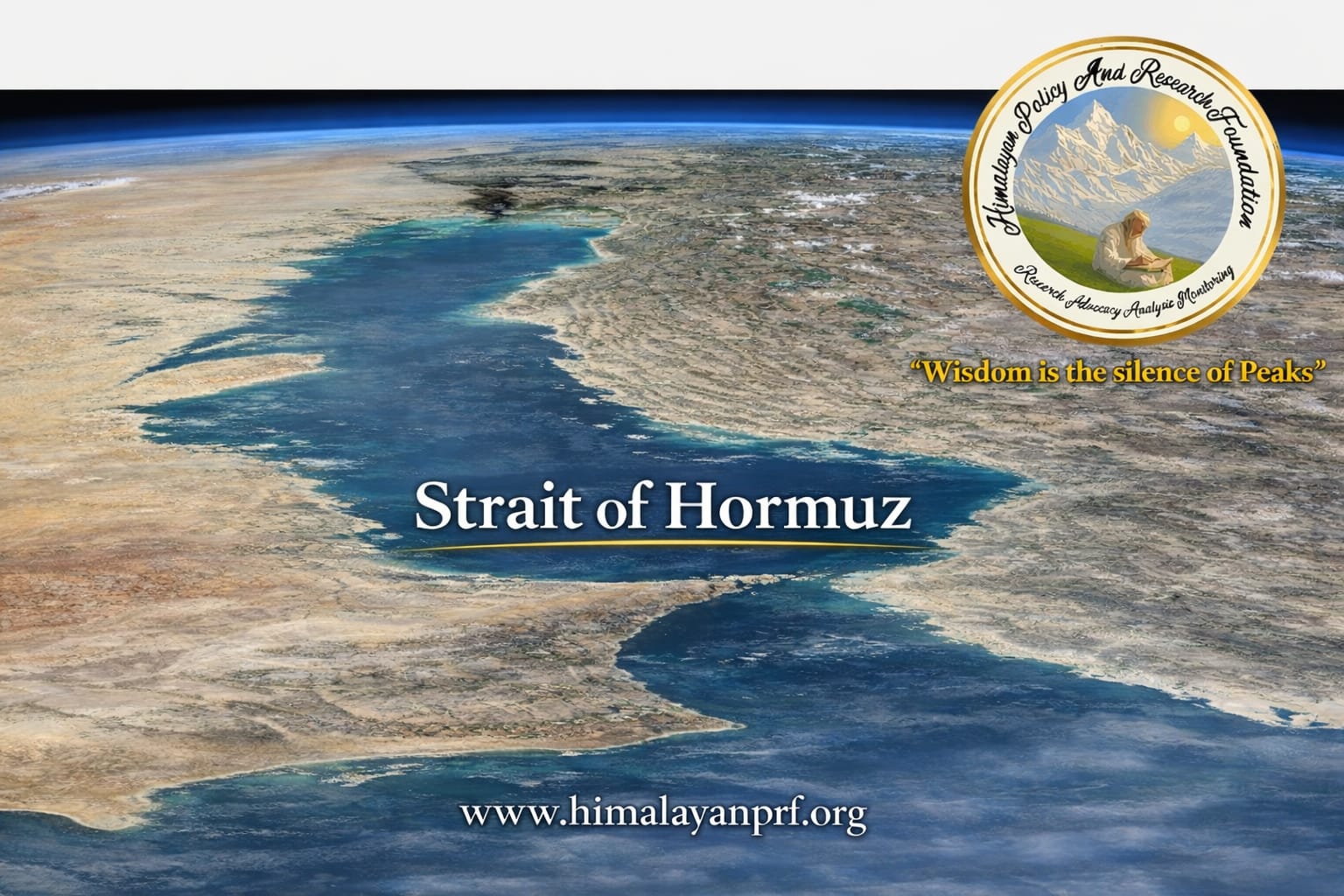
Few geographical locations exert as much influence over the contemporary global economy as the Strait of Hormuz. Situated between Iran and Oman at the mouth of the Persian Gulf, the strait is a narrow maritime passage through which an extraordinary volume of the world’s energy supply flows each day. In spatial terms, it is a relatively small corridor of water. In strategic terms, however, it represents one of the most consequential chokepoints in the international system. Nearly a fifth of the world’s oil consumption and a substantial proportion of globally traded liquefied natural gas pass through this corridor before reaching markets in Asia, Europe, and beyond. The routine movement of tankers through the strait sustains industrial production, transportation networks, and electricity generation across continents. Yet the same geographic concentration that allows such efficiency also produces a profound vulnerability. When geopolitical tensions escalate in the Persian Gulf, the Strait of Hormuz becomes a focal point of strategic anxiety.
The significance of Hormuz cannot be understood solely through statistics about energy flows. Its importance is embedded in the structure of the global political economy. The Persian Gulf region contains some of the largest proven hydrocarbon reserves in the world. Countries along its shores have for decades supplied a large portion of internationally traded crude oil. These resources must reach global markets through maritime routes, and geography funnels most of those exports through the Strait of Hormuz. The result is a classic strategic bottleneck: an enormous volume of economic value compressed into a narrow and easily identifiable transit corridor.
Such chokepoints have historically played decisive roles in international politics. Strategic thinkers from Alfred Thayer Mahan to contemporary analysts have emphasized the importance of maritime passages that concentrate trade routes into confined spaces. In open ocean environments, ships can disperse across vast expanses, making interdiction difficult and costly. In contrast, narrow maritime corridors create conditions in which disruption becomes feasible even for actors with limited naval resources. Geography, in other words, magnifies power. The state that occupies the coastline adjacent to such passages gains an inherent advantage in monitoring and potentially threatening maritime traffic.
In the case of the Strait of Hormuz, this geographic advantage belongs primarily to Iran. The northern coastline of the strait lies within Iranian territory, giving Tehran direct proximity to one of the most important energy transit routes on the planet. This location has shaped Iran’s strategic thinking for decades. Recognizing the disparity between its conventional military capabilities and those of external powers such as the United States, Iran has developed a military doctrine centered on asymmetric warfare in confined maritime environments. Rather
than seeking to dominate the seas in the traditional sense, Iranian strategy focuses on the ability to deny safe passage through the strait during periods of crisis.
The tools associated with this strategy are well known. Iran maintains a significant inventory of naval mines capable of being deployed covertly in shipping lanes. It has developed coastal missile systems designed to target vessels transiting the corridor. Small fast-attack boats, often operating in coordinated formations, are intended to overwhelm larger ships through swarm tactics. Submarines optimized for shallow waters add another layer of uncertainty to the maritime environment. Increasingly, unmanned aerial systems and surveillance technologies are integrated into this architecture of sea denial.
The strategic logic behind these capabilities is not necessarily to impose permanent closure of the strait. A prolonged blockade would likely provoke a powerful international military response and could ultimately damage Iran’s own economic interests. Instead, the objective is to create the credible possibility of disruption. Even intermittent attacks on tankers, the discovery of mines in shipping lanes, or heightened military confrontation in the vicinity of the strait can dramatically affect global energy markets. Oil prices respond quickly to perceived risks to supply, and traders often incorporate geopolitical uncertainty into price expectations long before physical shortages occur.
In this sense, the Strait of Hormuz functions not only as a logistical passage but also as a mechanism of economic signaling. By demonstrating its ability to threaten maritime transit, Iran can impose psychological pressure on global markets and on the governments that depend on Gulf energy supplies. The leverage derived from this capability becomes particularly significant during periods of geopolitical confrontation, such as the current tensions involving Iran, Israel, and the United States. The conflict has raised fears that escalation could eventually spill into the maritime domain, turning the strait into a theater of strategic competition.
The broader international community has long recognized the risks associated with this scenario. For decades, external naval powers have maintained a presence in the Persian Gulf with the explicit objective of ensuring freedom of navigation through the strait. The United States Navy, along with allied forces, regularly patrols the region and conducts operations designed to deter attacks on commercial shipping. Yet even the presence of powerful naval forces cannot entirely eliminate the vulnerabilities inherent in such a narrow passage. Mines can be difficult to detect, missile strikes can occur with little warning, and even minor incidents can trigger dramatic market reactions.
These vulnerabilities illustrate a deeper paradox within the global energy system. The architecture of modern energy trade is built upon efficiency and scale. Oil is transported in massive tankers that follow predictable maritime routes connecting major producing regions with major consuming markets. This system minimizes transportation costs and ensures the steady flow of energy required by industrial economies. At the same time, however, it concentrates risk in a handful of geographic chokepoints. The Strait of Hormuz, the Strait of Malacca, and a few other maritime passages collectively carry a large proportion of global
trade. Disruptions in any of these corridors can therefore produce effects that reverberate far beyond their immediate geographic surroundings.
The current conflict in the Middle East has once again brought this structural vulnerability into focus. Military confrontations between Iran and Israel, combined with the broader strategic involvement of the United States, have heightened the possibility that maritime routes in the Persian Gulf could become targets of coercive action. Although outright closure of the strait remains unlikely in the short term, the mere possibility of disruption introduces volatility into global energy markets. Each escalation in the conflict is closely monitored by traders, governments, and security analysts who understand that even localized incidents can have global consequences.
For energy-importing economies, the stakes are particularly high. Countries across Asia and Europe rely heavily on crude oil and natural gas exported from the Persian Gulf. Any disruption to shipping through the Strait of Hormuz would therefore produce immediate economic repercussions. Oil prices would likely surge, transportation costs would increase, and inflationary pressures could spread through national economies. In a world already grappling with economic uncertainty, such a shock would carry significant political implications.
Among the countries most exposed to these risks is India. Over the past three decades, India has emerged as one of the fastest-growing energy consumers in the world. Rapid urbanization, expanding industrial activity, and rising standards of living have all contributed to a dramatic increase in demand for petroleum products and natural gas. Yet domestic production has not kept pace with this demand, forcing the country to rely heavily on imported energy supplies. A large portion of those imports originates in the Persian Gulf and must transit the Strait of Hormuz before reaching Indian ports.
This dependence places India in a complex strategic position. On the one hand, the stability of maritime routes through the strait is essential for sustaining the country’s economic growth. On the other hand, India has limited influence over the geopolitical dynamics that shape security conditions in the Persian Gulf. The country must therefore navigate a delicate balance between maintaining productive relationships with Gulf energy producers, managing diplomatic ties with Iran, and cooperating with broader international efforts to preserve maritime stability.
The vulnerability associated with this dependence becomes particularly evident during periods of regional conflict. A disruption in shipping through the Strait of Hormuz would not only threaten the physical flow of energy supplies to India but also trigger broader market reactions that could dramatically increase the cost of imports. Because oil prices are determined within a globally integrated market, even countries able to secure alternative sources of supply would still face the economic consequences of rising global prices.
For India’s economy, such price shocks can have far-reaching effects. Energy costs influence transportation, manufacturing, agriculture, and nearly every sector of economic activity.
Higher oil prices increase the cost of imports, widen the current account deficit, and place downward pressure on the national currency. Inflationary pressures can spread through supply chains, ultimately affecting household consumption and economic growth.
These dynamics underscore the broader strategic importance of the Strait of Hormuz for India. The corridor is not simply a distant maritime passage located thousands of kilometers from the Indian coastline. It is a critical link in the chain that connects global energy markets to the functioning of the Indian economy. The stability of the strait therefore carries implications not only for international security but also for domestic economic policy.
Understanding the strategic importance of Hormuz requires recognizing this intersection between geography, energy, and economic vulnerability. The strait illustrates how seemingly distant geopolitical tensions can directly influence the economic trajectories of countries far removed from the immediate theater of conflict. For India, the challenge lies in navigating these vulnerabilities while continuing to sustain economic growth in an increasingly uncertain geopolitical environment.
In the global oil market, risk is often as consequential as physical shortage. Oil prices are determined not simply by present supply but by expectations about future availability. Even a temporary disruption in the strait – or credible signals that such disruption might occur – can trigger immediate volatility in energy markets. Traders respond to perceived threats by bidding up prices, shipping insurers adjust premiums, and governments begin contingency planning for supply shortages. The resulting turbulence can spread through the global economy with remarkable speed. Because oil remains central to transportation, manufacturing, and agriculture, price spikes tend to reverberate through multiple sectors simultaneously.
The strategic significance of the Strait of Hormuz therefore lies in its ability to transmit local instability into systemic economic pressure. A confrontation in a narrow maritime corridor can alter inflation trajectories, currency stability, and fiscal planning across continents. In this sense, the strait functions as a geopolitical multiplier. Its vulnerability amplifies the economic consequences of conflict.
The relationship between India’s economic trajectory and the stability of the strait is therefore direct. A prolonged disruption in transit would not simply alter fuel prices at the margin; it would threaten a central pillar of the country’s growth model. Even moderate increases in oil prices exert pressure on India’s current account balance because the country imports a large share of its crude requirements. When prices rise sharply, the import bill expands, placing strain on foreign exchange reserves and widening the trade deficit. Currency markets often react swiftly to such imbalances, which can lead to depreciation pressures on the rupee.
Inflation represents another channel through which disruption in the strait would affect India. Fuel costs influence transportation, electricity generation, and agricultural production. Higher energy prices tend to cascade through supply chains, raising the cost of goods ranging from food to manufactured products. For policymakers, this creates a delicate balancing act. The
central bank must weigh the need to contain inflation against the risk of slowing economic growth through tighter monetary policy. Meanwhile, the government faces pressure to cushion consumers through subsidies or tax adjustments, measures that can strain fiscal resources.
Strategic planners in New Delhi have long recognized this vulnerability. Over time, India has attempted to mitigate risk through diversification of supply sources, investment in strategic petroleum reserves, and diplomatic engagement with a wide range of energy producers. Yet the structural geography of the global oil trade limits the extent to which diversification can fully insulate the country from disruptions in the Strait of Hormuz. Even shipments originating outside the Persian Gulf can be affected by price volatility triggered by instability in the strait. In a tightly integrated market, disruption in one corridor reverberates across the entire system.
The current geopolitical environment intensifies these concerns. Escalating tensions involving Iran, the United States, and regional actors have revived longstanding fears about the vulnerability of the strait. Military posturing in and around the Persian Gulf, including naval deployments and missile demonstrations, has underscored how quickly commercial shipping can become entangled in strategic rivalry. Each episode of confrontation reminds energy-importing economies that their prosperity remains linked to the stability of a narrow maritime passage thousands of miles away.
For India, the strategic challenge extends beyond economics. The country maintains complex relationships across the region, balancing ties with Gulf monarchies, partnerships with Western powers, and historical connections with Iran. These relationships often pull policy in different directions. On one hand, India benefits from stable energy flows from Gulf producers whose exports traverse the strait. On the other hand, it has long valued its civilizational and geopolitical ties with Tehran. Navigating these overlapping interests requires careful diplomacy, particularly in moments of heightened tension.
The Strait of Hormuz thus occupies a distinctive place in India’s strategic calculus. It is both a physical corridor through which vital resources pass and a symbolic reminder of the country’s integration into global energy networks shaped by geopolitical contestation. When analysts describe the strait as a chokepoint, they are not merely referring to geography. They are describing a point where economic vulnerability, military strategy, and diplomatic complexity intersect.
If Iran were to attempt even a temporary closure of the strait during a major conflict, the consequences for India would unfold in stages. The immediate effect would likely be a surge in global oil prices, driven by fears of supply interruption. Financial markets would react almost instantly, with energy companies, shipping firms, and commodity traders recalibrating their expectations. Insurance costs for tankers navigating the region could rise dramatically, making shipments more expensive even if they continue to move.
In the medium term, physical shortages could emerge if shipping volumes declined significantly. Refineries dependent on Gulf crude might face supply disruptions, forcing them to seek alternative sources at higher cost. Strategic reserves could cushion the initial shock, but they would provide only temporary relief. The longer the disruption lasted, the greater the pressure on the broader economy.
At the strategic level, India would confront difficult choices about how to respond diplomatically and militarily. The country has gradually expanded the capabilities of its navy, recognizing the importance of maritime security for its economic future. Yet projecting power into the Persian Gulf in the midst of a major conflict would be fraught with risk. More likely, India would seek to work through multilateral channels, supporting international efforts to ensure freedom of navigation while emphasizing de-escalation.
Ultimately, the Strait of Hormuz illustrates a larger truth about the global energy system. Economic interdependence does not eliminate geopolitical risk; in many cases, it magnifies it. The same networks that allow resources to flow efficiently across continents also create points of concentrated vulnerability. When those points become entangled in conflict, the repercussions extend far beyond the immediate battlefield.
For India, a rising power with expanding economic ambitions, the lesson is clear. Energy security cannot be understood solely in terms of domestic production or bilateral supply agreements. It must also encompass the stability of the maritime corridors through which energy travels. The Strait of Hormuz, narrow though it may be, remains one of the most consequential of those corridors. Its security is inseparable from the stability of the global economy – and from the trajectory of India’s own development in the decades ahead.