The suicide bombing at the Khadijatul Kubra Shia Mosque on the
Written By: Sheeraz Zaman Lone ( Socio Political Activist from jammu and kashmir India )
The suicide bombing at the Khadijatul Kubra Shia Mosque on the outskirts of Islamabad in February 2026 represents a critical inflection point in Pakistan’s long and troubled encounter with militant violence, sectarian exclusion, and the blowback from decades of instrumentalising non‑state armed actors in regional politics. It encapsulates at once the acute human tragedy of mass casualty terrorism, the strategic volatility of cross‑border militancy, and the structural vulnerabilities of a state that has yet to fully reconcile its constitutional promises of equal citizenship with deeply embedded sectarian hierarchies and competing security imperatives.
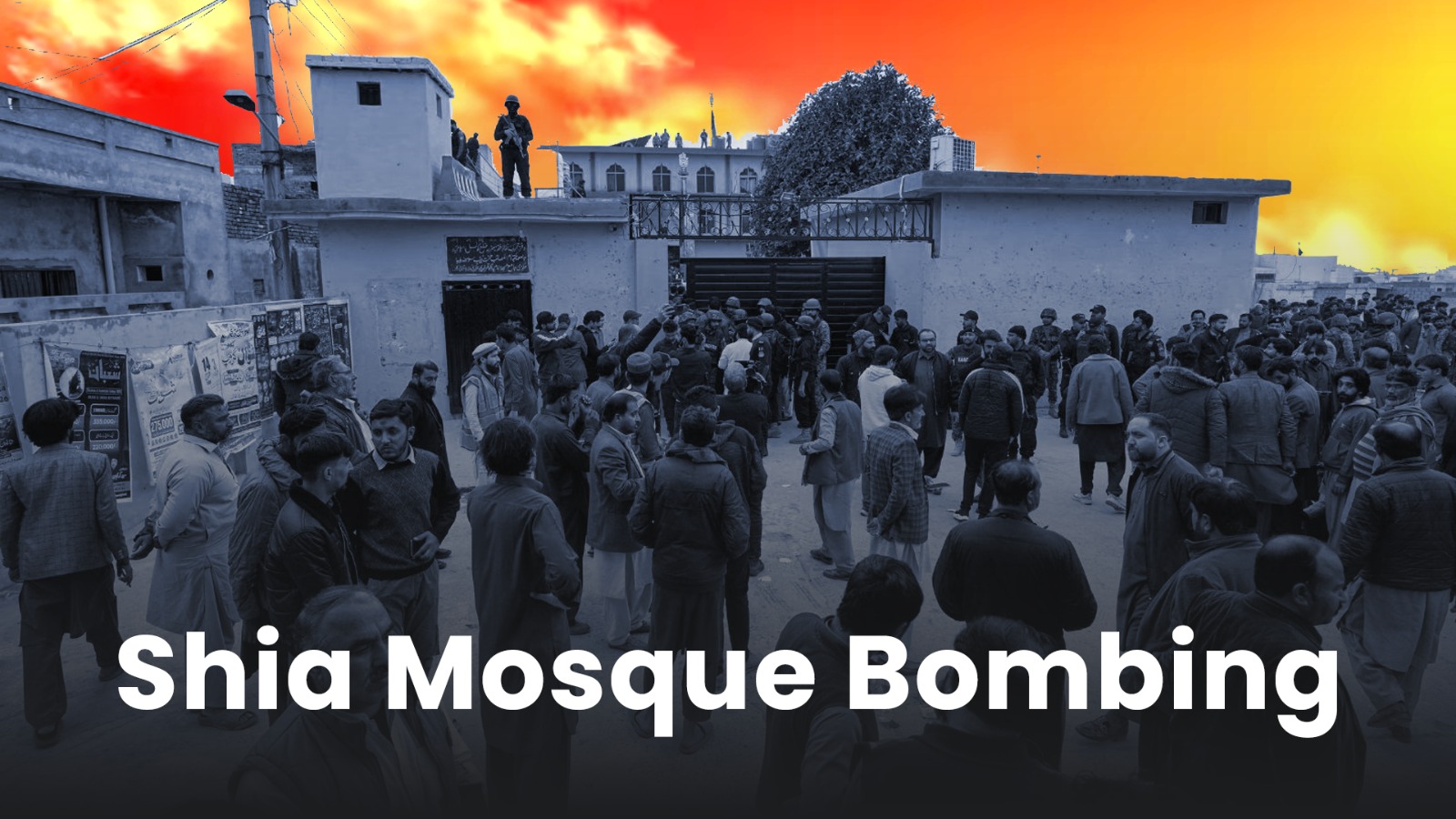
The attack itself, by most accounts, is now relatively well‑established in its basic factual outline, even as important investigative details remain under active scrutiny. On Friday 6 February 2026, during congregational prayers at the Khadijatul Kubra Mosque (also referred to as an Imambargah) in the Tarlai Kalan area in southeastern Islamabad, a suicide bomber attempted to enter the compound but was reportedly confronted at the gate by mosque security personnel. Witnesses and official statements converge on a sequence in which the assailant opened fire on the guards and then detonated an explosive vest either at the inner gate or within the mosque precincts, producing a devastating blast that collapsed parts of the structure, shattered windows, and left bodies and wounded worshippers scattered across the prayer hall and courtyard. Initial casualty figures varied in the chaotic aftermath, but Pakistani officials subsequently reported between 31 and 32 worshippers killed and around 169–170 injured, with a significant number in critical condition; some later reports and political statements have used slightly higher figures, underlining how casualty counts in mass attacks can evolve as victims succumb to injuries and as institutions consolidate data. Hospitals across Islamabad were placed on high alert, emergency services appealed for blood donations, and televised images showed residents and police jointly transporting the wounded to nearby medical facilities in a desperate effort to prevent the death toll from rising further.
The attack rapidly drew a claim of responsibility from a local affiliate of the so‑called Islamic State, identified in various reports as Islamic State Khorasan (ISIS‑K) or the Islamic State in Pakistan Province (ISPP), illustrating the fluid branding and organisational overlap within Islamic State’s regional project. Through its Amaq news agency, the group disseminated a statement and an image of a gun‑wielding attacker with his face covered and eyes blurred, celebrating the operation and describing it as a “fidayeen” suicide mission against what it casts as heretical Shia targets. Pakistani and international monitoring organisations tracking jihadist messaging noted that the claim was consistent with prior ISIS‑K operations in Pakistan and Afghanistan that similarly framed Shia communities as legitimate targets of mass violence in a transnational sectarian campaign. Subsequent reports cited Pakistani officials as identifying the bomber as a Pakistani national who had reportedly traveled repeatedly to Afghanistan, an observation that fed directly into a broader debate about the cross‑border dimensions of militant networks and the degree to which Afghanistan‑based sanctuaries, funders, or facilitators are involved in attacks on Pakistani soil.
In the hours and days following the bombing, the Pakistani state mobilised security and symbolic responses that reflected both the gravity of the incident and its political sensitivity. Islamabad authorities imposed heightened security measures, increased checkpoints, and placed key installations on alert, while political and religious leaders issued condemnations and calls for unity against terrorism. Prime Minister Shehbaz Sharif and President Asif Ali Zardari both framed the attack as an assault not only on a vulnerable religious minority but also on Pakistan’s national cohesion, pledging that those responsible would be pursued and insisting that terrorism would not be allowed to derail the country’s trajectory. Thousands of mourners gathered for funerals and prayer ceremonies for the victims, with media reports of “mourning in every street” underscoring the depth of communal grief and the sense that an especially egregious threshold had been crossed in the capital, which has historically suffered fewer large‑scale attacks than provinces such as Khyber Pakhtunkhwa and Balochistan. The bombing was widely noted as the deadliest attack in Islamabad since the Marriott Hotel truck‑bombing in 2008, and also as the second major attack in the federal capital within a few months, following a suicide bombing near a district court in late 2025 that killed at least a 12 people.
The investigative response developed rapidly, though inevitably amid contested narratives. Pakistan’s interior minister Mohsin Naqvi announced that security agencies had conducted coordinated raids and apprehended four suspects in connection with the bombing, including an individual presented as the alleged mastermind. According to this account, the arrests occurred across multiple locations and targeted what authorities described as a facilitation network supporting the bomber, suggesting that the operation involved local logistical support rather than a purely “external” attacker. Parallel reporting from Peshawar indicated that police had raided what they termed the hideout of the suspected bomber, detaining two brothers and a woman, and seizing material believed to be linked to the planning and preparation of the attack. While detailed forensic and judicial findings were still emerging, the official narrative increasingly emphasised cross‑border linkages: defence minister Khawaja Asif publicly stated that the bomber had travelled between Afghanistan and Pakistan and that the incident should be understood in the context of a wider pattern of attacks with origins, or at least enabling environments, across the Afghan frontier.
It is within this context that Pakistani officials advanced the controversial claim that “India‑backed proxies” were involved in enabling or sponsoring the attack, with senior ministers alleging that Islamabad had shared evidence of Indian support for terrorism with neighbouring countries. These assertions provoked immediate and forceful rebuttals from India, whose Ministry of External Affairs issued a statement condemning the bombing, expressing condolences for the victims, and dismissing Pakistan’s accusations as baseless attempts to externalise responsibility for domestic security failures and “home‑grown ills.” Afghan authorities and commentators likewise rejected implications that Kabul was complicit in cross‑border militancy, even as international analysts noted persistent concerns over the ability or willingness of the de facto Afghan authorities to constrain ISIS‑K and other transnational jihadist groups operating from Afghan territory. This triangular blame game between Islamabad, New Delhi, and Kabul illustrates how dramatic acts of terror are quickly subsumed into regional geopolitical contests, often at the expense of a sober analysis of the local drivers of violent extremism and the internal policy reforms required to address them.
From an academic perspective, the February 2026 bombing must be situated within at least three overlapping trajectories: Pakistan’s long history of sectarian violence targeting Shia and other religious minorities; the evolution of ISIS‑linked networks in South Asia; and the “blowback” from Pakistan’s decades‑long reliance on militant groups as instruments of foreign and domestic policy. Pakistan has witnessed recurrent mass casualty attacks on Shia mosques, processions, and shrines, as well as on Ahmadis, Christians, Hindus, and Sufis, particularly since the 1980s when sectarian organisations such as Sipah‑e‑Sahaba Pakistan and Lashkar‑e‑Jhangvi emerged within a regional environment influenced by the Iranian revolution, Saudi‑Iranian rivalry, and the anti‑Soviet jihad in Afghanistan. In more recent years, ISIS‑K and related entities have sought to “outbid” older sectarian actors in brutality and international notoriety, carrying out attacks such as the 2017 assault on the Lal Shahbaz Qalandar shrine in Sehwan that killed more than 90 people, and multiple bombings in Quetta and Peshawar directed at Hazara Shias and other minorities. The Islamabad mosque bombing follows this grim pattern of targeting Shia worshippers at sites of religious gathering, but it is particularly significant in that it pierces the relative sense of security that many Pakistanis associate with the capital and underscores the diffusion of risk beyond historically “peripheral” conflict zones.
The logic of such attacks, in the strategic calculus of ISIS‑K and similar groups, is at once sectarian, political, and performative. Shia communities are framed as apostate and thus legitimate targets within an exclusionary Salafi‑jihadist worldview, making Shia mosques and religious rituals attractive sites for “spectacular” violence intended to inflame intra‑Muslim tensions and undermine any prospect of pluralist religious coexistence. At the same time, hitting the capital demonstrates reach and embarrasses the state, signaling that, despite an extensive security apparatus, Pakistan remains vulnerable at its political core and cannot reliably shield its citizens from attacks even in highly policed urban spaces. In the transnational market for jihadist prestige, such operations help ISIS‑K project resilience and relevance after territorial defeats in Iraq and Syria, offering a narrative of continued expansion into new theatres and the ability to exploit cross‑border sanctuaries and porous frontiers.
Yet an exclusive focus on the operational logic of ISIS‑linked actors risks obscuring the deeper structural conditions that make such violence possible and, in some respects, probable. Pakistan’s state narrative frequently highlights the sacrifices of its security forces and citizens in the “war on terror,” and it is true that Pakistan has suffered tens of thousands of fatalities from terrorism over the past two decades. Nevertheless, scholars and policy analysts have long argued that successive Pakistani governments and segments of the security establishment fostered and protected particular militant organisations as strategic assets, especially in the context of Kashmir and Afghanistan, while failing to dismantle sectarian infrastructure that served as a feeder for more radical entities. This selective repression produced what might be described as a “hierarchy of militancy,” in which groups considered aligned with perceived national objectives enjoyed relative impunity, while others were targeted more aggressively, creating complex networks of overlap, splintering, and tactical alliances that are difficult to control. Over time, the boundaries between “good” and “bad” militants blurred, and younger fighters, socialised into a culture of militant activism, sometimes defected to more radical outfits such as ISIS‑K that explicitly reject the constraints of state patronage.
The Islamabad bombing therefore exemplifies how terror “plans” and militant infrastructures cultivated or tolerated for strategic purposes can, in the language of blowback, return to haunt the patron state itself. Even if ISIS‑K is organisationally distinct from groups historically cultivated by Pakistani actors, it operates within a milieu shaped by decades of militarised Islamism, proliferation of armed jihadist networks, and the normalisation of sectarian dehumanisation in parts of the public sphere. Moreover, when officials respond to such attacks by deflecting attention towards external conspirators, particularly by attributing responsibility to India without making public detailed, independently verifiable evidence, they risk reinforcing a political culture in which introspection about domestic drivers of radicalisation is postponed or avoided. The immediate political gains of such externalisation, rallying nationalist sentiment or delegitimising adversaries, are offset by the long‑term cost of under‑investing in deradicalisation, inclusive governance, and institutional reform within Pakistan itself.
Religious exclusion functions in this context both as a discursive resource for militants and as a structural vulnerability for the state. Pakistan’s constitution formally guarantees equality of citizens and, in principle, protects religious freedom, yet discriminatory laws and practices, most notably the second amendment declaring Ahmadis non‑Muslim, stringent blasphemy provisions, and pervasive social prejudice against Shias and smaller minorities, have entrenched hierarchies of belonging. When segments of society internalise the idea that certain communities are less authentically Pakistani or less fully Muslim, it becomes easier for militant entrepreneurs to legitimise violence against them as a form of purification or defence of the faith. At the same time, victims of discrimination and targeted violence may lose faith in state institutions that appear unwilling or unable to protect them, further eroding social cohesion. The Islamabad Shia Mosque bombing thus dramatizes how religious exclusion can be lethal not only for marginalised communities but ultimately for the fabric of the nation‑state, undermining trust, fueling cycles of retaliation, and providing adversaries with exploitable fault lines.
International reactions to the bombing underline both the humanitarian stakes and the geopolitical complexity of the incident. The United Nations Secretary‑General and senior UN officials issued statements condemning the attack, expressing solidarity with Pakistan, and reiterating that places of worship must be protected as spaces of peace. States including India and Afghanistan condemned the bombing and expressed condolences, even as they repudiated Pakistani allegations of external involvement and, in India’s case, explicitly framed those allegations as an attempt to avoid confronting “home‑grown” extremism. The Vatican and various Christian organisations also highlighted the attack as part of a wider pattern of terrorism and religiously motivated violence, calling for protections for all faith communities and for international cooperation in countering violent extremism. Analytical pieces from think tanks and security experts stressed that the bombing should sharpen focus on the regional threat posed by ISIS‑K, whose operations have increasingly crossed formal borders and challenged both the Taliban government in Afghanistan and neighbouring states such as Pakistan.
These international responses point to a broader question: what does this attack mean for Pakistan in the present moment, and what are the likely consequences if structural issues remain unaddressed? In the short term, the bombing is likely to reinforce securitised approaches, including intensified intelligence operations, extended use of special powers by counterterrorism agencies, and potentially renewed kinetic campaigns in border regions or perceived militant strongholds. While such measures may be necessary to disrupt immediate threats, an over‑reliance on coercion, absent parallel investments in inclusive politics and social cohesion, risks reproducing the conditions under which groups such as ISIS‑K recruit: communities feeling collectively punished or discriminated against, lack of civilian oversight, and limited avenues for peaceful political expression.
In the medium to long term, repeated high‑profile attacks on minorities can deepen patterns of sectarian segregation, as vulnerable communities retreat into defensive postures, reduce public religious expression, or migrate internally or externally in search of safety. This fragmentation undermines the idea of a shared civic space in which Pakistanis of different sects and religions coexist as equal citizens, and it can have economic and intellectual costs as professionals and entrepreneurs from minority communities reduce their exposure or leave the country. Simultaneously, persistent insecurity in the capital can deter investment and tourism, strain public finances through increased security spending, and exacerbate public dissatisfaction with governance.
From a policy perspective, Pakistan has not been inactive. The state has launched multiple counterterrorism campaigns, most notably operations such as Zarb‑e‑Azb and Radd‑ul‑Fasaad, and has adopted national action plans that formally commit to dismantling militant infrastructure, regulating madrassas, and curbing hate speech. It has also banned certain organisations and placed others on watchlists, made high‑profile arrests, and cooperated with international partners on intelligence sharing and border control. However, implementation has often been uneven, with critics noting selective enforcement, a tendency to focus on groups threatening the state directly while tolerating others seen as tactically useful, and limited progress in reforming curricula or addressing socio‑economic grievances that can feed radicalisation.
The Islamabad Mosque bombing, in this sense, should be treated as a critical test of whether Pakistani authorities will move beyond episodic crackdowns towards a more holistic, rights‑respecting, and inclusive strategy. Comparative research on countering violent extremism suggests several elements that would be particularly salient. First, a consistent and unequivocal normative stance against sectarian hate, including enforcement of laws against incitement irrespective of the political connections of the perpetrators, is essential to delegitimise the ideological ecosystem from which anti‑Shia and anti‑minority violence emerge. Second, education reform that fosters critical thinking, pluralist understandings of Islamic tradition, and appreciation of Pakistan’s multi‑religious heritage can undercut the simplistic binaries exploited by extremist propagandists. Third, community‑based approaches that involve religious leaders, civil society organisations, and survivors of terrorism in designing prevention and rehabilitation programmes can enhance legitimacy and effectiveness.
Crucially, any sustainable strategy must also address the regional dimension without reducing it to blame shifting. Pakistan is entitled, as any state is, to raise legitimate concerns about cross‑border facilitation of terrorism, whether emanating from Afghan territory or involving hostile intelligence agencies. However, the credibility of such claims depends on transparent presentation of evidence and willingness to subject them to international scrutiny, rather than relying on rhetorical assertions that are easily dismissed by neighbouring states. At the same time, Pakistan’s own history of utilising non‑state actors must be openly acknowledged and reckoned with, not only as a moral imperative but as a practical necessity for rebuilding trust with neighbours and convincing its own citizens that a genuine break with past practices has occurred. Regional cooperation frameworks, whether bilateral mechanisms with Afghanistan and India or multilateral platforms involving other South and Central Asian states, should focus on intelligence sharing against ISIS‑K and similar transnational threats, joint border management initiatives, and measures to curb financial flows to extremist networks.
The Islamabad Shia Mosque bombing on 6 February 2026, then, is more than a discrete tragedy; it is a stark indicator of the intertwined dangers of militant blowback, sectarian exclusion, and geopolitical instrumentalization of terror. The immediate facts of the attack, the suicide bomber’s assault on worshippers, the scores of dead and wounded, the claim of responsibility by an ISIS affiliate, the arrests of suspected facilitators, are the visible tip of a much larger iceberg of structural and historical dynamics that have long rendered Pakistan vulnerable to violent extremism. Whether this moment becomes a catalyst for a more self‑critical, inclusive, and regionally cooperative approach, or simply another entry in a grim chronicle of recurring violence, will depend on the choices made by Pakistan’s political leadership, security institutions, religious authorities, and civil society in the months and years ahead.
About the Author