By: Dr Shahid Murtaza ( Senior Research Fellow)
India-Russia relations, when viewed across the longue durée of nearly eight decades, resist simplistic characterization. They are neither an ideological relic of the Cold War nor a merely transactional arrangement of convenience. Rather, they represent a deeply sedimented strategic understanding- one that has survived systemic ruptures, recalibrated itself in the face of shifting power configurations, and continues to function as a stabilizing axis in an increasingly volatile international order. To reduce this relationship to clichés of “time-tested friendship” is to overlook the more substantive truth: that India and Russia have, over time, cultivated a pragmatic convergence anchored in strategic autonomy, mutual utility, and an unspoken recognition of each other’s geopolitical compulsions.
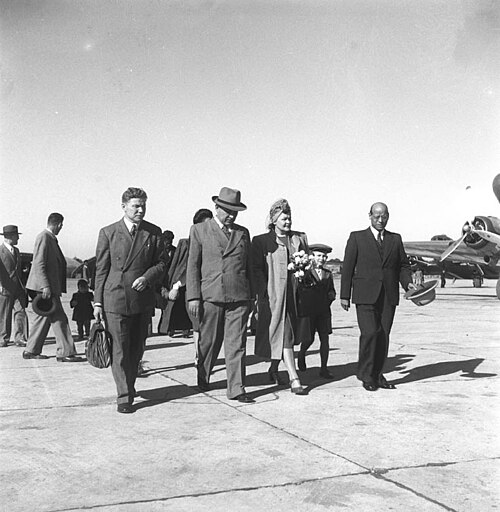
In the early years following independence, India’s foreign policy bore the imprint of anti-colonial idealism and an insistence on sovereign decision-making. Non-alignment, often misunderstood as passive neutrality, was in fact an assertion of agency in a bipolar world. The Soviet Union, initially wary of this posture, gradually recalibrated its approach, recognizing in India a partner that could neither be subsumed into Western alliances nor easily coerced into ideological conformity. The relationship that emerged in the 1950s and 1960s was thus not predicated on doctrinal alignment but on a meeting of strategic needs. India required capital-intensive industrialization, technological assistance, and diplomatic space; the Soviet Union sought legitimacy and influence in the decolonizing world.
This phase of engagement was marked by the construction of India’s industrial backbone. Soviet collaboration in establishing steel plants, heavy machinery complexes, and energy infrastructure was not merely economic assistance- it was an investment in India’s long-term strategic capacity. These projects, often dismissed today as relics of a statist past, were in fact foundational to India’s ability to pursue an independent developmental trajectory. They insulated India, at least partially, from the conditionalities and asymmetries embedded in Western aid regimes.
The relationship, however, acquired unmistakable strategic clarity in the late 1960s and early 1970s. The 1971 Treaty of Peace, Friendship and Cooperation was not an ornamental diplomatic gesture; it was a calculated response to an emerging alignment between the United States, China, and Pakistan. The treaty formalized a degree of strategic reassurance that allowed India to act with confidence during the Bangladesh crisis. Soviet vetoes in the United Nations Security Council were not acts of charity but manifestations of a deeper understanding: that India’s regional stabilization efforts were not inimical to Soviet interests. This moment crystallized the essence of the partnership- reliability under pressure.
Yet, the durability of any relationship is tested not in moments of alignment, but in periods of dislocation. The collapse of the Soviet Union in 1991 was such a moment. For India, it meant the sudden erosion of a trusted partner; for Russia, it entailed a profound internal crisis that constrained its external engagements. Defence supply chains were disrupted, institutional linkages weakened, and the ideological scaffolding that had once framed the relationship disappeared almost overnight. Many predicted an irreversible decline.
What followed instead was a gradual, if uneven, reconstruction. The 1990s witnessed a pragmatic effort on both sides to salvage core areas of cooperation, particularly in defence. By the early 2000s, this effort had acquired a more structured form with the declaration of a “strategic partnership.” What is noteworthy here is not merely the restoration of ties, but their transformation. The relationship was no longer anchored in ideological affinity; it was reconstituted on the basis of converging interests in a multipolar world.
USSR SUPPORTED INDIA’S NUCLEAR INITIATIVES, ESPECIALLY AFTER THE 1974 NUCLEAR TESTS
Defence cooperation remained central, but its character evolved. India was no longer a passive recipient of military hardware; it sought co-development, technology transfer, and joint production. Russia, despite its own constraints, proved more amenable to these demands than most Western suppliers. Projects such as the BrahMos missile system exemplified this shift- a move from buyer-seller dynamics to collaborative innovation. The leasing of nuclear submarines, the induction of advanced fighter aircraft, and the procurement of air defence systems reflected a level of trust that transcended transactional logic.
At the same time, the relationship began to diversify. Energy emerged as a critical domain of engagement. Russia’s vast reserves of oil and natural gas, coupled with India’s growing energy demands, created a natural complementarity. Indian investments in Russian energy projects, particularly in remote and challenging geographies, signalled a willingness to engage beyond immediate commercial returns. The cooperation in nuclear energy further reinforced this trajectory, contributing not only to India’s energy security but also to its technological advancement.
On the diplomatic front, India and Russia have consistently articulated a shared preference for a multipolar world order. This is not merely rhetorical posturing; it reflects a structural concern with the concentration of power in a few hands. Both countries have advocated for the reform of global institutions, particularly the United Nations Security Council, to better reflect contemporary realities. Russia’s support for India’s candidature as a permanent member is indicative of this alignment, even if the prospects of such reform remain uncertain.
Their cooperation within multilateral platforms- BRICS, the Shanghai Cooperation Organisation, and the G20- further underscores this convergence. These forums are not alliances in the traditional sense; they are spaces for negotiating the terms of global governance. Within them, India and Russia often find common ground on issues ranging from economic restructuring to counterterrorism. At times, their positions diverge, reflecting their distinct national interests. Yet, these divergences have rarely escalated into open discord.
It is within this broader context that agreements such as the Reciprocal Exchange of Logistics Agreement (RELOS) must be situated. At one level, RELOS is a technical arrangement, facilitating access to each other’s military logistics and support infrastructure. It allows for refuelling, replenishment, maintenance, and port access- functions that are essential for sustained military operations. But to view it solely through this operational lens would be to miss its deeper significance.
RELOS represents a qualitative deepening of strategic trust. Logistics agreements, by their very nature, require a high degree of confidence in the partner’s intentions and reliability. They entail not just the sharing of facilities, but the integration of operational frameworks. For India, which has entered into similar agreements with multiple partners, RELOS reflects a broader strategy of enhancing its strategic reach while preserving autonomy. For Russia, it provides an avenue to maintain a meaningful presence in regions where its footprint has historically been limited.
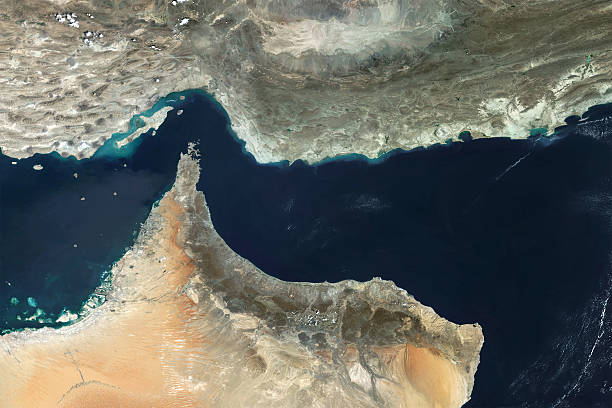
The agreement also has a maritime dimension that warrants attention. As India seeks to consolidate its role in the Indian Ocean Region, access to extended logistical networks becomes crucial. Conversely, Russia’s growing interest in the Indo-Pacific necessitates partnerships that can facilitate its operational mobility. RELOS, in this sense, is not merely bilateral- it has implications for the evolving geometry of regional security.
However, the contemporary phase of India-Russia relations is not without its complexities. India’s expanding engagement with the United States and its participation in groupings such as the Quad have introduced new variables into the equation. Russia, for its part, has deepened its strategic partnership with China, driven in part by its confrontation with the West. These developments create a triangular dynamic that is fraught with both opportunities and tensions.
India’s challenge lies in navigating this landscape without compromising its core principle of strategic autonomy. Its engagement with the United States is driven by specific convergences- economic, technological, and security-related, but it does not signify a wholesale realignment. Similarly, its relationship with Russia, while enduring, is not immune to recalibration. The task, therefore, is not to choose between partners, but to manage multiple relationships in a manner that maximizes national interest.
Russia, too, faces its own set of constraints. Its increasing reliance on China, while strategically expedient, carries the risk of asymmetry. In this context, maintaining a robust partnership with India serves as a counterbalance, providing Russia with strategic flexibility. The India-Russia relationship thus acquires an added significance, not just as a bilateral arrangement, but as a component of broader geopolitical balancing.
One of the persistent weaknesses in this partnership, however, is the relatively underdeveloped economic dimension. Bilateral trade, though growing, remains modest compared to the potential. The over-reliance on defence and energy creates a certain structural imbalance. Efforts to diversify trade, into pharmaceuticals, information technology,
agriculture, and manufacturing have been slow to materialize. Initiatives such as the International North-South Transport Corridor offer promising avenues, but their full potential remains unrealized.
Equally important is the need to revitalize societal linkages. During the Soviet era, educational exchanges, cultural interactions, and academic collaborations played a significant role in shaping mutual perceptions. Today, these connections have weakened, overshadowed by more immediate strategic concerns. Rebuilding them is essential, not as an exercise in nostalgia, but as an investment in the long-term resilience of the relationship.
In assessing the trajectory of India-Russia relations, one must resist both romanticization and pessimism. The partnership has endured not because it is immutable, but because it has been adaptable. It has absorbed shocks, accommodated divergences, and reinvented itself in response to changing circumstances. This adaptability is its greatest strength. The introduction of mechanisms like RELOS is indicative of this capacity for renewal. It reflects a willingness to move beyond established templates and explore new forms of cooperation. At the same time, it underscores a fundamental continuity, the persistence of mutual trust in an era where such trust is increasingly scarce.
The future of this relationship will depend on the ability of both countries to address emerging challenges with the same pragmatism that has characterized their past engagement. This will require not only strategic foresight but also a willingness to invest in areas that have hitherto remained underdeveloped. Economic integration, technological collaboration, and societal exchanges must complement the existing pillars of defence and diplomacy.
Ultimately, India-Russia relations are best understood as a dynamic equilibrium, an ongoing negotiation between continuity and change. They are not defined by a single moment or agreement, but by a sustained pattern of engagement that has, over time, acquired a certain resilience. In a world marked by uncertainty and flux, such relationships are not merely advantageous; they are indispensable.
To speak of India and Russia, therefore, is not to invoke a static alliance, but to recognize a living partnership, one that continues to evolve, adapt, and assert its relevance in the shifting contours of global politics.
About the Author