Written By: Dr. Peerzada Muneer
Democracy in India can be pictured as a beautiful tree whose roots sink deep into Indic history, whose trunk is the republican constitutional order, and whose branches are the everyday practices of participation, dissent and plural living that hold together an astonishing diversity of people and ways of life. This tree is beautiful not because it is free of disease or storms, but because it continues to grow despite serious strain, drawing new nourishment from old civilizational resources even as it is pruned and reshaped by contemporary struggles over power, justice, and identity.
- Indic Lineages of the Democratic “Tree”
When political scientists define democracy today, they often do so in dry procedural terms: competitive elections, universal suffrage, separation of powers and basic civil liberties (Roy, 2024). India clearly satisfies those minimum conditions, having held regular national and state elections with universal adult franchise since 1950, under a written Constitution that entrenches fundamental rights even amid poverty, illiteracy, and deep social cleavages (Government of India, 2013; Bhattacharyya, 2021). Yet in the Indic context, democracy has always meant more than a checklist of institutions; it is also a civilizational project that tries to harmonize many ways of living under a shared ethical horizon of dharma—that which upholds and sustains a just order (Chakrabarti, 2025).
This broader imagination rests partly on long historical experience that people still invoke in everyday conversation and political rhetoric. Long before modern liberal democracies appeared, parts of ancient India saw republican or quasi‑republican formations such as the gana‑sanghas of the Licchavis, the Vajji confederacy and the Mallas, where councils of clan heads deliberated on war, law, and public policy (Sharma, 2013). Buddhist canonical sources and later political treatises describe structured assemblies with presiding officers, agreed procedures, and norms of orderly debate, which suggests that collective decision‑making and a sense of accountability to an assembly were part of the Indic political imagination, even if these bodies were aristocratic and far from egalitarian by modern standards (Sharma, 2013; IJFMR, 2025).
Closer to the ground, institutions of local self‑rule such as village assemblies, guilds and panchayats embedded habits of consultation and consensual settlement in everyday life, long before the vocabulary of “participatory democracy” was coined (Roy, 2024). These bodies were far from perfect, they often excluded women and subordinated lower castes, but they rested on an expectation that authority should be exercised through communal discussion and shared norms rather than purely individual command, leaving a civilizational memory of governance as a shared responsibility anchored in reciprocity and dharma rather than in naked coercion (Roy, 2024; India Leaders for Social Sector, 2022).
When colonial modernity brought new technologies, institutions and ideas—parliaments, codified rights, elections—it encountered this layered terrain rather than a vacuum. Anti‑colonial thinkers from Phule and Ambedkar to Gandhi and Nehru reworked the language of democracy by weaving Western idioms of liberty and equality into Indic notions of swaraj (self‑rule), sarvodaya (welfare of all) and the ethical restraints of dharma (India Leaders for Social Sector, 2022; Choudhry et al., 2016). As a result, the demand for democratic self‑government was never just a plan to copy Westminster; it was also a way of recovering agency for a people imagined as internally diverse yet bound by a common civilizational story and by a shared stake in a constitutional future (Bhattacharyya, 2021; Khosla, 2020).
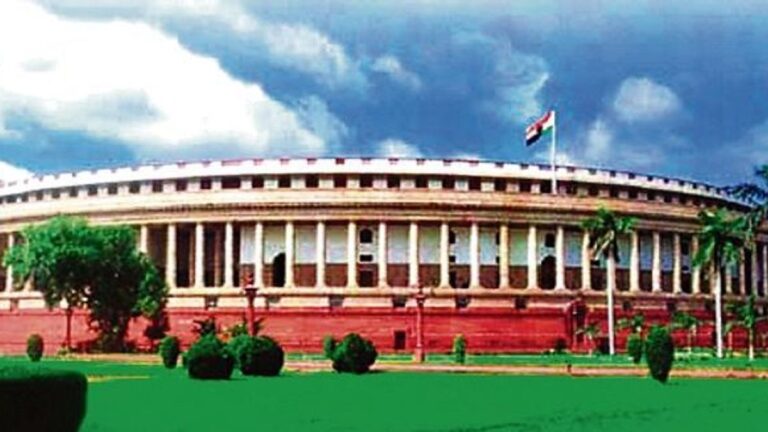
The Constitution of 1950, often compared to a vast banyan tree, institutionalized this synthesis by combining a strong, centralized parliamentary state with universal suffrage, judicially enforceable rights, affirmative action, and a flexible federal structure (Singh, 2023; Austin, 1999). The framers were acutely aware that in a society fractured by caste, religion, and regional hierarchies, democracy could not remain a thin, purely procedural shell; they saw it as the instrument of what Granville Austin called a “social revolution” carried out within a constitutional framework, which meant empowering the state to act while also placing ethical and legal brakes on its power (Austin, 1999; Mehta, 2016).
- The Indian Republic as a Living Tree
If the Indic past provides the soil, the democratic republic since independence supplies the trunk and main branches of the tree people live with today. One striking decision still remembered with a kind of quiet pride is that India introduced universal suffrage from the very first general election, when literacy was low, feudal structures were strong and memories of Partition’s violence were raw (Singh, 2023; Government of India, 2013). At a time when even some established democracies were still excluding women or minorities, India’s framers chose to trust the political judgment of the poorest and most marginal, insisting in effect that the roots of the tree must spread into every social stratum if it was to remain anchored (Khosla, 2020).
Over the decades that followed, this trunk has stood through storms that would have snapped many other polities. The Emergency of 1975–77, when civil liberties were suspended and opposition leaders imprisoned, remains the darkest chapter of formal authoritarianism in the republic, yet it was followed by a decisive electoral rejection of the ruling party and a renewal of constitutional checks that many older citizens still recall as proof that voters can rein in overreach (Bhattacharyya, 2021; Jalal, 1995). Regional insurgencies, communal riots, and economic crises have continued to test the sturdiness of democratic institutions, but neither the military nor any unelected body has displaced electoral politics at the national level, and most Indians still take for granted that governments come and go through the ballot box (Singh, 2023; Chatham House, 2022).
At the same time, the shape of the canopy has changed dramatically as people historically kept at the margins moved closer to the center of political life. Christophe Jaffrelot and others speak of successive “democratic upsurges”, in which lower castes, regional communities, and once‑excluded groups have used the vote, parties, and movements to claim visibility and power in legislatures, bureaucracy and public discourse (Roy, 2024; Jaffrelot, 2003). The implementation of the Mandal Commission’s recommendations, the rise of strong regional parties in the Hindi belt, and the expansion of panchayati raj with reserved seats for women and Scheduled Castes and Tribes have thickened representation and produced a more gnarled, multi‑centered tree, less dominated by any single elite branch (Bhattacharyya, 2021; NCERT, 2014).
Beneath this growth, however, lie tensions that ordinary citizens can feel in their daily interactions with the state. Tripurdaman Singh argues that elements of authoritarianism were “baked into” the constitutional order from the start—strong executive powers, wide emergency provisions, preventive detention laws, and later anti‑defection rules that concentrate influence in party leaderships (Singh, 2023). Pratap Bhanu Mehta similarly notes that Indian constitutionalism was preoccupied with constituting and enabling state power to transform society, sometimes more than with limiting it, creating a permanent friction between the promise of rights and the logic of state‑led development that people encounter whenever welfare, security, and liberty collide (Mehta, 2016).
That friction has sharpened in the twenty‑first century, and people across the spectrum now debate it openly. Analyses by The India Forum and the Journal of Democracy point to a narrowing of civil liberties, the frequent use of sedition and anti‑terror laws, pressure on independent institutions and a climate of polarizing nationalism since 2014, even as elections remain intensely contested and voter turnout remains robust (Bhattacharyya, 2021; Varshney, 2019). These accounts suggest that while the formal trunk of electoral democracy stands, some branches that once sheltered dissent, minority protections, and institutional autonomy are being cut back or shaded, prompting uneasy questions among citizens about how long a tree can remain healthy if its canopy is trimmed to suit the tastes of those who temporarily control the saw (Bhattacharyya, 2021; Chatham House, 2024).
From a dharmic perspective, such periods of strain are not only technical malfunctions but also ethical tests. The CIGI study on “dharmic democracy” argues that Indic traditions insist on balancing rights with duties and individual agency with the responsibilities of rulers and citizens to uphold a just order, warning that both majoritarian triumphalism and overbearing statism can easily be wrapped in the language of cultural authenticity (Chakrabarti, 2025). When public debate is framed as a clash between supposedly “Western” liberal norms and a supposedly “Indian” vision of democracy that downplays civil liberties, the dharmic idiom risks being turned upside down to defend exactly the forms of domination it historically sought to restrain (Chakrabarti, 2025; Bhattacharyya, 2021).
At the same time, studies on democracy and development in India remind us that the life of this tree is not decided only in Delhi or state capitals. Research on rights‑based legislation and welfare programs, from the Right to Information to rural employment guarantees and food security, shows how electoral competition and legal entitlements have created new forms of citizenship among the poor, even when implementation is patchy and frustrating (Arun, 2023; World Bank, 2022). Panchayats led by women or Dalits, student unions in public universities, and community‑rooted movements around land, forests or gender justice are all small but vital shoots that keep open the possibility that constitutional promises can be turned into lived experience from below, rather than granted as favors from above (NCERT, 2014; IDS Bulletin, 2021).
III. India’s Democracy as an Ideal to the World
Beyond its borders, India is often held up as the world’s largest democracy, and many people in other societies watch it with a mix of admiration and concern. For much of the post‑Cold War era, scholars highlighted how India’s ability to hold regular, competitive elections, keep the military under civilian control and accommodate linguistic and regional diversity through federalism challenged the assumption that only rich, homogeneous societies can sustain democracy (Jalal, 1995; Chatham House, 2022). India’s own foreign policy documents have described it as a “dynamic democracy” whose experience shows that political freedom and development can reinforce each other in the Global South, offering an alternative to authoritarian versions of rapid modernization (Government of India, 2013).
More recently, however, discussions have become more ambivalent and more honest. On one hand, think‑tank reports argue that India’s plural democratic ethos, shaped by doctrines like Vasudhaiva Kutumbakam, “the world is one family,” gives it a distinctive voice in global debates on climate justice, digital governance, and multilateral reform, potentially making it a bridge between Western liberal norms and non‑Western perspectives (Chatham House, 2024; Chakrabarti, 2025). On the other hand, the same analyses caution that visible domestic backsliding on civil liberties, minority rights, and institutional independence risks weakening India’s moral standing as a democratic example, even as its economic and geopolitical clout grows (Chatham House, 2024; Bhattacharyya, 2021).
From an Indic standpoint, this tension may be what makes India such a revealing “beautiful tree” for other societies to study. Tripurdaman Singh observes that elements of constitutional authoritarianism and democratic openness have always intertwined in India’s design; what changes over time is how much each is activated, resisted, or normalized by parties, leaders, and citizens (Singh, 2023). Dwaipayan Bhattacharyya similarly suggests that democracy in India has depended on a steady social investment from multiple groups—lower castes, linguistic communities, women, the rural poor—each seeing democracy as a path to dignity, and that current erosion reflects not only elite strategies but also a weakening of that everyday investment (Bhattacharyya, 2021).
The lesson that emerges is both sobering and hopeful for anyone who cares about the future of democracy. A democratic tree, however deeply rooted in inspiring civilizational values, cannot remain beautiful by sheer inertia; it needs constant tending by those who live under its shade and depend on its fruit. When citizens treat the vote as sufficient and retreat from sustained engagement with institutions, movements, and ideas, they effectively hand the pruning shears entirely to those who temporarily control the executive, making it easier for “sub‑democratic” practices to become normal (Bhattacharyya, 2021). Yet when artists, teachers, judges, bureaucrats, farmers, students, and workers insist that dharma in a modern republic includes due process, equality before law, honesty in public life, and respect for difference, they feed the tree with exactly the ethical and emotional nutrients it needs to withstand illiberal winds and economic tempests alike (Chakrabarti, 2025; IDS Bulletin, 2021).
If India can recover and deepen this culture of shared responsibility, its democracy could stand not as a flawless model to be copied, but as a living example of how an ancient, internally diverse civilization can keep remaking constitutional democracy without cutting off its own roots. For established Western democracies wrestling with polarization, inequality, and multicultural anxiety, India’s long experience of managing “unity in diversity” through federal flexibility, coalition governments, and layered identities offers practical insights into how conflict can be channeled without tearing the system apart. For aspiring democracies in Asia, Africa, and Latin America, India’s story shows both the power of inclusive institutions and the danger of believing that a written constitution alone can protect freedom without daily work from below (Bhattacharyya, 2021; World Bank, 2022).
In the end, to see democracy in India as a beautiful tree is to hold together its splendor and its scars. The roots in ancient gana‑sanghas, village councils, and dharmic ethics; the trunk of a surprisingly resilient yet tension‑ridden constitutional order; the branches of social movements, regional parties, and grassroots experiments; and the countless leaves of everyday acts of speech, association, and solidarity together make up a living organism that is always unfinished. Whether that organism continues to offer shelter, fruit, and room to grow for all who stand beneath it will depend on whether Indians across regions, classes, castes, and creeds choose to see themselves not just as beneficiaries of the tree’s shade but also as its gardeners. In that ongoing, very human labor of tending and renewal lies the deepest beauty of democracy in the Indic context.
References
Arun, R. “The Phenomenon of Democracy and Development in India.” International Journal for Research in Applied Science & Engineering Technology (IJFMR), 2023.
Austin, G. The Indian Constitution: Cornerstone of a Nation. Oxford University Press, 1999.
Bhattacharyya, D. “Understanding the Downslide of India’s Democracy.” The India Forum, 2021.
Chakrabarti, A. “Bridging Civilizations: India’s Dharmic Democracy and the Liberal Paradigm.” Centre for International Governance Innovation (CIGI), 2025.
Chatham House. “Democracy in India.” Research Paper, 2022.
Chatham House. “How India’s Democracy Shapes Its Global Role and Relations with the West.” 2024.
Choudhry, S., Khosla, M., and Mehta, P.B. (eds.). The Oxford Handbook of the Indian Constitution. Oxford University Press, 2016.
Government of India, Ministry of External Affairs. India: A Dynamic Democracy. MEA Publication, 2013.
IDS Bulletin. “Reclaiming Democracy in India.” IDS Bulletin, 2021.
India Leaders for Social Sector. “Ancient India’s Democracy: A Leadership Blueprint.” ILSS Blog, 2022.
Jaffrelot, C. India’s Silent Revolution: The Rise of the Lower Castes in North India. Permanent Black, 2003.
Jalal, A. Democracy and Authoritarianism in South Asia: A Comparative and Historical Perspective. Cambridge University Press, 1995.
Khosla, M. India’s Founding Moment: The Constitution of a Most Surprising Democracy. Harvard University Press, 2020.
Mehta, U.S. “Indian Constitutionalism: Crisis, Unity, History.” In Choudhry et al., The Oxford Handbook of the Indian Constitution, 2016.
NCERT. “Democratic System in India.” Indian Economic Development, Class XII Textbook, 2014.
Roy, K. “Understanding Indian Democracy: An Evolving Concept.” TIJER, 2024.
Sharma, R. “The Ancient Indian Republics: Strength and Drawbacks.” IJCRT, 2013.
Singh, T. “The Authoritarian Roots of India’s Democracy.” Journal of Democracy, 2023.
Varshney, A. “How India’s Ruling Party Erodes Democracy.” Journal of Democracy 30(4), 2019.
World Bank. “Re‑examining Social Contracts: The Promise of Inclusive and Accountable Governance.” Washington, DC, 2022.
Web Links:
- https://en.wikipedia.org/wiki/Gaṇasaṅgha
- https://www.peepultree.world/livehistoryindia/story/eras/gana-sangha-democratic-rule-of-ancient-india
- https://www.cigionline.org/articles/bridging-civilizations-indias-dharmic-democracy-and-the-liberal-paradigm/
- https://ijcrt.org/papers/IJCRT1133421.pdf
- https://www.ijfmr.com/papers/2025/3/45517.pdf
- https://www.files.ethz.ch/isn/125396/1154_trystnehru.pdf
- https://www.chathamhouse.org/2022/04/democracy-india
https://voiceofindia.me/2024/08/15/democracy-in-ancient-india-rakesh-goyal/
About the Author