Written by: Arsullah Habib (Educator)
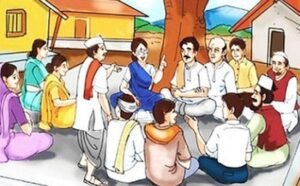
Panchayati Raj in Jammu and Kashmir stands at the intersection of an ambitious national project of democratic decentralisation and a regional history marked by conflict, centralisation, and structural ambiguity. It is one of the few institutional arenas through which rural citizens can access the state and negotiate development, yet its evolution, design and practice reveal a persistent tension between the rhetoric of “grassroots democracy” and the realities of coercive politics, bureaucratic dominance, and incomplete devolution.
Historical Evolution of Panchayati Raj in India and J&K
The idea of village self‑government is deeply rooted in Indian political thought and practice, but its modern incarnation as “Panchayati Raj” emerged under colonial and post‑colonial pressures to democratise administration and promote rural development. Late nineteenth‑century experiments with local boards under Lord Ripon, though limited, introduced the principle that local affairs should be managed by elected bodies, and post‑independence governments repeatedly turned to Panchayats to reconcile centralised planning with local participation. The Balwant Rai Mehta Committee (1957) recommended democratic decentralisation through a three‑tier structure with directly elected village Panchayats and indirectly elected higher tiers, responsible for local planning and community development; subsequent committees, including Ashok Mehta (1978), G. V. K. Rao (1985) and L. M. Singhvi (1986), highlighted the need for constitutional status, financial autonomy and a strong Gram Sabha.
These strands culminated in the 73rd Constitutional Amendment Act, 1992, which inserted Part IX into the Constitution and made it mandatory for states to establish a three‑tier Panchayati Raj system, hold regular five‑year elections under independent State Election Commissions, provide reservations for Scheduled Castes, Scheduled Tribes and women, constitute State Finance Commissions, and devolve powers over a broad range of subjects listed in the Eleventh Schedule. While states retained discretion on the details, Panchayats were transformed from mere administrative adjuncts to constitutionally recognised institutions of local self‑government, intended to institutionalise bottom‑up planning and deepen democratic participation beyond the periodic election of state legislatures and Parliament.
Jammu and Kashmir’s trajectory diverged significantly because of its special constitutional position under Article 370 and its own Constitution. Village‑level institutions existed under the Village Panchayat Regulation No. 1 of 1935, promulgated by Maharaja Hari Singh, which created Panchayats primarily as instruments of local administration and minor justice under tight bureaucratic control, with restrictive franchise based on property, taxation and education, and with the Panchayat officer empowered to supervise elections, nominate panchs and remove members. Amendments in 1941 broadened their developmental functions, such as maintenance of roads, sanitation, water works and local taxation, but these bodies remained elitist and closely tied to the monarchical order.
After accession and the adoption of the J&K Constitution, the Village Panchayat Act of 1951 and the Village Panchayat Act of 1958 sought to build a network of village councils with wider powers in local administration, justice and development, and moved towards adult franchise, but retained provisions for nomination and broad state control. The Jammu and Kashmir Panchayati Raj Act, 1989 marked a qualitative shift: it renamed the system as “Panchayati Raj,” introduced a formal three‑tier structure of Halqa Panchayats at village level, Block Development Councils (BDCs) at the intermediate level and District Planning and Development Boards at the district level, and declared in its preamble the goal of promoting vigorous local self‑government and effective participation of people in decision‑making and development. However, in the absence of the 73rd Amendment’s automatic applicability, the state retained discretion on elections, reservations and fiscal devolution, and the onset of militancy and prolonged periods of Governor’s/President’s Rule delayed the operationalisation of this framework for many years.
Implementation, Amendments and Present Structure in J&K
Actual implementation of Panchayati Raj in J&K has been sporadic and heavily conditioned by the security environment and political calculations. The first major round of Panchayat elections under the 1989 Act was held only in 2000–01, followed by elections in 2011 and 2018, often after long gaps that contravened the five‑year cycle envisaged by the 73rd Amendment and undermined institutional continuity. The 2011 elections, held amid a relative lull in militancy, saw high turnout in many areas and generated hope that Panchayats would become effective vehicles of rural development and participation, yet elected representatives quickly confronted threats from militant groups, boycott politics, and a bureaucracy that was reluctant to cede real authority; many panchs and sarpanchs resigned citing lack of security and absence of actual power, revealing the fragility of decentralisation in a conflict zone.
A crucial legal criticism of the 1989 Act concerns its divergence from the democratic spirit of the 73rd Amendment. While the national constitutional framework requires all seats in Panchayats to be filled by direct elections from territorial constituencies, the J&K Act retained provisions for nomination at every tier, including Halqa Panchayat, BDC and District Board, and allowed the government to nominate members from Scheduled Castes, Scheduled Tribes and women instead of guaranteeing them elected seats in proportion to their population and a fixed share for women. This design diluted the principle of popular sovereignty and converted constitutional rights of representation into discretionary favours of the executive, allowing ruling elites to insert loyalists and undermining the authenticity of local democracy; in practice, it often led to token representation rather than empowerment.
Subsequent amendments attempted to address some of these infirmities. The 2003 amendment to the 1989 Act introduced reservations for Scheduled Castes, Scheduled Tribes and women in Panchayats, aligning more closely with the 73rd Amendment’s equity objectives, although implementation in a state with distinct demographic patterns and contested identity politics remained complex. The 2011 amendment created the State Election Commission to conduct Panchayat elections, an institutional step towards insulating local polls from executive interference, but the continued delays and politically timed elections indicate that legal provisions did not fully translate into autonomy. The 2016 amendments prepared the ground for greater integration with Union norms, and the Jammu and Kashmir Panchayati Raj (Fourth Amendment) Act, 2018 represented the most significant pre‑reorganisation change: it added a detailed schedule of functions, granted Panchayats powers to directly implement centrally sponsored schemes and supervise certain local offices and schools, and elaborated the role of the Halqa Majlis (Gram Sabha) and Ward Majlis (Ward Sabha) in planning, executing and monitoring development programmes.
From a democratic theory perspective, the 2018 amendment strengthened the formal architecture of decentralisation by specifying functions and enhancing financial autonomy, yet its legitimacy and impact must be assessed against the backdrop of continued security threats, weak Gram Sabhas and the dominance of the bureaucracy in technical and fiscal matters. Many departments continued to treat Panchayats as implementing agencies rather than autonomous planning bodies, limiting the transformative potential of the new powers and creating space for misuse in the form of patronage‑driven selection of works and beneficiaries and opaque utilisation of funds.
The abrogation of Article 370 and the Jammu and Kashmir Reorganisation Act, 2019 radically altered the constitutional context, bringing the Union Territory within the direct ambit of the 73rd Amendment and enabling the Union government to restructure local governance. The Union approved a new Jammu and Kashmir Panchayati Raj Act and created directly elected District Development Councils (DDCs), which replaced the earlier District Planning and Development Boards and completed a formal three‑tier system, with Halqa Panchayats at the base, BDCs in the middle and DDCs at the apex; this redesign has been publicised as the full adoption of a three‑tier Panchayati Raj system with additional funds and functionaries compared to other states.
At present, J&K’s PRI structure consists of Halqa Panchayats with directly elected panches and sarpanches, Halqa Majlis as the general assembly of voters, BDCs composed of the sarpanches in a block and headed by an elected chairperson, and DDCs with directly elected members from territorial constituencies, alongside ex officio members such as Members of Legislative Assembly (once the Assembly was restored) and BDC chairpersons. DDCs are entrusted with the preparation and approval of district plans and the monitoring of development programmes, while Gram Sabhas and Panchayats are supposed to identify priorities and implement local projects; substantial funds flow through these bodies under flagship schemes and Finance Commission grants, and the Union government often highlights J&K as a model of resource‑rich Panchayats following the reorganisation.
This structure, however, raises serious questions of constitutional authenticity and coherence. Critics argue that directly elected DDCs, created by executive and statutory measures rather than by constitutional amendment, amount to a quasi‑fourth tier of governance that complicates rather than clarifies the relationship between local bodies and the state legislature and may lack firm constitutional anchoring. As the legislative assembly has been restored, overlapping jurisdictions and competition between DDC members and MLAs for control over funds and visibility have created institutional friction, with some legal experts contending that DDCs distort both federalism and local self‑government by diverting political energy away from the demand for statehood and by blurring the line between legislative and executive authority at the district level.
Achievements, Democratic Content and Pitfalls
Measured against its stated aims of deepening democracy and promoting local development, Panchayati Raj in J&K has produced a mixed record. On the positive side, successive rounds of Panchayat elections have brought tens of thousands of local representatives into public life, many of them from rural, non‑elite backgrounds, including women and members of Scheduled Castes and Scheduled Tribes who gained descriptive representation through reservations introduced in the 2003 and later amendments. In relatively peaceful areas, especially in parts of Jammu division and pockets of North Kashmir, Panchayats have overseen improvements in rural infrastructure, such as roads, minor irrigation, sanitation and community assets, facilitated access to welfare schemes, and acted as mediators in local disputes, thereby giving institutional form to community leadership that had earlier been informal.
The Panchayati Raj framework also carries normative weight in a conflict‑affected region. It offers an alternative grammar of politics centred on everyday governance rather than high‑stakes sovereignty questions, and creates institutional channels for citizens to question officials, demand services and collectively deliberate on priorities through Gram Sabhas. Even where elections have been partial or boycotted, the very availability of a local representative, however constrained, has sometimes given villagers a focal point to articulate grievances and negotiate with the administration, thus modestly validating the idea that democratic participation can operate below the level of the statehood debate.
However, a critical analysis reveals that the democratic content and philosophical alignment of Panchayati Raj with the ideals of self‑government are still limited and fragile. Participation patterns highlight a deep regional divide: while the 2018 Panchayat elections recorded high overall turnout, disaggregated data show that Kashmir division experienced an extraordinary level of non‑contest and vacancy, with around two‑thirds of sarpanch and over ninety per cent of panch seats either uncontested or without polling, and entire districts like Shopian registering no elections at all; boycotts by regional parties, calls from separatist groups, and the pervasive fear of militant retaliation produced a landscape where formal democracy was hollowed out by coercion and alienation. In such conditions, the legitimacy of local bodies as genuine expressions of popular will is open to serious question, and claims that the three‑tier system has fully embedded grassroots democracy in the Valley are at best premature.
The relationship between Panchayats and the security apparatus further complicates their democratic character. On the one hand, intensifying militancy since 1989 has repeatedly targeted Panchayat representatives, leading to resignations, demands for police protection and a climate in which standing for local office is perceived as a risky choice rather than a routine civic activity. On the other hand, the state sometimes instrumentalises Panchayats as tools of counter‑insurgency and legitimacy, showcasing elections and development works as evidence of “normalcy,” which can undermine their perception as autonomous institutions and expose members to accusations of collaboration from armed actors; this double bind weakens their ability to function as neutral, community‑oriented bodies and distorts the philosophy of decentralisation as empowerment.
Institutionally, the logic of power decentralisation remains incomplete. Although laws and amendments allocate numerous functions to Panchayats, including planning and implementation roles in key rural development schemes, line departments and district officials retain substantial control over technical approvals, staff, tendering and fund release, so that local bodies often act as agents executing programmes designed elsewhere rather than as originators of local plans. This administrative subordination invites misuse: works may be selected to serve departmental or political priorities rather than community needs, and Panchayat representatives can become intermediaries in patronage networks, trading access to schemes for political loyalty. Weak Gram Sabhas, poor public awareness of rights, and low levels of social audit and transparency further blur accountability and allow leakages and corruption to go unchecked.
From a democratic theory standpoint, Panchayati Raj is meant to instantiate the principle of subsidiarity, situating decision‑making as close as possible to the people affected. In J&K, this principle confronts three structural pitfalls. First, security centralisation means that important decisions about law and order, land use in sensitive areas, and infrastructure with strategic implications are taken by higher authorities with little input from PRIs, effectively carving out large spheres of public life from local deliberation. Second, the continued salience of identity politics and the unresolved status dispute generate intense suspicion about any institutional arrangement perceived as a vehicle for altering demographic balances or consolidating central control, which can discourage participation and encourage boycott, particularly in the Valley. Third, the incomplete and sometimes contested adoption of 73rd Amendment norms, including the introduction of DDCs and the evolving relationship between local bodies and the reconstituted Legislative Assembly, has created a complex, layered power structure in which true lines of authority are not always clear; this confusion enables both bureaucrats and higher‑level politicians to override or sideline Panchayats when convenient.
Yet, despite these pitfalls, Panchayati Raj remains a viable, and arguably necessary, option for strengthening democratic processes in J&K, provided its deficiencies are candidly acknowledged and addressed. Its potential lies in three interrelated domains. First, sustained, predictable and rule‑bound devolution of funds, functions and functionaries can turn Panchayats into genuine centres of local policy choice rather than transmission belts for centrally determined schemes; this requires a robust Finance Commission‑like mechanism, clear activity mapping and a culture shift within the bureaucracy towards facilitation rather than control. Second, deepening the role of Gram Sabhas through regular, inclusive meetings, participatory planning and mandatory social audits can counter elite capture and create a public sphere in which marginalised voices, including women, SCs, STs and the landless, exercise agency beyond mere electoral participation. Third, insulating local bodies from both partisan manipulation and security instrumentalisation, while ensuring credible protection from violence, can gradually normalise Panchayat office as an ordinary democratic role, reducing the stigma and risk currently attached to it in many parts of the Valley.
In this sense, the content and philosophy of Panchayati Raj in J&K are best understood as an ongoing, contested experiment rather than a completed institutional design. Its alignment with democracy remains partial: it validates democratic norms when it enables local deliberation, equitable representation and accountability, and it undermines them when it becomes a façade for central control, a terrain for patronage politics, or a site of coercion. The challenge is not to decide whether Panchayati Raj is intrinsically good or bad for J&K, but to determine under what legal, political and security conditions it can evolve towards the ideal of genuine self‑government that the 73rd Amendment sought to entrench across India.
References
Balwant Rai Mehta Committee and recommendations on democratic decentralisation.
Ashok Mehta, G. V. K. Rao and L. M. Singhvi Committees on strengthening Panchayati Raj.
Byju’s, “Panchayati Raj – 73rd Constitutional Amendment Act.”
Britannica, “Panchayati raj | History, Structure, Functions, & 73rd Constitutional …”.
Drishti IAS, “Panchayati Raj Institution (PRI).”
InsightsonIndia, “Evolution of Panchayati Raj.”
eGyanKosh, “Unit on Panchayati Raj and the 73rd Amendment.”
The Constitution (Seventy‑Third Amendment) Act, 1992, overview in standard polity sources.
The Jammu and Kashmir Reorganisation Act, 2019.
“Panchayati Raj Institutions in Jammu and Kashmir: An Analysis of Recent Panchayat Election,” IJRAR.
“Panchayat Raj System in Kashmir: A Historical Study of Its Development from 1935 to 2019,” IJCRT.
“Panchayati Raj in Jammu and Kashmir: Theory and Practice,” University of Kashmir.
“Complication of Rural Development & Panchayati Raj System of Jammu and Kashmir,” JETIR.
“Panchayati Raj System: Issues and Challenges in Jammu And Kashmir,” IJCRT.
“Problems and Prospects for the Panchayati Raj System in Jammu and Kashmir,” IJARSCT.
“Panchayati Raj System: Issues and Challenges in …” and related articles on J&K militancy and PRIs.
Government of Jammu & Kashmir, Panchayati Raj Act 1989 and amendments including the Fourth Amendment Act, 2018.
Articles and reports on District Development Councils in J&K and their legal‑political implications.
Analytical commentaries on Panchayati Raj’s national performance and challenges in deepening local democracy.
About the Author