By: Dr Manzoor Hassan ( Senior Researcher)
What has happened to Venezuela in recent months should trouble anyone who still believes that international law is meant to restrain power rather than merely explain its outcomes. The military pressure, coercive enforcement measures, and political intervention directed at the Venezuelan state are often described as exceptional responses to an exceptional crisis. Yet when placed in historical and geopolitical context, they appear less as exceptions and more as the continuation of a familiar pattern- one in which legal norms bend when they collide with entrenched strategic interests.
To understand the gravity of the present moment, one must step back from the immediacy of headlines and examine the longer arc of Venezuela’s relationship with global power. Venezuela’s significance has never been about its military strength or diplomatic reach. It has always been about resources, geography, and alignment. Oil, in particular, has shaped the country’s external relations more decisively than ideology or leadership. For much of the twentieth century, Venezuela functioned as a stable supplier within an international energy system dominated by Western capital and U.S. strategic priorities. Sovereignty existed, but it was carefully managed.

This balance began to change at the turn of the century. The rise of Hugo Chávez marked not just a shift in domestic politics but a challenge to the assumptions underpinning regional order. Chávez’s insistence on state control over oil revenues, redistribution, and an independent foreign policy disrupted a long-standing hierarchy. Whether one admires or criticizes the Bolivarian project is ultimately beside the point. What matters is that Venezuela began to act like a state seeking autonomy rather than permission.
From that moment onward, Venezuela’s relationship with the United States entered a prolonged period of tension. This tension was not primarily about democratic standards or human rights, as is often claimed, but about predictability and control. States that align smoothly with dominant power structures are rarely scrutinized with the same intensity as
those that resist them. Over time, Venezuela was recast- from a difficult partner to a problem state, and eventually to a target of sustained pressure.
That pressure initially took non-military forms. Diplomatic isolation, economic sanctions, and financial restrictions became the primary instruments of engagement. These measures were presented as calibrated tools designed to induce political change. In reality, they functioned as blunt instruments, weakening state capacity and exacerbating social suffering. Even so, they existed within a contested but recognizable framework of international politics. Sanctions, however questionable, still allowed the fiction that law and diplomacy were operative.
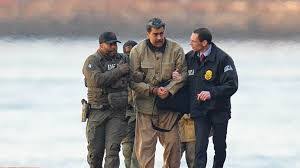
The recent turn toward direct coercion represents a rupture with that framework. Military involvement, seizures of commercial assets, and the detention of Venezuela’s sitting president are not extensions of sanctions by other means. They are a fundamental shift in method and meaning. At this point, the issue is no longer whether the Venezuelan government is democratic, competent, or legitimate in the eyes of its critics. The issue is whether powerful states may unilaterally override sovereignty when patience runs out.
International law is clear on this question, not because it is morally elevated, but because it was designed to manage precisely these situations. The United Nations Charter emerged from the recognition that unchecked power leads to instability and war. Article 2(4), which prohibits the use of force against the territorial integrity or political independence of states, is not a decorative clause. It is the system’s load-bearing wall. Without it, international order collapses into a hierarchy enforced by coercion.
The exceptions to this rule are deliberately narrow. Self-defense requires an armed attack, not political hostility or strategic inconvenience. Collective security requires authorization from the Security Council, not unilateral judgment. Venezuela satisfied neither condition. There was no Venezuelan attack, no imminent threat, and no multilateral mandate. This absence matters more than any political narrative attached to the intervention.

The arrest of a sitting head of state through external force deserves particular attention. Head-of-state immunity is often misunderstood as a personal privilege. In reality, it is a structural principle meant to protect the functioning of international relations. It ensures that disputes between states are addressed through diplomacy and law, not through abduction and
force. To discard this principle is to normalize a world in which political leaders survive at the discretion of stronger powers.
The same logic applies to maritime coercion. The seizure of vessels and restriction of trade routes is not a technical enforcement issue. It is a strategic act with far-reaching consequences. Historically, control of sea lanes has been one of the most effective tools of domination. That is why international law treats blockades and interdictions with such seriousness. When commercial shipping becomes a target, civilian life is inevitably affected. Economic pressure turns into collective punishment.
What is striking in the Venezuelan case is how easily these actions are justified through language rather than law. Words like democracy, accountability, and humanitarian concern are invoked repeatedly, often sincerely, but without legal grounding. This is not accidental. Moral language is flexible; legal standards are not. The former can be adapted to circumstance, the latter cannot. When values are detached from the legal process, they become instruments of power rather than restraints upon it.
This selective application of norms reveals a deeper problem. International law today operates unevenly, not because its rules are unclear, but because their enforcement is political. Weaker states are disciplined in the name of legality; stronger states interpret legality as a matter of discretion. Over time, this disparity corrodes trust in the system itself. Law begins to look less like a common framework and more like a vocabulary of justification.
For Latin America, this experience is neither abstract nor new. The region has repeatedly witnessed interventions framed as necessary corrections to instability or misrule. Each time, sovereignty was treated as conditional, and each time, the long-term consequences were borne by ordinary people rather than political elites. The situation in Venezuela revives this historical memory and reinforces a sense of vulnerability among states that lack strategic leverage.
The broader implication is unsettling. If the prohibition on the use of force can be set aside when a state becomes inconvenient, then international law ceases to function as a limit. It becomes descriptive rather than prescriptive, explaining outcomes rather than shaping them. In such a world, compliance offers no security, and restraint becomes a liability.
Venezuela’s predicament, therefore, is not only about Venezuela. It is about whether the international system still believes in its own rules. Whether sovereignty remains a principle or has become a negotiable privilege. Whether power is still expected to justify itself before law, or whether law now trails behind power, adjusting to its movements. These are not theoretical questions. They define the kind of world that is being built, quietly and incrementally, through precedents that are allowed to stand.
If the Venezuelan episode is examined closely, what becomes evident is not merely a violation of specific legal provisions, but a deeper shift in how power now relates to law in global politics. The issue is not that international law has suddenly become irrelevant; rather, it is being selectively invoked, selectively enforced, and increasingly subordinated to strategic convenience. This shift does not announce itself dramatically. It proceeds quietly, through precedents that are justified as exceptional, temporary, or unavoidable. Over time, however, these exceptions accumulate, and the rule they were meant to preserve begins to dissolve.
The most revealing aspect of the intervention against Venezuela is the way legal arguments are deployed after the fact, rather than guiding action beforehand. Self-defense is invoked without an armed attack. Criminal accountability is cited without judicial process. Humanitarian concern is expressed without multilateral consent. Each justification contains a kernel of moral or political plausibility, yet none satisfies the legal thresholds established to prevent abuse. This pattern suggests that law is no longer functioning as a prior constraint on action, but as a retrospective narrative used to normalize outcomes already achieved.
This inversion is dangerous. International law was never designed to eliminate power politics; it was designed to channel it. The prohibition on the use of force does not deny that states pursue interests. It insists only that they do so without resorting to unilateral violence. When that prohibition is weakened, what replaces it is not realism in its classical sense, but arbitrariness. Power loses even the minimal discipline imposed by rules.
The Venezuelan case also exposes the limits of institutional mechanisms meant to safeguard legality. The United Nations Security Council, paralyzed by geopolitical rivalry, has become increasingly unable to act as an effective arbiter. This paralysis is often cited as justification for unilateral action, yet it is precisely unilateralism that further weakens the Council’s authority. The cycle is self-reinforcing: institutions fail because they are bypassed, and they
are bypassed because they fail. In this environment, law becomes fragmented, and legitimacy becomes contested.
What is often overlooked in discussions of intervention is the lived cost of such actions. Legal violations are not abstract breaches; they translate into material consequences. Economic strangulation disrupts livelihoods. Maritime coercion affects food and energy supplies. Political destabilization deepens uncertainty and fear. These effects are borne not by policymakers or strategists, but by ordinary people. International law’s emphasis on sovereignty and non-intervention is grounded in this reality. It recognizes that external force, however justified rhetorically, almost always amplifies human suffering.
The erosion of legal restraint also carries strategic consequences. When powerful states demonstrate that force may be used without authorization, others take note. Rivals adapt. Norms weaken across regions, not just where the initial violation occurs. The Venezuelan precedent does not remain confined to Latin America; it travels. It shapes expectations in Eastern Europe, the Middle East, Africa, and East Asia. Each instance of selective legality lowers the threshold for future confrontation.
This is particularly significant in a world undergoing multipolar transition. As power diffuses, the need for shared rules becomes greater, not lesser. Yet the Venezuelan episode suggests the opposite trajectory: a return to spheres of influence managed through pressure rather than consent. Smaller states, observing this shift, are forced to recalibrate their behavior. Alignment becomes a survival strategy. Autonomy becomes risky. Law becomes unreliable.
The language used to justify intervention deserves careful scrutiny. Democracy, human rights, and accountability are essential values. Their credibility, however, depends on consistent application. When they are invoked selectively, detached from the legal process, they lose moral force. They begin to resemble tools rather than principles. This instrumentalization does not strengthen global norms; it corrodes them.
None of this is to deny Venezuela’s internal problems or the legitimacy of criticism directed at its government. States are not shielded from scrutiny by sovereignty alone. But scrutiny is not intervention, and criticism is not authorization. International law draws these distinctions deliberately, because history shows what happens when they collapse. The question is not whether Venezuela should be accountable, but who decides, by what means, and under what constraints.
The uncomfortable truth is that the Venezuelan aggression reflects a broader loss of confidence in law as a governing framework. Power no longer waits for permission; it acts and explains later. This shift may produce short-term strategic gains, but it carries long-term costs. Trust erodes. Institutions weaken. Conflict becomes harder to contain.
In the end, Venezuela stands less as a singular case than as a mirror. It reflects a world in which legal restraint is increasingly conditional, where sovereignty is unevenly respected, and where norms survive more as language than as limits. Whether this trajectory can be reversed depends not on declarations of commitment to a rules-based order, but on the willingness to accept restraint even when it is inconvenient.
International law does not fail because it is idealistic. It fails when those most capable of upholding it choose not to. The breach in Venezuela is therefore not only a violation of territory or sovereignty; it is a breach of trust in the very idea that power can be governed by law. That breach, once normalized, is far harder to repair than any single act of aggression.
About the Author