Peerzada Muneer
The contemporary climate crisis is fundamentally a crisis of water. As anthropogenic greenhouse gas emissions drive a rapid rise in global temperatures, the earth’s hydrological cycle is being reshaped in ways that destabilise long‑established patterns of precipitation, snow and glacier dynamics, river flows, and groundwater recharge. This reconfiguration of the water cycle manifests not only as more frequent and intense extremes of drought and flood, but also as subtle yet pervasive shifts in seasonal timing, reliability, and quality of freshwater resources. The consequences are far‑reaching: water insecurity now intersects with food systems, energy production, public health, ecosystems, and geopolitical stability, making the climate–water nexus a central focus of scientific research and policy concern. Within this global context, India stands out as a critical hotspot, where a large and growing population, monsoon‑dependent agriculture and heavy reliance on groundwater converge with climate variability to produce complex and often acute forms of water stress. The Himalayan region of Jammu and Kashmir, and the Kashmir Valley in particular, represents an especially sensitive microcosm of these dynamics. Historically perceived as water‑abundant due to its snow‑fed rivers, glaciers and springs, the region is now experiencing visible signs of climatic transformation, warmer winters, altered snowfall and rainfall patterns, drying springs and rivers, and heightened exposure to both drought‑like conditions and catastrophic floods.

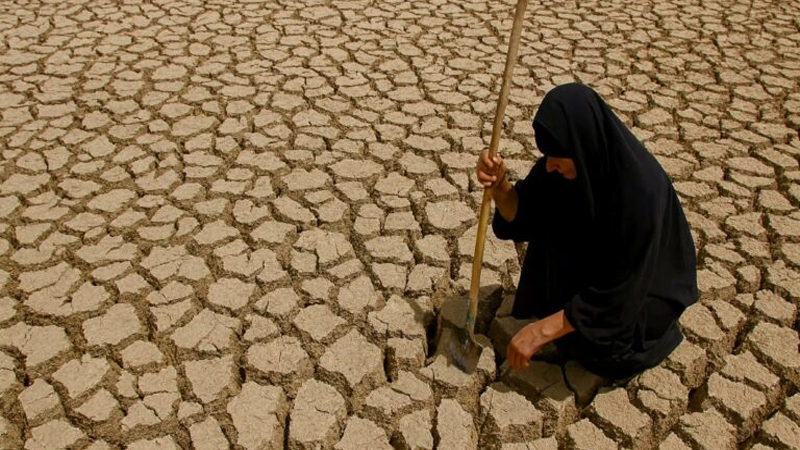
Globally, the relationship between climate, temperature variation, and water scarcity is mediated through changes in the water cycle that manifest as altered precipitation regimes, more frequent and intense droughts, and shifts in snow and glacier hydrology that undermine long-term freshwater storage. Approximately half of the world’s population, around 4 billion people, already experiences severe water scarcity for at least part of the year due to combined climatic and non-climatic factors, a figure that is projected to rise further as warming continues and demand increases. Only about 0.5% of Earth’s water is available and usable freshwater, and terrestrial water storage, including soil moisture, snow, and ice, has declined by about 1 cm per year over the past two decades, with significant implications for water security. The intensification of the hydrological cycle is evident in increased heavy precipitation events affecting hundreds of millions of people, simultaneous lengthening of dry spells in many regions, and accelerated glacier mass loss, all of which contribute to growing variability and unreliability of water supplies.
Recent assessments underscore the severity of these trends. The World Meteorological Organization reports that 2023 was the driest year for global rivers in 33 years, with more than half of global catchment areas exhibiting abnormal discharge conditions and widespread deficits in river flows and reservoir inflows. In the same year, glaciers lost more than 600 gigatons of water, the largest loss recorded in five decades of observations, confirming that many glacierized basins have passed “peak water” and will see declining meltwater contributions in the long term. Climate change has increased atmospheric moisture content, intensified precipitation by roughly 2–3% per degree of warming, and accelerated snowmelt and glacier retreat, thereby making the water cycle more erratic, oscillating between extremes of too much and too little water, across continents. These physical changes intersect with socioeconomic vulnerabilities: nearly 3.6 billion people already face inadequate access to water at least one month a year, and this number may exceed 5 billion by 2050 if current trends persist, exacerbating inequities in water access, quality, and governance.
Water scarcity is no longer simply a function of absolute physical availability but reflects a broader condition of water insecurity shaped by climate-induced hazards, pollution, infrastructure deficits, and governance limitations. Around 1.9 billion people, approximately 27% of the global population in the early to mid‑2010s, lived in areas of potentially severe water scarcity, and projections suggest that by 2050, between 2.7 and 3.2 billion people could be living in such conditions, even under moderate warming scenarios. Climate change interacts with population growth, economic development, and land-use change to increase water demand for agriculture, industry, and households, with global water withdrawals projected to rise by 20–30% by mid‑century, thereby intensifying competition across sectors and heightening the risk of conflict and displacement in already stressed regions. The World Economic Forum and related global risk analyses have repeatedly identified water crises as among the top systemic global risks because they link directly to food and energy security, health, economic stability, and geopolitical tensions.
The health, ecological, and socio-political implications of climate-driven water stress are profound. Changes in precipitation and hydrological extremes are linked to increased incidence of water-borne and vector-borne diseases, degradation of freshwater ecosystems, and loss of culturally significant aquatic landscapes, especially in high mountain and polar regions. The World Health Organization notes that climate change affects the social and environmental determinants of health: clean air, safe drinking water, sufficient food, and secure shelter, through heatwaves, floods, storms, and droughts that compromise water and sanitation systems and increase disease burdens. In many parts of Africa, Asia, and Latin America, droughts, although representing only about 7% of disasters between 1970 and 2019, accounted for roughly one-third of disaster-related deaths, underscoring how water scarcity interacts with poverty and marginalization to produce disproportionate human impacts. Moreover, intensifying water stress is projected to drive significant internal and cross-border migration, with some estimates indicating multi-fold increases in asylum applications and internal displacement under high-emissions scenarios.
In this context, India occupies a critical position because of its large and growing population, high reliance on climate-sensitive agriculture, and complex monsoonal and cryospheric hydrology, which together make it a major hotspot of climate-related water risk. India already ranks among the world’s most water‑stressed countries, with several major river basins experiencing chronic over-extraction, groundwater depletion, and seasonal scarcity that are aggravated by rainfall variability and heat extremes. Roughly four billion people globally living under conditions of severe water scarcity for at least a month each year include nearly half residing in India and China, highlighting the concentration of global water risk in South and East Asia. In India, agriculture accounts for around 80–90% of freshwater withdrawals, and climate-induced changes in monsoon behaviour, evapotranspiration, and soil moisture directly translate into heightened risks of crop failure, rural distress, and food insecurity, especially for smallholders.

Empirical evidence from India shows that climate change is altering both temperature and precipitation patterns in ways that intensify water poverty and increase the volatility of water availability. Studies of recent decades highlight rising mean and extreme temperatures across many regions, an increase in the frequency and duration of heatwaves, and shifting monsoon onset and withdrawal dates, often accompanied by more intense short-duration rainfall events and longer dry spells. These climatic shifts amplify both meteorological and hydrological drought; for example, droughts now occur more frequently in central and western India and increasingly coincide with heatwaves, creating compound events that reduce soil moisture, depress reservoir levels, and impair groundwater recharge. India’s dependence on groundwater as a buffer against monsoon variability has led to extensive over‑abstraction in states such as Punjab, Haryana, Rajasthan, and parts of peninsular India, where falling water tables signal a transition from seasonal stress to structural scarcity.
The social consequences of climate-related water stress in India are unevenly distributed and reinforce existing patterns of inequality. Rural communities, women, marginalized castes, and informal urban settlements often bear the brunt of water scarcity because of limited access to piped water, reliance on climate-sensitive livelihoods, and weaker political representation in water governance. Evidence from drought-affected regions indicates that climate shocks erode household assets, increase indebtedness, and trigger distress migration, including seasonal migration to cities, while also deepening gendered burdens of water collection and care work. Climate-induced water insecurity further interacts with health vulnerabilities: reduced access to safe drinking water and sanitation increases the risk of diarrheal diseases, undernutrition, and heat-related illnesses, while urban heat islands amplify health harms where water shortages limit adaptive behaviours such as hydration and cooling.
Water quality in India is also concurrently threatened by climate change, as higher temperatures and altered runoff patterns influence pollutant loading, pathogen survival, and eutrophication in rivers, lakes, and reservoirs. Research indicates that increased frequency of intense rainfall events elevates the risk of contamination of drinking water sources with sediments, nutrients, and microbial pathogens, while prolonged low flows during droughts concentrate pollutants and reduce the assimilative capacity of water bodies. These processes undermine drinking water safety, agricultural suitability, and aquatic ecosystem health, particularly in densely populated and industrialized catchments such as those of the Ganges and Yamuna. Furthermore, coastal and deltaic regions, including parts of eastern India, face salinization of groundwater and surface water due to sea-level rise and storm surges, compounding inland water scarcity with quality-related constraints.
Against this national backdrop, the Himalayan region, and Jammu and Kashmir in particular, exemplifies how climate-induced temperature and precipitation shifts are destabilizing historically snow- and glacier-dependent water systems. High mountain Asia has experienced significant glacier mass loss in recent decades, and the western Himalaya, which feeds many of the rivers flowing through Jammu and Kashmir, is projected to see continued shrinkage of ice and snow reserves even under moderate warming scenarios. Meltwater from glaciers and seasonal snow traditionally sustains dry-season flows in rivers such as the Jhelum and Chenab and recharges springs across the Kashmir Valley; as glaciers recede and snow cover becomes thinner and more erratic, both the timing and magnitude of runoff are being altered, with implications for irrigation, hydropower, and domestic supplies. These cryospheric changes also interact with shifts in monsoon dynamics and western disturbances, leading to more frequent rain-on-snow events, rain‑dominated winters, and altered flood and drought regimes.
Recent observations and regional studies indicate that Jammu and Kashmir is warming faster than in previous decades, with rising mean temperatures, more frequent heat events, and a noticeable decline in the duration and reliability of winter snowfall, especially in the Kashmir Valley. Local reports and scientific analyses describe a pattern of “snow droughts,” where winter precipitation falls increasingly as rain rather than snow, or overall snowfall declines sharply, reducing snowpack and thereby diminishing spring and summer meltwater that traditionally buffered dry periods. Concurrently, altered precipitation patterns manifest as both deficient winters and occasionally intense but short-lived rainfall events during other seasons, contributing to a higher risk of both drought-like conditions and flash flooding in different years. These climatic anomalies have tangible socio-ecological impacts: horticultural and agricultural sectors that depend on chill hours and predictable snowmelt, including apple orchards and paddy cultivation, face greater yield variability and heightened susceptibility to both late frosts and heatwaves.
Evidence from hydrological and field-based studies in the Kashmir Valley demonstrates that springs, streams, and smaller tributaries are drying or experiencing reduced discharge, while major rivers exhibit depressed low-season flows in years of low snow accumulation. Local media and research reports document numerous instances of traditional springs going dry or significantly receding, leading to drinking water shortages in rural communities and necessitating greater reliance on piped or tanker supplies that are themselves vulnerable to supply disruptions. The Jhelum River, the principal river draining the Valley, has shown episodes of unusually low water levels in recent years, affecting irrigation canals, hydropower generation, and navigation, while also heightening concern about the region’s ability to cope with both agricultural needs and urban demand in Srinagar and other towns. In parallel, glacier-fed tributaries have reported reduced late‑summer flows, consistent with the broader signal of glacial retreat and altered seasonal runoff in the western Himalaya.
At the same time, the region remains vulnerable to extreme hydrological events, with climate change increasing the likelihood of intense rainfall episodes that can produce catastrophic floods such as the 2014 inundation of the Jhelum basin. More frequent heavy precipitation events, combined with land-use changes including deforestation, encroachment on floodplains, and urbanization of wetlands in and around Srinagar, magnify peak flows and reduce the landscape’s capacity to absorb and slowly release water, thus transforming what would have been moderate floods into damaging disasters. The coexistence of heightened flood risk during certain periods with emerging trends of low flows and drying springs during others illustrates the dual nature of climate-driven water stress in Jammu and Kashmir: the region is increasingly exposed to both too much and too little water, often within short temporal windows. This pattern complicates water management, as traditional infrastructure and planning frameworks were calibrated to more stable seasonal patterns of snow, rain, and runoff.

The ecological impacts of climate and hydrological change in the Kashmir Valley extend to wetlands, lakes, and forests that underpin local biodiversity and ecosystem services. Iconic water bodies such as Dal and Wular lakes are experiencing cumulative pressures from reduced inflows, increased sedimentation, encroachment, and pollution, while altered temperature and hydrological regimes affect their ecological functioning and resilience. Wetlands that once acted as natural sponges, storing floodwaters and slowly releasing them downstream, are being degraded or converted, thereby undermining both biodiversity conservation and climate adaptation capacities. Forest ecosystems in the region face stress from rising temperatures, shifting moisture regimes, and increased incidence of pests and fires, which in turn can reduce watershed stability, increase erosion, and further destabilize stream and river flows. These ecological changes feed back into human vulnerability by compromising fisheries, grazing resources, and other nature-based livelihoods that have historically supported rural communities in the Valley.
Water scarcity in Jammu and Kashmir is therefore not solely a matter of absolute availability but arises from the interaction of climatic change with socio-political, infrastructural, and governance factors. Rapid demographic growth, urban expansion, and rising per capita water demand have increased pressures on surface and groundwater resources, while aging or inadequate infrastructure leads to losses, inequitable distribution, and limited capacity to respond to climatic shocks. In many rural areas, piped water coverage is incomplete or intermittent, leading households to depend on local springs whose discharge is now declining, whereas urban neighbourhoods encounter periodic shortages due to both supply constraints and distributional inequities. Cross-border tensions over water governance in the broader Indus basin, of which Jammu and Kashmir is a central component, further complicate long-term adaptation planning by injecting geopolitical uncertainty into water-sharing arrangements that are themselves increasingly stressed by climate change.
These dynamics have direct implications for livelihoods and human security in the region. Agriculture in the Kashmir Valley is heavily reliant on climate and water, with paddy fields, orchards, and pastoral systems all sensitive to changes in snowmelt timing, pre-monsoon rainfall, and summer temperature extremes; recent years have seen reports of lower yields, crop damage from unseasonal weather, and increased reliance on groundwater or canal diversions to compensate for declining surface flows. Hydropower, a key pillar of the region’s energy system and economic planning, is vulnerable to both drought-induced low flows and flood-induced infrastructure damage, thereby linking water variability directly to power supply stability and economic performance. Household water insecurity, particularly during extended dry spells, increases the burden on women and children for water collection and contributes to growing perceptions of risk and anxiety about the region’s environmental future.
In response to these escalating challenges, adaptation and governance measures in Jammu and Kashmir must grapple simultaneously with climate science, local knowledge, and structural constraints in the water sector. Effective adaptation will require improving monitoring and data systems for snow, glaciers, groundwater, and river flows; rehabilitating and protecting springs, wetlands, and catchments; modernizing irrigation to increase water-use efficiency; and integrating climate projections into land-use and infrastructure planning. At the same time, equitable and participatory water governance that recognizes the differentiated vulnerabilities of rural and urban communities, women, and marginalized groups will be essential to reducing water insecurity and preventing climate impacts from deepening existing social and political tensions. Given that many mitigation measures, such as large-scale afforestation or bioenergy, can themselves have significant water footprints, climate policy in the region must adopt a whole-systems perspective that safeguards water security while pursuing low-carbon development pathways.
Taken together, the evidence across scales reveals that climate change is re‑writing the geography and seasonality of water in ways that demand a fundamental rethinking of how societies understand and govern this critical resource. Globally, rising temperatures are intensifying the hydrological cycle, eroding the reliability of freshwater systems and exposing billions of people to new and compounded forms of water insecurity. In India, these broad processes are superimposed on a monsoon‑dominated climate, a groundwater‑dependent agrarian economy and deeply unequal social structures, producing a mosaic of water stress that is at once biophysical and socio‑political. The case of Jammu and Kashmir, with its rapidly warming climate, shrinking cryosphere, drying springs, altered river regimes and dual exposure to drought and flood, shows that even mountain regions historically regarded as water‑rich can become emblematic frontiers of scarcity and risk. Yet the trajectory outlined in the article is not inevitable. It underscores that responses must move beyond narrow engineering fixes toward integrated, multi‑level approaches that combine mitigation of greenhouse gas emissions with transformative adaptation in water management, land use, agriculture, energy, and urban planning. Crucially, such strategies must be anchored in principles of equity and participation, acknowledging that climate‑induced water stress amplifies existing injustices and that those who have contributed least to global emissions are often the most exposed and least equipped to adapt. By situating Jammu and Kashmir and the Kashmir Valley within the wider climate–water crisis, the analysis highlights both the urgency and the possibility of reorienting development pathways around the protection, restoration and just allocation of water, recognising it not merely as a resource but as the central medium through which the impacts of a warming world are already being felt.
References:
UN‑Water. “Water and Climate Change.” UN‑Water. Accessed December 16, 2025. https://www.unwater.org/water-facts/water-and-climate-change.
United Nations. “Water – at the Center of the Climate Crisis.” United Nations Climate Action. Accessed December 15, 2025. https://www.un.org/en/climatechange/science/climate-issues/water.
UN‑Water. Climate Change and Water. Policy Brief. Geneva: UN‑Water, 2019. https://www.unwater.org/sites/default/files/app/uploads/2019/10/UN_Water_PolicyBrief_ClimateChange_Water.pdf.
UN‑Water. “Water Scarcity.” UN‑Water. Accessed December 18, 2025. https://www.unwater.org/water-facts/water-scarcity.
UNESCO. “Imminent Risk of a Global Water Crisis, Warns the UN World Water Development Report 2023.” UNESCO, March 21, 2023. https://www.unesco.org/en/articles/imminent-risk-global-water-crisis-warns-un-world-water-development-report-2023.
UN‑Water. Progress on Level of Water Stress: 2024 Update. Geneva: UN‑Water, 2024. https://www.unwater.org/publications/progress-level-water-stress-2024-update.
United Nations Development Programme. “Water.” UNDP. Accessed December 18, 2025. https://www.undp.org/water.
“‘Short Drought’ Dries up Kashmir’s Springs, Raising Fears over Drinking Water Supplies.” Daily Excelsior, December 15, 2025. https://www.dailyexcelsior.com/short-drought-dries-up-kashmirs-springs-raising-fears-over-drinking-water-supplies/.
India Water Portal. “When the Heat Rises, Water Runs Out: How Climate Shocks Are Deepening Water Poverty in India.” India Water Portal, July 11, 2025. https://www.indiawaterportal.org/climate-change/when-the-heat-rises-water-runs-out-how-climate-shocks-are-deepening-water-poverty-in-india.
UN‑Water. Climate Change and Water. Policy Brief. Geneva: UN‑Water, 2019. https://www.unece.org/fileadmin/DAM/env/documents/2020/WATER/09Sep30-2Oct_15th_IWRM/UN_Water_PolicyBrief_ClimateChange_Water_ENG.pdf.
India Water Portal. “India’s Water Policy: Between Scarcity, Reform, and a Sustainable Future.” India Water Portal, August 27, 2025. https://www.indiawaterportal.org/governance-and-policy/indias-water-policy-between-scarcity-reform-and-a-sustainable-future.
Sahoo, Abhishek, and co‑authors. “Impact of Temperature Shocks on Household Water Poverty in India.” Scientific Reports 15, no. 1 (2025). https://www.nature.com/articles/s41598-025-01732-6.
India Water Portal. “Climate Change Threatens Water Access for World’s Poorest Communities.” India Water Portal. Accessed December 14, 2025. https://www.indiawaterportal.org/drinking-water/climate-change-threatens-water-access-worlds-poorest-communities.
India Water Portal. “Once a Lifeline, Now a Memory: What Happened to Kashmir’s Water Springs.” India Water Portal, July 9, 2025. https://www.indiawaterportal.org/groundwater/once-a-lifeline-now-a-memory-what-happened-to-kashmirs-water-springs.
Kashmir Patriot. “Kashmir Rivers, Springs Dry up amid Drought‑Like Situation.” Kashmir Patriot, December 16, 2025. https://www.kashmirpatriot.com/kashmir-rivers-springs-dry-up-amid-drought-like-situation/.
India Water Portal. “Climate Change and Water Sources: Strengthening Community Preparedness and Water Use.” India Water Portal. Accessed December 11, 2025. https://www.indiawaterportal.org/drinking-water/climate-change-and-water-sources-strengthening-community-preparedness-and-water-use.
About the Author